


Human polyomaviruses and cancer: an overview
- PMID: 30328951
- PMCID: PMC6157077
- DOI: 10.6061/clinics/2018/e558s
Human polyomaviruses and cancer: an overview
Abstract
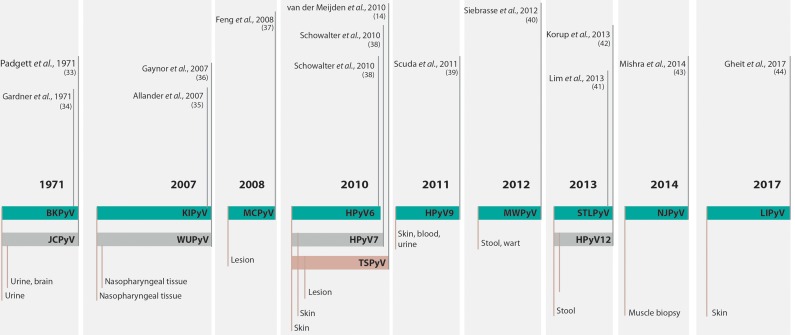
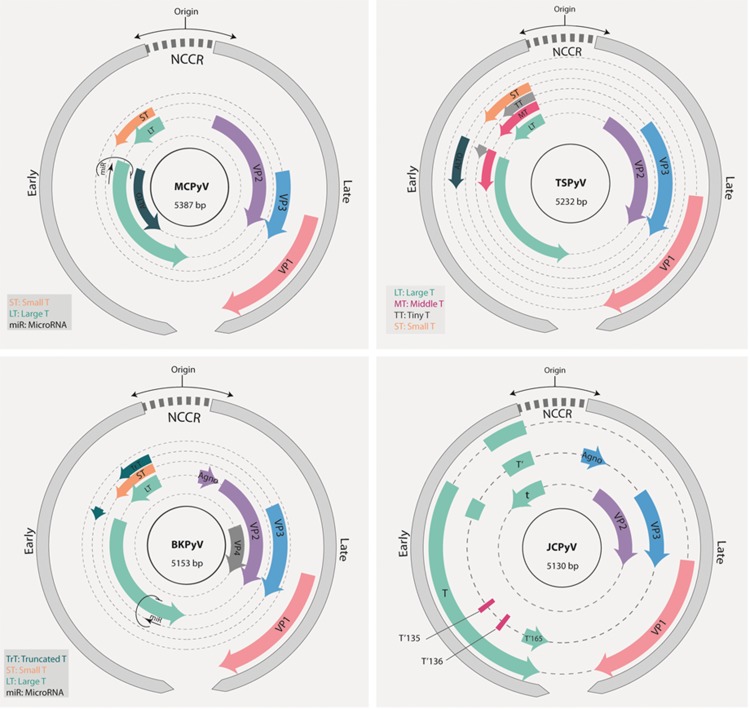
The name of the family Polyomaviridae, derives from the early observation that cells infected with murine polyomavirus induced multiple (poly) tumors (omas) in immunocompromised mice. Subsequent studies showed that many members of this family exhibit the capacity of mediating cell transformation and tumorigenesis in different experimental models. The transformation process mediated by these viruses is driven by viral pleiotropic regulatory proteins called T (tumor) antigens. Similar to other viral oncoproteins T antigens target cellular regulatory factors to favor cell proliferation, immune evasion and downregulation of apoptosis. The first two human polyomaviruses were isolated over 45 years ago. However, recent advances in the DNA sequencing technologies led to the rapid identification of additional twelve new polyomaviruses in different human samples. Many of these viruses establish chronic infections and have been associated with conditions in immunosuppressed individuals, particularly in organ transplant recipients. This has been associated to viral reactivation due to the immunosuppressant therapy applied to these patients. Four polyomaviruses namely, Merkel cell polyomavirus (MCPyV), Trichodysplasia spinulosa polyomavirus (TSPyV), John Cunningham Polyomavirus (JCPyV) and BK polyomavirus (BKPyV) have been associated with the development of specific malignant tumors. However, present evidence only supports the role of MCPyV as a carcinogen to humans. In the present review we present a summarized discussion on the current knowledge concerning the role of MCPyV, TSPyV, JCPyV and BKPyV in human cancers.
Conflict of interest statement
No potential conflict of interest was reported.
Figures
References
-
- Ferenczy MW, Marshall LJ, Nelson CD, Atwood WJ, Nath A, Khalili K, et al. Molecular biology, epidemiology, and pathogenesis of progressive multifocal leukoencephalopathy, the JC virus-induced demyelinating disease of the human brain. Clin Microbiol Rev. 2012;25((3)):471–506. doi: 10.1128/CMR.05031-11. - DOI - PMC - PubMed
-
- Imperiale MJ, Major EO. Polyomaviridae. In: Fields BN, Knipe DM, Howley PM, editors. Fields virology. Philadelphia: Wolters Kluwer Health/Lippincott Williams & Wilkins;; 2007. pp. 2263–2298. p.
Publication types
MeSH terms
LinkOut - more resources
Full Text Sources
Other Literature Sources
