


How should long-term free-living physical activity be targeted after stroke? A systematic review and narrative synthesis
- PMID: 30333027
- PMCID: PMC6192196
- DOI: 10.1186/s12966-018-0730-0
How should long-term free-living physical activity be targeted after stroke? A systematic review and narrative synthesis
Abstract
Background: Increasing physical activity (PA) levels (regular movement such as walking and activities of daily living) and reducing time spent sedentary improves cardiovascular health and reduces morbidity and mortality. Fewer than 30% of independently mobile stroke survivors undertake recommended levels of PA. Sedentary behaviour is also high in this population. We aimed to systematically review the study characteristics and the promise of interventions targeting free-living PA and/or sedentary behaviour in adult stroke survivors.
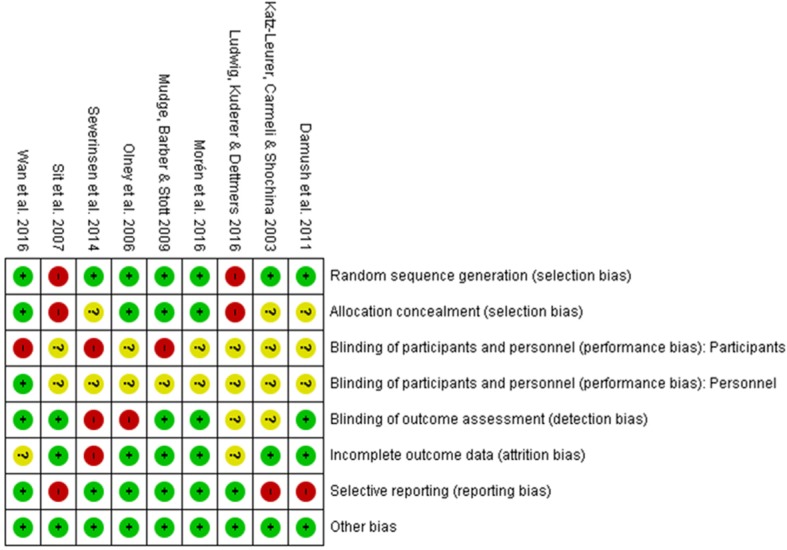
Methods: Seven electronic databases were searched to identify randomised controlled trials (≥3-months follow-up) targeting PA and/or sedentary behaviour in adults with first or recurrent stroke or transient ischaemic attack. The quality assessment framework for RCTs was used to assess risk of bias within and across studies. Interventions were rated as "very", "quite" or "non-promising" based on within- or between-group outcome differences. Intervention descriptions were captured using the TIDieR (Template for Intervention Description and Replication) Checklist. Behaviour change techniques (BCTs) within interventions were coded using the BCT Taxonomy v1, and compared between studies by calculating a promise ratio.
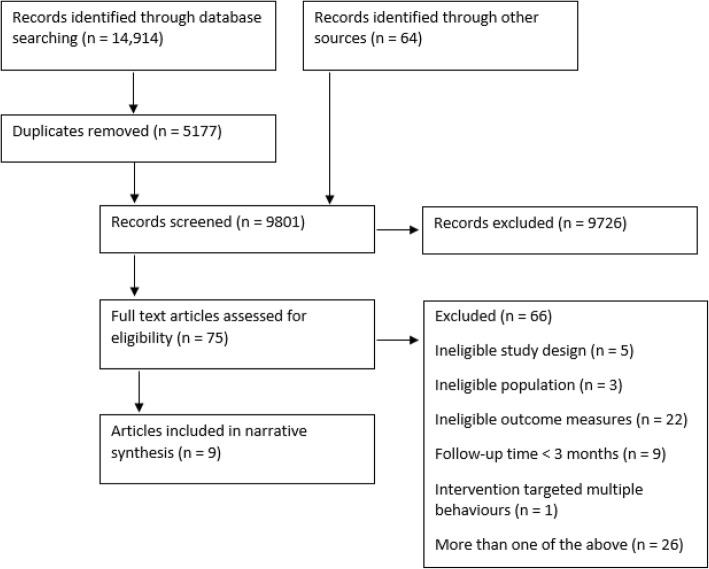
Results: Nine studies fulfilled the review criteria (N = 717 randomised stroke patients) with a high or unclear risk of bias. None of the studies targeted sedentary behaviour. Six studies were very/quite promising (reported increases in PA post-intervention). Studies were heterogeneous in their reporting of participant age, time since stroke, stroke type, and stroke location. Sub-optimal intervention descriptions, treatment fidelity and a lack of standardisation of outcome measures were identified. Face to face and telephone-based self-management programmes were identified as having promise to engage stroke survivors in PA behaviour change. Optimal intensity of contact, interventionist type and time after stroke to deliver interventions was unclear. Nine promising BCTs (ratios ≥2) were identified: information about health consequences; information about social and environmental consequences; goal setting-behaviour; problem-solving; action planning; feedback on behaviour; biofeedback; social support unspecified; and credible source.
Conclusions: Future research would benefit from establishing stroke survivor preferences for mode of delivery, setting and intensity, including measurement of physical activity. Interventions need to justify and utilise a theory/model of behaviour change and explore the optimal combination of promising BCTs within interventions.
Keywords: Behaviour change; Physical activity; Sedentary behaviour; Stroke; Systematic review.
Conflict of interest statement
Ethics approval and consent to participate
Not applicable.
Consent for publication
Not applicable.
Competing interests
The authors declare that they have no competing interests.
Publisher’s Note
Springer Nature remains neutral with regard to jurisdictional claims in published maps and institutional affiliations.
Figures
References
-
- Lee IM, Shiroma EJ, Lobelo F, Puska P, Blair SN, Katzmarzyk PT. Lancet physical activity series working group. Effect of physical inactivity on major non-communicable diseases worldwide: an analysis of burden of disease and life expectancy. Lancet. 2012;380:219–229. doi: 10.1016/S0140-6736(12)61031-9. - DOI - PMC - PubMed
Publication types
MeSH terms
Grants and funding
LinkOut - more resources
Full Text Sources
Medical
