


Macro- and microplastics affect cold-water corals growth, feeding and behaviour
- PMID: 30333567
- PMCID: PMC6192985
- DOI: 10.1038/s41598-018-33683-6
Macro- and microplastics affect cold-water corals growth, feeding and behaviour
Abstract
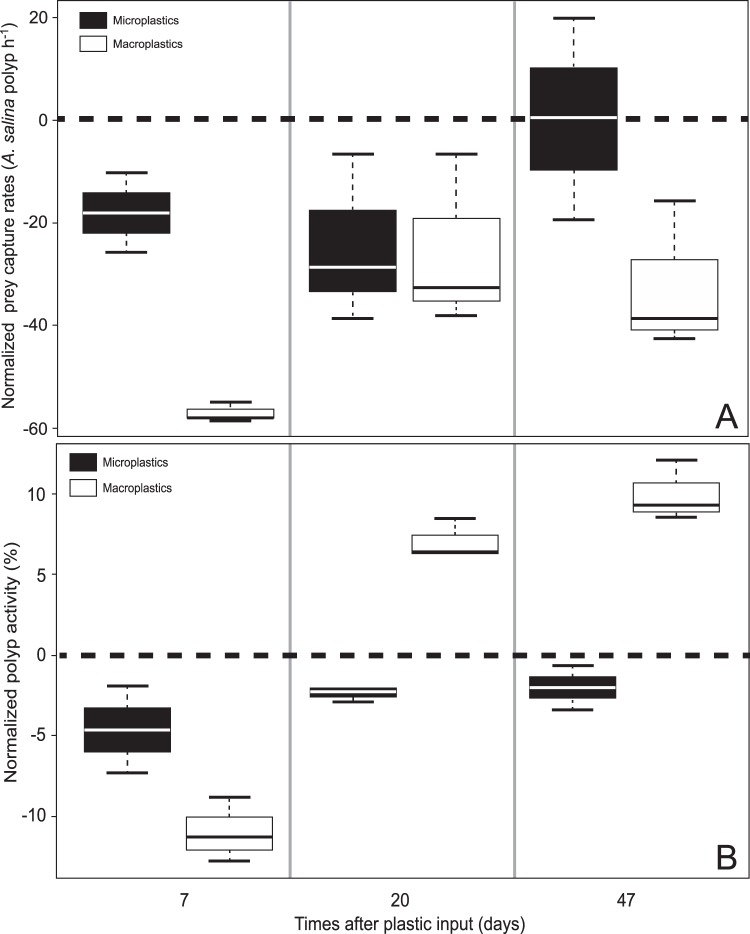
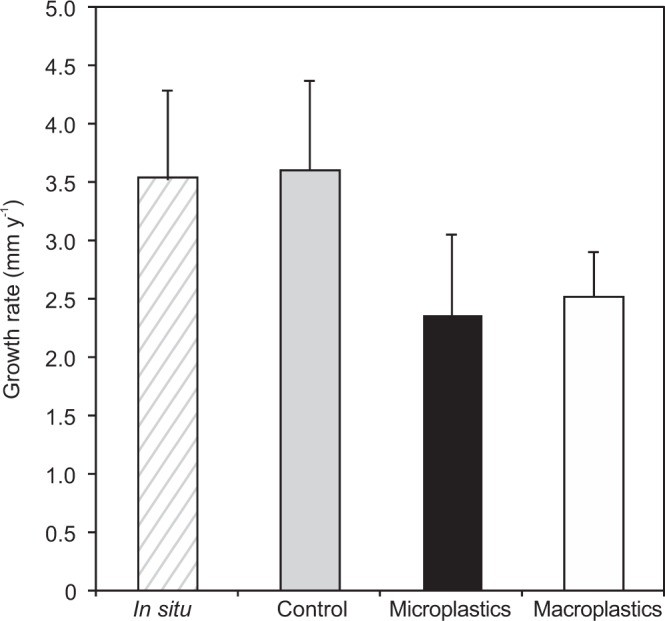
Plastic contamination is now recognized as one of the most serious environmental issues for oceans. Both macro- and microplastic debris are accumulating in surface and deep waters. However, little is known about their impact on deep marine ecosystems and especially on the deep-sea reefs built by emblematic cold-water corals. The aim of this study was to investigate whether plastics affected the growth, feeding and behaviour of the main engineer species, Lophelia pertusa. Our experiments showed that both micro- and macroplastics significantly reduced skeletal growth rates. Macroplastics induced an increased polyp activity but decreased prey capture rates. They acted as physical barriers for food supply, likely affecting energy acquisition and allocation. Inversely, microplastics did not impact polyp behaviour or prey capture rates, but calcification was still reduced compared to control and in situ conditions. The exact causes are still unclear but they might involve possible physical damages or energy storage alteration. Considering the high local accumulation of macroplastics reported and the widespread distribution of microplastics in the world ocean, our results suggest that plastics may constitute a major threat for reef aggradation by inhibiting coral growth, and thus jeopardise the resilience of cold-water coral reefs and their associated biodiversity.
Conflict of interest statement
The authors declare no competing interests.
Figures
References
-
- Thevenon, F., Carroll, C., Sousa, J. Plastic debris in the ocean: The characterization of marine plastics and their environmental impacts, situation analysis report. International Union for Conservation of Nature, 10.2305/IUCN.CH.2014.03.en (2015).
-
- Zampoukas, N. et al. Marine strategy framework directive: task group 10 report: Marine Litter. Publications Office (2010).
Publication types
MeSH terms
Substances
LinkOut - more resources
Full Text Sources
Other Literature Sources
