Review
. 2019 Jan;17(1):51-62.
doi: 10.1038/s41579-018-0098-9.

Developmental roadmap for antimicrobial susceptibility testing systems

Affiliations
Review

Developmental roadmap for antimicrobial susceptibility testing systems

Alex van Belkum et al. Nat Rev Microbiol. 2019 Jan.

Abstract

Antimicrobial susceptibility testing (AST) technologies help to accelerate the initiation of targeted antimicrobial therapy for patients with infections and could potentially extend the lifespan of current narrow-spectrum antimicrobials. Although conceptually new and rapid AST technologies have been described, including new phenotyping methods, digital imaging and genomic approaches, there is no single major, or broadly accepted, technological breakthrough that leads the field of rapid AST platform development. This might be owing to several barriers that prevent the timely development and implementation of novel and rapid AST platforms in health-care settings. In this Consensus Statement, we explore such barriers, which include the utility of new methods, the complex process of validating new technology against reference methods beyond the proof-of-concept phase, the legal and regulatory landscapes, costs, the uptake of new tools, reagent stability, optimization of target product profiles, difficulties conducting clinical trials and issues relating to quality and quality control, and present possible solutions.


Conflict of interest statement

A.v.B., A.M. and W.M.D. are employees of bioMérieux, an international company developing, marketing and selling diagnostic tests, including antimicrobial susceptibility testing. G.L. is an employee of Curetis, a company that is active in the field of infectious disease diagnostics. bioMérieux and Curetis have had no influence on the current more personal account presented in this manuscript. J.P.H. is a partner in the European Union H202-funded project DIAGORAS (www.diagoras.eu), which was established to develop a rapid point-of-care microbiological device. The other authors declare no competing interests.

Figures

Fig. 1
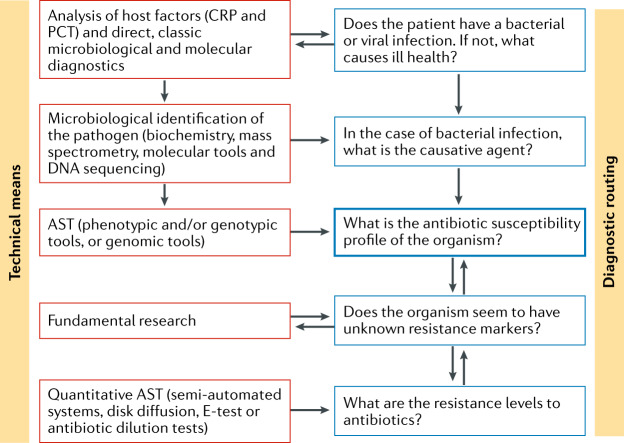
Fig. 1. Triaging infections using diagnostic testing.
Various technical means are available for identifying the causative agents of microbial infections and for generating antibiotic susceptibility profiles, which can inform the suitable course of treatment (diagnostic routing). First, host factors, such as C-reactive protein (CRP), procalcitonin (PCT) and others are analysed to, for instance, distinguish viral from bacterial infection. Following the identification of the causative bacterial pathogen, antimicrobial susceptibility testing (AST) is the next step (except in some specific molecular tests) to generate an antibiotic susceptibility profile. AST ensures that suitable antibiotics are prescribed to a patient. Beyond the outlined routine diagnostic process, there is opportunity to follow up with fundamental research to analyse the presence of novel resistance markers (possibly identifying novel resistance mechanisms) and to determine the resistance levels to the antibiotic.
Fig. 2
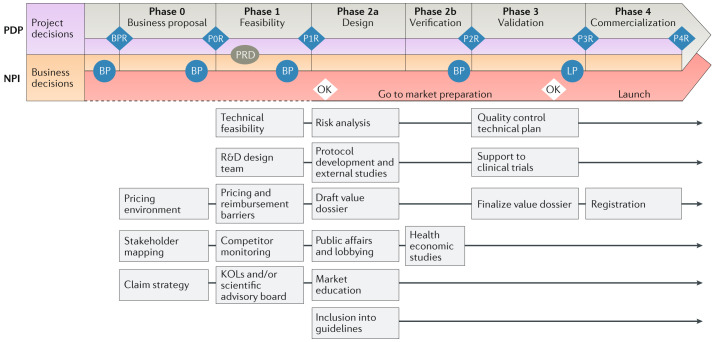
Fig. 2. Schematic overview of the development process for products in the in vitro diagnostics market.
The product development plan (PDP) consists of six distinct phases. The business proposal is composed during phase 0, usually taking results of basic research into consideration. Definition and feasibility studies are performed in phase 1, followed by design and verification in two separate phases (2a and 2b). Phase 3 involves validation, and the final phase, phase 4, comprises commercialization. To streamline this process, there is an initial business plan review (BPR) and subsequent phase reviews (P0R to P4R) after all phases. During phase 1, a product requirements document (PRD) is developed. The PRD takes into account all technical and medical needs this product should ultimately meet. The project decision may still lead to changes in the overall planning. New product introduction (NPI) is a distinct process (in parallel with the PDP) that focuses on the successful introduction of the new product. Whereas the PDP is mostly focused on technical and medical requirements, the NPI also takes customer requirements, market needs, pricing, medical–economic value and other parameters into account. For the NPI, similar reviews are planned during the process, which go straight from the business plan (BP) to launch planning (LP). At two stages, very important development decisions are taken. At the end of phase 1, an ‘OK’ is needed, as well at the end of phase 3. At these stages, labour-intense and costly further development stages will be agreed upon by the development team. The boxes below the planning schemes identify some of the most important parameters that are studied during the various stages of the PDP and NPI. Note that specific investigations and changes are continually being investigated at the various stages. The dashed line implies the possibility for a development process to still be aborted during these phases. From phase 2a onward this is much less likely to happen. KOLs, key opinion leaders; R&D, research and development.

References

    1. European Centre for Disease prevention and Control (ECDC), European Medicine Agency (EMEA). The bacterial challenge: time to react (ECDC, 2009).
    1. Llor C, et al. The STOP-AB trial protocol: efficacy and safety of discontinuing patient antibiotic treatment when physicians no longer consider it necessary. BMJ Open. 2017;7:e015814. - PMC - PubMed
    1. Cangelosi GA, Meschke JS. Dead or alive: molecular assessment of microbial viability. Appl. Environ. Microbiol. 2014;80:5884–5891. - PMC - PubMed
    1. Nault V, et al. Sustained impact of a computer-assisted antimicrobial stewardship intervention on antimicrobial use and length of stay. J. Antimicrob. Chemother. 2017;72:933–940. - PubMed
    1. Holcomb ZE, Tsalik EL, Woods CW, McClain MT. Host-based peripheral blood gene expression analysis for diagnosis of infectious diseases. J. Clin. Microbiol. 2017;55:360–368. - PMC - PubMed

Publication types

Substances