


Tau Pathology in Parkinson's Disease
- PMID: 30333786
- PMCID: PMC6176019
- DOI: 10.3389/fneur.2018.00809
Tau Pathology in Parkinson's Disease
Abstract
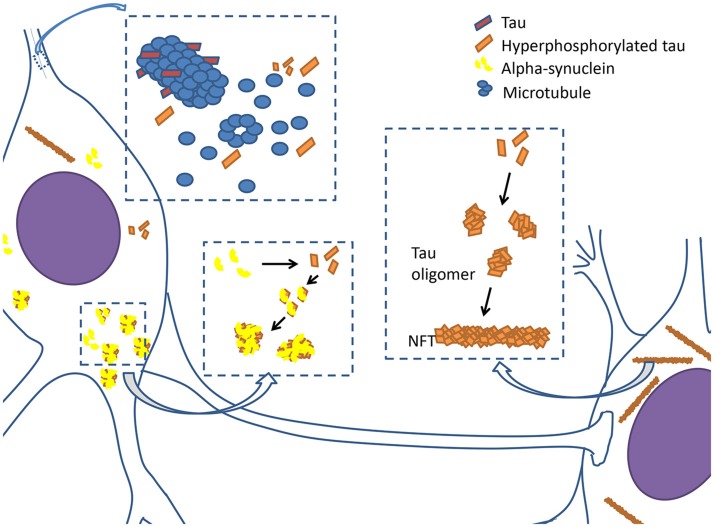
Tau protein-a member of the microtubule-associated protein family-is a key protein involved in many neurodegenerative diseases. Tau pathology in neurodegenerative diseases is characterized by pathological tau aggregation in neurofibrillary tangles (NFTs). Diseases with this typical pathological feature are called tauopathies. Parkinson's disease (PD) was not initially considered to be a typical tauopathy. However, recent studies have demonstrated increasing evidence of tau pathology in PD. A genome-wide association (GWA) study indicated a potential association between tauopathy and sporadic PD. The aggregation and deposition of tau were also observed in ~50% of PD brains, and it seems to be transported from neuron to neuron. The aggregation of NFTs, the abnormal hyperphosphorylation of tau protein, and the interaction between tau and alpha-synuclein may all contribute to the cell death and poor axonal transport observed in PD and Parkinsonism.
Keywords: Parkinson's disease (PD); alpha-synuclien; hyperphosphorylation; tau protein; tauopathy.
Figures
References
-
- Shin RW, Iwaki T, Kitamoto T, Tateishi J. Hydrated autoclave pretreatment enhances tau immunoreactivity in formalin-fixed normal and Alzheimer's disease brain tissues. Lab Invest. (1991) 64:693–702. - PubMed
Publication types
LinkOut - more resources
Full Text Sources
Other Literature Sources
Molecular Biology Databases
