


Influence of Weight Loss on Volumetric Change in Contralateral Breast During 2-Stage Breast Reconstruction
- PMID: 30333899
- PMCID: PMC6166231
Influence of Weight Loss on Volumetric Change in Contralateral Breast During 2-Stage Breast Reconstruction
Abstract
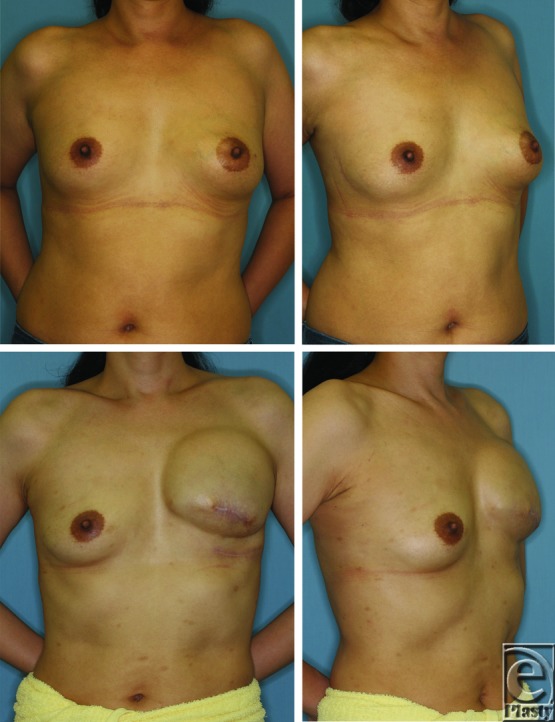
Objective: During 2-stage breast reconstruction in patients with unilateral breast cancer, we sometimes experience cases in which the contralateral breast volume changes greatly. However, few studies have examined volumetric changes in the contralateral breast during 2-stage breast reconstruction. Methods: Changes in contralateral breast volume between the first and second operations were examined in patients who underwent 2-stage unilateral breast reconstruction between February 2013 and August 2016 (123 patients aged 49.1 ± 8.6 years). Influences of age, postoperative treatment, and body weight on volumetric changes in the contralateral breast were statistically analyzed. Results: A positive correlation was observed between changes in body weight and contralateral breast volume (correlation coefficient = 0.218, P = .015). Weight loss was particularly important: all patients who lost more than 3 kg showed decreased contralateral breast volume (P = .010). Age and postoperative treatment had no significant effect on the change in contralateral breast volume. Conclusion: Change in body weight, and massive weight loss in particular, is an important factor for volumetric changes in the contralateral breast during 2-stage unilateral breast reconstruction.
Keywords: body weight; breast reconstruction; contralateral breast; volumetric change; weight loss.
Figures



References
-
- Ishii N, Ando J, Harao M, et al. Decreased contralateral breast volume after mastectomy, adjuvant chemotherapy, and anti-estrogen therapy, in particular in breasts with high density. J Plast Reconstr Aesthet Surg. 2017;70:1363–8. - PubMed
-
- Tepper OM, Unger JG, Small KH, et al. Mammometrics: the standardization of aesthetic and reconstructive breast surgery. Plast Reconstr Surg. 2010;125:393–400. - PubMed
LinkOut - more resources
Full Text Sources