


Borrowing From Nature: Biopolymers and Biocomposites as Smart Wound Care Materials
- PMID: 30333972
- PMCID: PMC6176001
- DOI: 10.3389/fbioe.2018.00137
Borrowing From Nature: Biopolymers and Biocomposites as Smart Wound Care Materials
Abstract
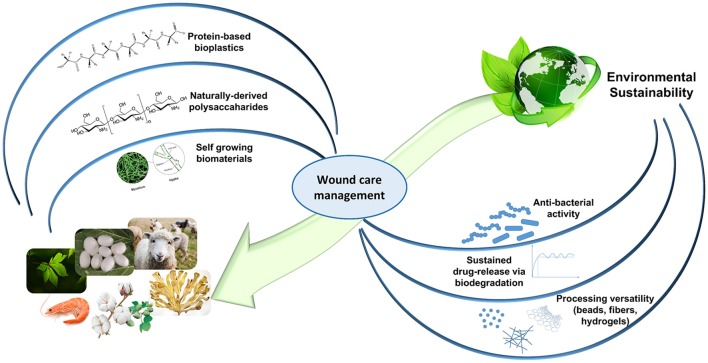
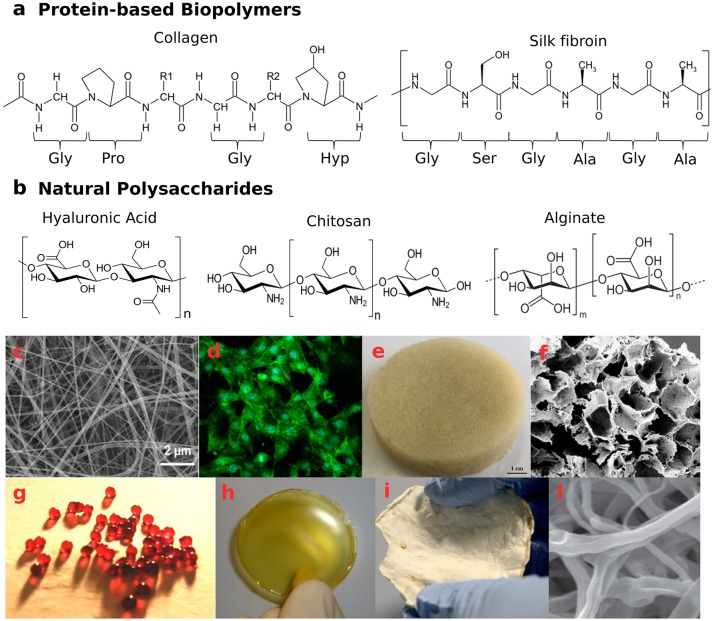
Wound repair is a complex and tightly regulated physiological process, involving the activation of various cell types throughout each subsequent step (homeostasis, inflammation, proliferation, and tissue remodeling). Any impairment within the correct sequence of the healing events could lead to chronic wounds, with potential effects on the patience quality of life, and consequent fallouts on the wound care management. Nature itself can be of inspiration for the development of fully biodegradable materials, presenting enhanced bioactive potentialities, and sustainability. Naturally-derived biopolymers are nowadays considered smart materials. They provide a versatile and tunable platform to design the appropriate extracellular matrix able to support tissue regeneration, while contrasting the onset of adverse events. In the past decades, fabrication of bioactive materials based on natural polymers, either of protein derivation or polysaccharide-based, has been extensively exploited to tackle wound-healing related problematics. However, in today's World the exclusive use of such materials is becoming an urgent challenge, to meet the demand of environmentally sustainable technologies to support our future needs, including applications in the fields of healthcare and wound management. In the following, we will briefly introduce the main physico-chemical and biological properties of some protein-based biopolymers and some naturally-derived polysaccharides. Moreover, we will present some of the recent technological processing and green fabrication approaches of novel composite materials based on these biopolymers, with particular attention on their applications in the skin tissue repair field. Lastly, we will highlight promising future perspectives for the development of a new generation of environmentally-friendly, naturally-derived, smart wound dressings.
Keywords: alginate; antibacterial; biomimetic; chitosan; hyaluronic acid; keratin; silk fibroin; wound healing.
Figures
References
-
- Aluigi A., Varesano A., Montarsolo A., Vineis C., Ferrero F., Mazzuchetti G., et al. (2007). Electrospinning of keratin/poly(ethylene oxide) blend nanofibers. J. Appl. Polym. Sci. 104, 863–870. 10.1002/app.25623 - DOI
-
- Aluigi A., Vineis C., Varesano A., Mazzuchetti G., Ferrero F., Tonin C. (2008). Structure and properties of keratin/PEO blend nanofibres. Eur. Polym. J. 44, 2465–2475. 10.1016/j.eurpolymj.2008.06.004 - DOI
Publication types
LinkOut - more resources
Full Text Sources
Miscellaneous
