


Kidney Cancer Incidence in California: End of the Trend?
- PMID: 30334007
- PMCID: PMC6179112
- DOI: 10.3233/KCA-170005
Kidney Cancer Incidence in California: End of the Trend?
Abstract
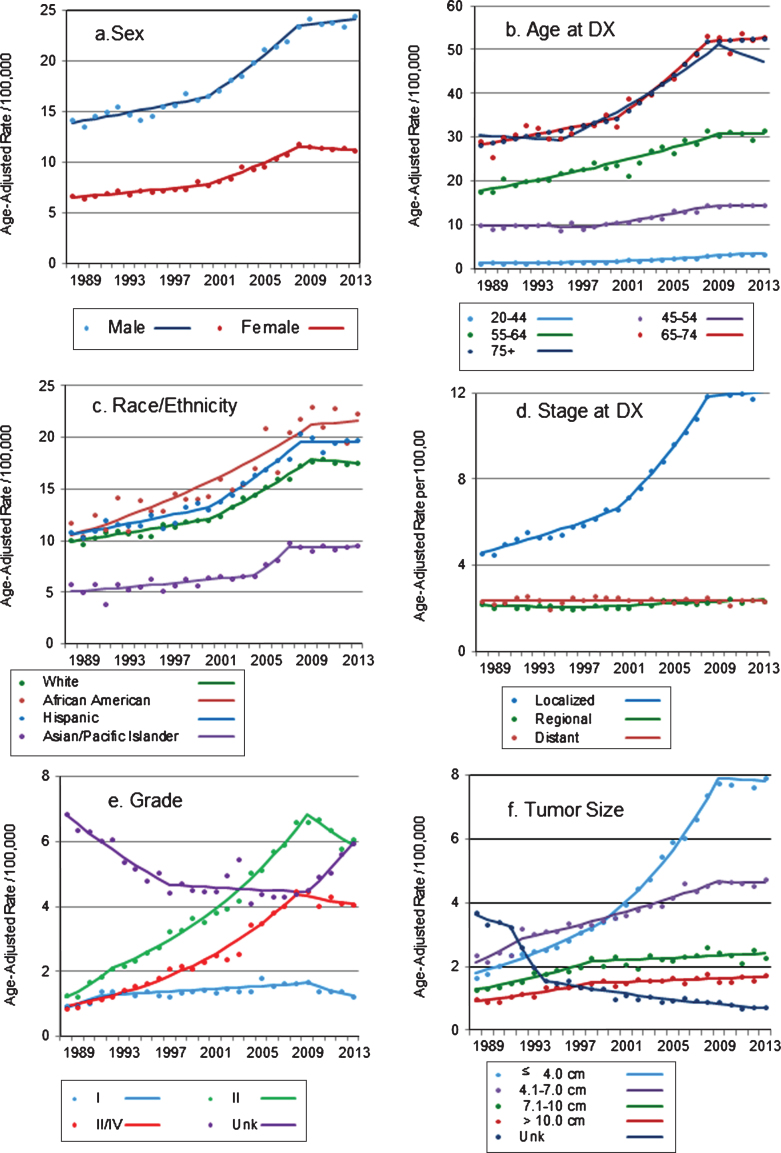
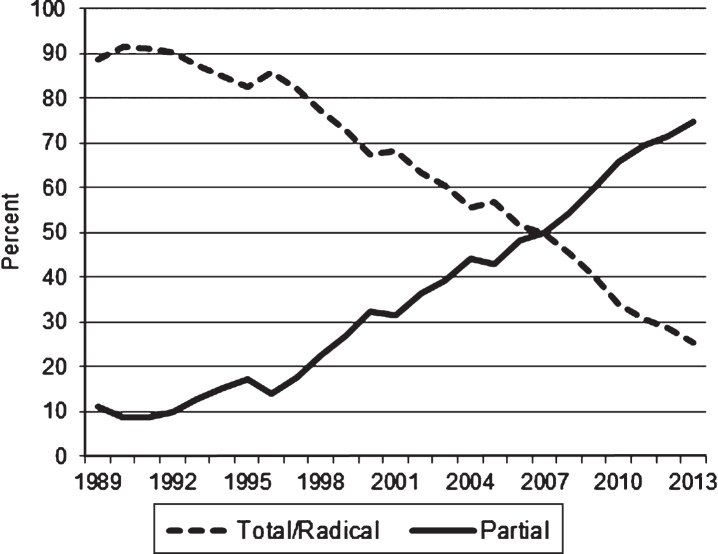
Background and Objective: Since the 1990s, multiple studies have reported on an increased incidence of renal cell carcinomas (RCC), which has been considered incidental to the high use of abdominal diagnostic imaging. This population-based study used data from the California Cancer Registry to (i) update trends in RCC incidence and mortality by several tumor and demographic characteristics after reports of decreased use of diagnostic imaging in recent years, and (ii) examine changes in surgical treatment for early-stage RCC. Methods: Records of patients diagnosed with RCC from 1988 through 2013 and mortality data from the same period were examined. Joinpoint regression was used to estimate annual percent changes in age-adjusted RCC incidence and mortality rates, stratified by sex, race/ethnicity, stage at diagnosis, grade, and tumor size. Trends in the proportion of partial or total/radical nephrectomies were evaluated by Cochran-Armitage tests. Results: A total of 77,363 incident cases of RCC and 28,590 deaths were evaluated. While mortality rates significantly decreased, the incidence of small localized RCC increased in virtually all groups examined after the mid-1990s until 2008-2009, when incidence trends stabilized in all groups concomitant with a decrease in imaging. The proportion of partial nephrectomies among patients with small localized tumors increased from 13.8% in 1988 to 74.6% in 2013. Conclusions: Earlier trends in RCC were consistent with the incidental discovery of small tumors. In parallel with the increase in early-stage RCC, the use of partial nephrectomies increased markedly. Following the decreased use of advanced diagnostic imaging, the trend of increasing RCC incidence appears to have ended in California.
Keywords: Kidney cancer; Renal Cell Carcinoma; incidence; mortality; trends.
Figures
References
-
- California Cancer Registry: Annual Statistical Tables by Site. http://www.ccrcal.org/Reports_and_Factsheets/Annual_Statistical_Tables_b.... Accessed May 20, 2016.
-
- Chow WH, et al. Obesity and risk of renal cell cancer. CancerEpidemiol Biomarkers Prev 1996;5(1):17–21. - PubMed
-
- Decastro GJ, McKiernan JM. Epidemiology, clinical staging, and presentation of renal cell carcinoma. Urol Clin North Am 2008;35(4):581–92; vi. - PubMed