


Self-management of pain and depression in adults with spinal cord injury: A scoping review
- PMID: 30335601
- PMCID: PMC7241513
- DOI: 10.1080/10790268.2018.1523776
Self-management of pain and depression in adults with spinal cord injury: A scoping review
Abstract
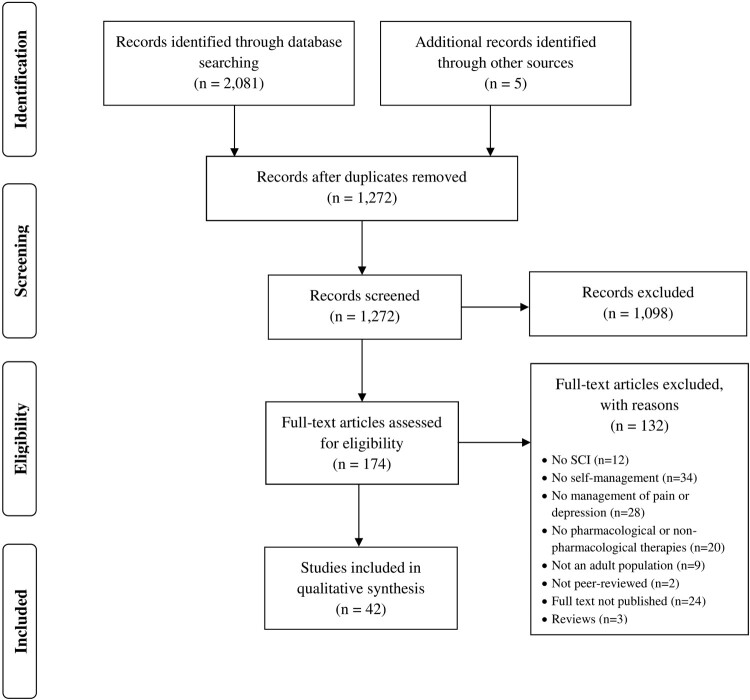
Context: Pain and depression are two prevalent secondary complications associated with spinal cord injury (SCI) that negatively impact health and well-being. Self-management strategies are growing in popularity for helping people with SCI to cope with their pain and depression. However, there is still a lack of research on which approaches are best suited for this population.Objective: The aim of this scoping review was to determine what is known about the self-management of pain and depression through the use of pharmacological and non-pharmacological therapies in adults with SCI.Methods: Seven electronic databases were searched for articles published between January 1, 1990 and June 13, 2017. Grey literature was searched and additional articles were identified by manually searching the reference lists of included articles.Results: Overall, forty-two articles met the inclusion criteria; with the majority reporting on the self-management of pain, rather than on depression or on both complications. Non-pharmacological interventions were more likely to include self-management strategies than pharmacological interventions. A limited number of studies included all of the core self-management tasks and skills.Conclusions: There are significant knowledge gaps on effective self-management interventions for pain and depression post-SCI. There is a need to develop interventions that are multi-faceted, which include both pharmacological and non-pharmacological therapies to address multimorbidity.
Keywords: Adaptation; Depression; Pain; Psychological; Self care; Self-management; Spinal cord injuries.
Figures
References
-
- Fatehi D, Naleini F, Salehi M, Afshari D, Mirfendereski SAM, Farzizadeh M, et al. Traumatic spinal cord injury; theranostic applications of advanced MRI techniques. Biomed Pharmacol J 2015;8(2):891–903.
-
- Marino RJ, Barros T, Biering-Sorensen F, Burns SP, Donovan WH, Graves DE, et al. International standards for neurological classification of spinal cord injury. J Spinal Cord Med 2003;26(sup1):S50–6. - PubMed
-
- Crewe N, Krause J.. Medical, Psychosocial and Vocational Aspects of Disability. 3 ed. 2009:282–300.
-
- World Health Organization . Spinal cord injury (Fact Sheet N°384) 2013. Available from http://www.who.int/mediacentre/factsheets/fs384/en/.
-
- SCI Ontario . What is an SCI? 2014. Available from https://sciontario.org/support-services/resources/living-with-an-sci/wha....
Publication types
MeSH terms
Grants and funding
LinkOut - more resources
Full Text Sources
Medical
Miscellaneous
