


The limits of simple implementation intentions: Evidence from a field experiment on making plans to exercise
- PMID: 30336306
- PMCID: PMC7872013
- DOI: 10.1016/j.jhealeco.2018.09.002
The limits of simple implementation intentions: Evidence from a field experiment on making plans to exercise
Abstract
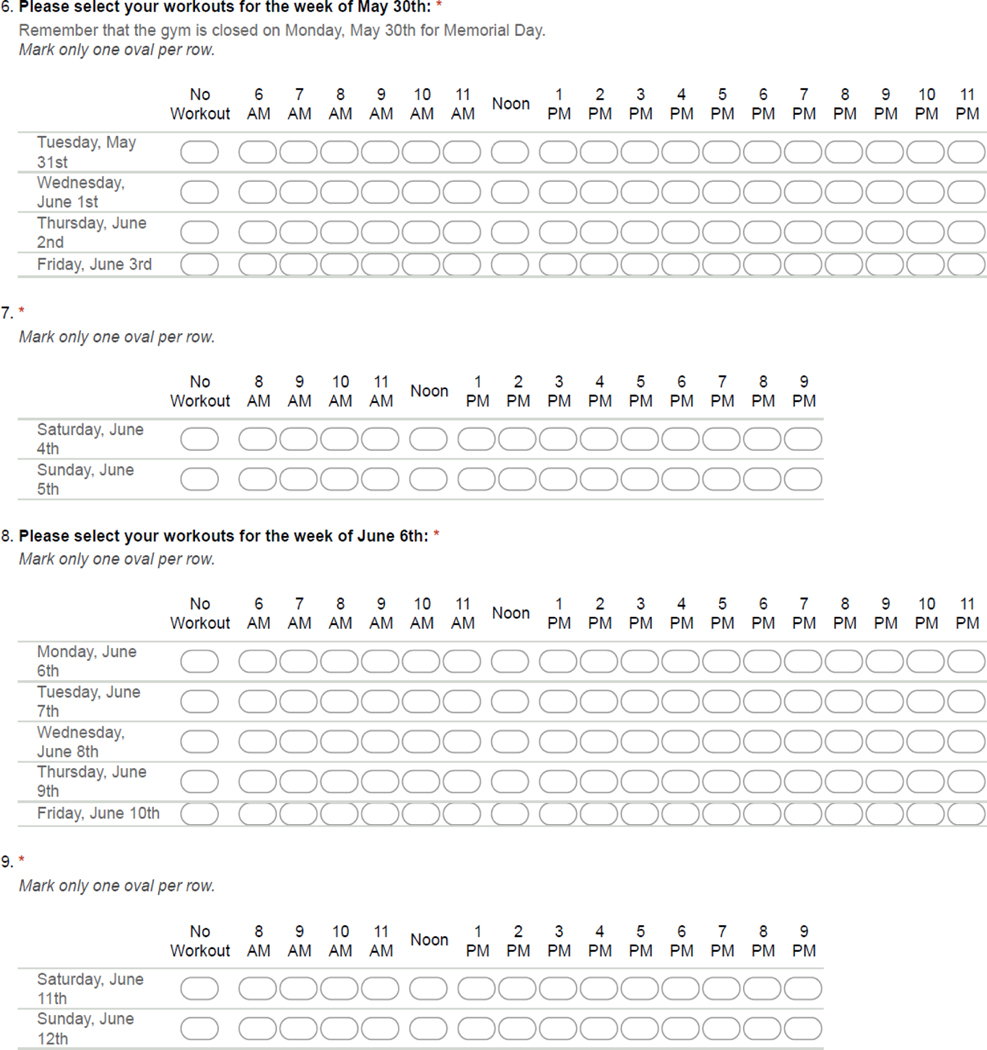
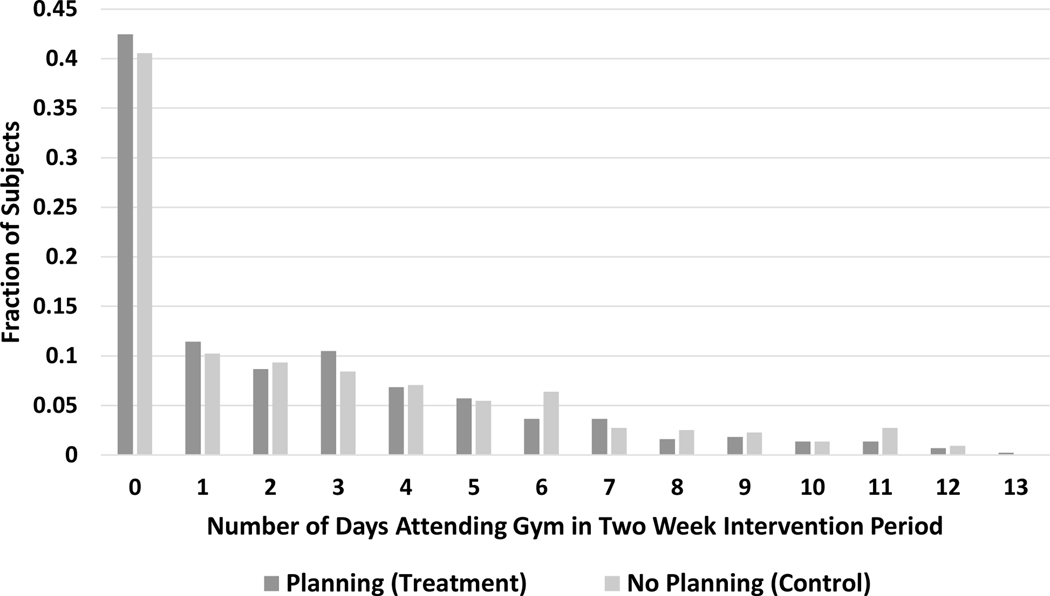
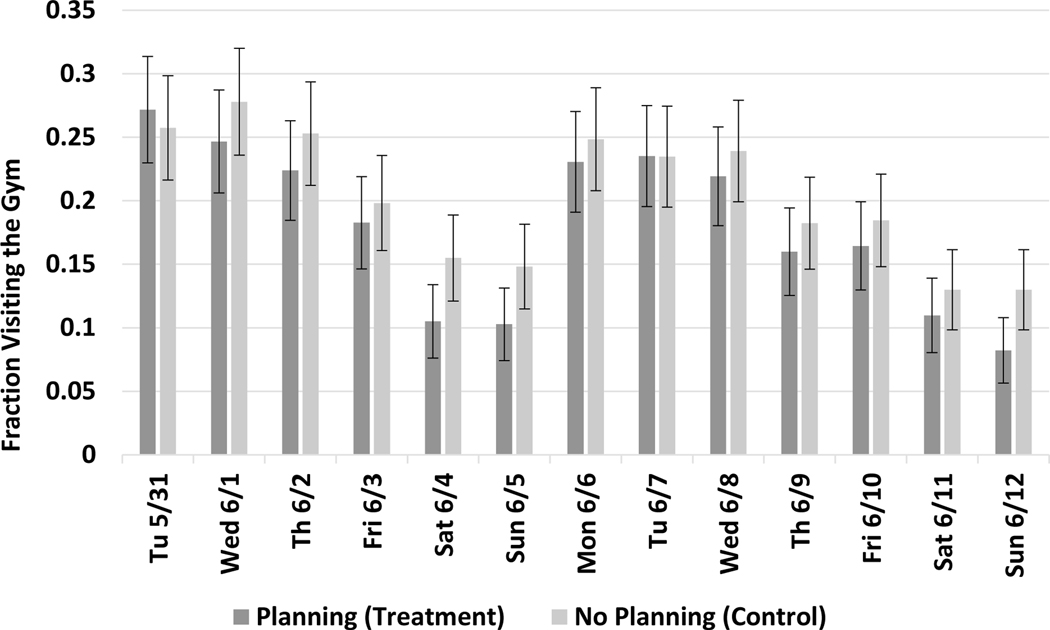
Recent large-scale randomized experiments find that helping people form implementation intentions by asking when and where they plan to act increases one-time actions, such as vaccinations, preventative screenings and voting. We investigate the effect of a simple scalable planning intervention on a repeated behavior using a randomized design involving 877 subjects at a private gym. Subjects were randomized into i) a treatment group who selected the days and times they intended to attend the gym over the next two weeks or ii) a control group who instead recorded their days of exercise in the prior two weeks. In contrast to recent studies, we find that the planning intervention did not have a positive effect on behavior. We observe a tightly estimated null effect even though the majority of subjects believed that planning is helpful and despite clear evidence that they engaged with the planning process.
Keywords: Behavioral economics; Exercise; Health behaviors; Implementation intentions; Nudge; Physical activity; Planning.
Copyright © 2018 Elsevier B.V. All rights reserved.
Figures
References
-
- Acland Dan and Levy Matthew R.. (2015). Naiveté, Projection Bias, and Habit Formation in Gym Attendance. Management Science, 61(1): 146–160.
-
- Altmann S, & Traxler C. (2014). Nudges at the Dentist. European Economic Review, 72, 19–38.
-
- Bitterly TB, Mislavsky R, Dai H, & Milkman KL. (2015). Want-should conflict: A synthesis of past research. In Hoffman W. and Nordgren L. (Eds), The Psychology of Desire.
-
- Busso M, Cristia J, & Humpage S. (2015). Did you get your shots? Experimental evidence on the role of reminders. Journal of Health Economics, 44, 226–237. - PubMed
