


Extensive colonic pneumatosis in a patient on adjuvant chemotherapy after right colectomy for primary terminal ileum lymphoma: A decision-making process between surgical and non-surgical management
- PMID: 30336386
- PMCID: PMC6197732
- DOI: 10.1016/j.ijscr.2018.09.050
Extensive colonic pneumatosis in a patient on adjuvant chemotherapy after right colectomy for primary terminal ileum lymphoma: A decision-making process between surgical and non-surgical management
Abstract
Introduction: Pneumatosis intestinalis is a rare condition that may be idiopathic or a sign of numerous underlying gastrointestinal, pulmonary and systemic diseases.
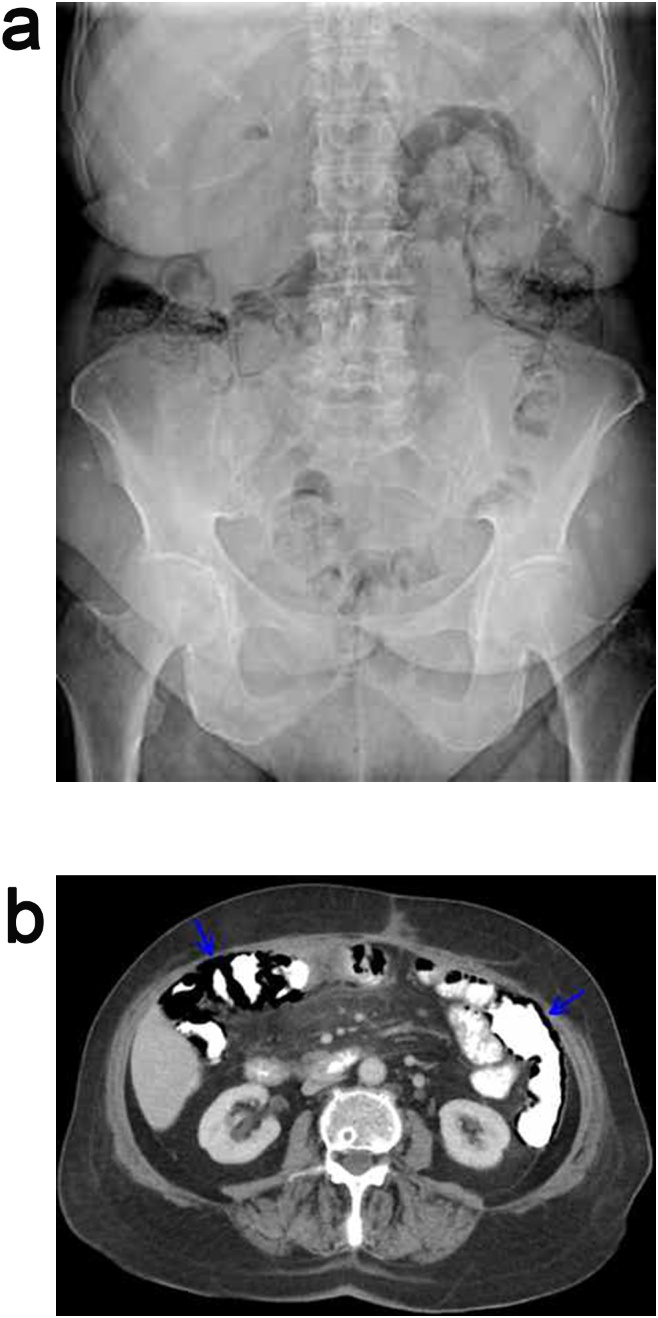
Presentation of case: Herein, the case an otherwise-healthy 82-year-old female patient with vague abdominal pain due to total colonic pneumatosis 20 days after completion of R-CHOP chemotherapy for a stage IIE primary non-Hodgkin's lymphoma of the terminal ileum submitted to right hemicolectomy and ileal resection 6 months previously is presented. As no evidence of intramural bowel gas was present on pre-operative CT, pneumatosis coli considered to be secondary. As no worrisome clinical, laboratory and imaging findings were present, pneumatosis coli seemed to be benign. As no other etiologic factors identified, pneumatosis coli considered to be chemotherapy-induced. The patient treated conservatively with cessation of enteral nutrition and broad spectrum antibiotics with uneventfull recovery.
Discussion: Pneumatosis intestinalis can be benign or life-threatening. Bowel obstruction, perforation, ischemia and severe colitis represent the most life-threatening causes. In clinical practice it is often challenging to distinguish between life-threatening and benign pneumatosis intestinalis, a decision which should be based on the presence or absence of worrisome clinical, laboratory and imaging findings.
Conclusion: In analogous cases, the main dilemma for the physicians is to identify whether surgical intervention is required or not. Given the potential severity of pneumatosis intestinalis, early diagnosis and recognition of its severity is critical as it would dictate surgical or non-surgical management.
Keywords: Case report; Chemotherapy; Pneumatosis coli; Pneumatosis intestinalis; Primary intestinal lymphoma.
Copyright © 2018 The Authors. Published by Elsevier Ltd.. All rights reserved.
Figures
References
-
- Agha R.A., Fowler A.J., Saeta A., Barai I., Rajmohan S., Orgill D.P., SCARE Group The SCARE statement: consensus-based surgical case report guidelines. Int. J. Surg. 2016;34:180–186. - PubMed
-
- Lassandro F., Valente T., Rea G., Lassandro G., Golia E., Brunese L., Laghi A. Imaging assessment and clinical significance of pneumatosis in adult patients. Radiol. Med. 2015;120:96–104. - PubMed
-
- Braumann C., Menenakos C., Jacobi C.A. Pneumatosis intestinalis—a pitfall for surgeons? Scand. J. Surg. 2005;94:47–50. - PubMed
-
- ESMO Lymphoma Consensus Conference Panel Members ESMO consensus conference on malignant lymphoma: general perspectives and recommendations for the clinical management of the elderly patient with malignant lymphoma. Ann. Oncol. 2018;29:544–562. - PubMed
-
- ESMO Guidelines Committee Extranodal diffuse large B-cell lymphoma (DLBCL) and primary mediastinal B-cell lymphoma: ESMO clinical practice guidelines for diagnosis, treatment and follow-up. Ann. Oncol. 2016;27:91–102. - PubMed
LinkOut - more resources
Full Text Sources
Research Materials
