


Emotional Prosody Processing in Schizophrenic Patients: A Selective Review and Meta-Analysis
- PMID: 30336573
- PMCID: PMC6210777
- DOI: 10.3390/jcm7100363
Emotional Prosody Processing in Schizophrenic Patients: A Selective Review and Meta-Analysis
Abstract
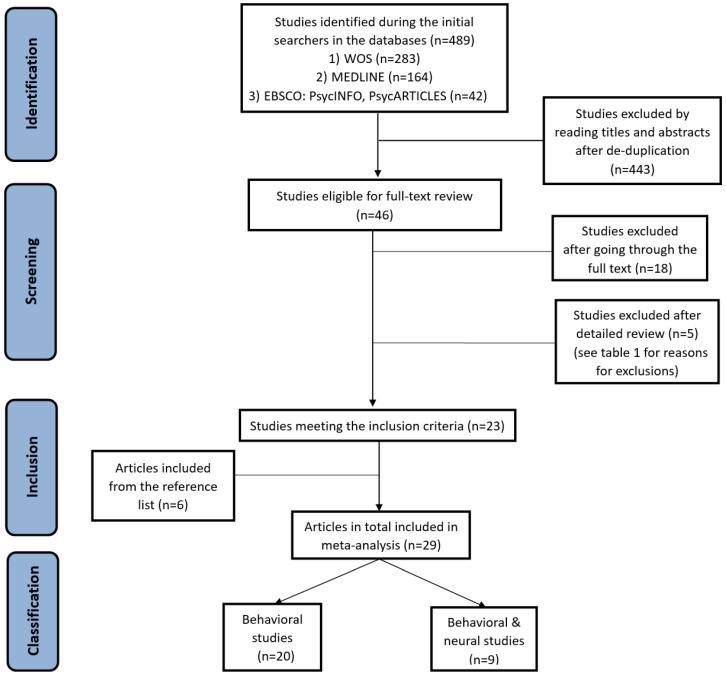
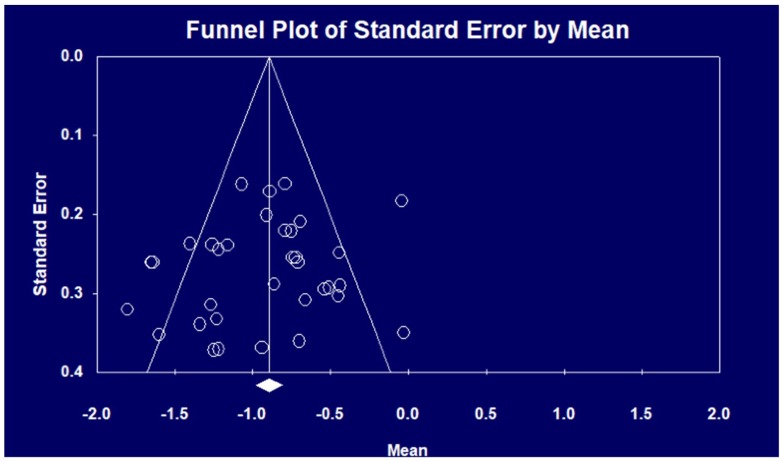
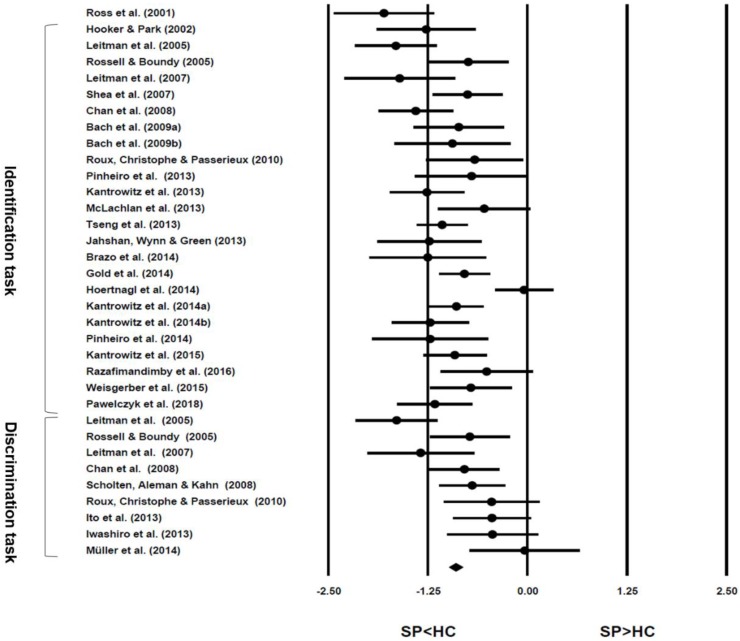
Emotional prosody (EP) has been increasingly recognized as an important area of schizophrenic patients' dysfunctions in their language use and social communication. The present review aims to provide an updated synopsis on emotional prosody processing (EPP) in schizophrenic disorders, with a specific focus on performance characteristics, the influential factors and underlying neural mechanisms. A literature search up to 2018 was conducted with online databases, and final selections were limited to empirical studies which investigated the prosodic processing of at least one of the six basic emotions in patients with a clear diagnosis of schizophrenia without co-morbid diseases. A narrative synthesis was performed, covering the range of research topics, task paradigms, stimulus presentation, study populations and statistical power with a quantitative meta-analytic approach in Comprehensive Meta-Analysis Version 2.0. Study outcomes indicated that schizophrenic patients' EPP deficits were consistently observed across studies (d = -0.92, 95% CI = -1.06 < δ < -0.78), with identification tasks (d = -0.95, 95% CI = -1.11 < δ < -0.80) being more difficult to process than discrimination tasks (d = -0.74, 95% CI = -1.03 < δ < -0.44) and emotional stimuli being more difficult than neutral stimuli. Patients' performance was influenced by both participant- and experiment-related factors. Their social cognitive deficits in EP could be further explained by right-lateralized impairments and abnormalities in primary auditory cortex, medial prefrontal cortex and auditory-insula connectivity. The data pointed to impaired pre-attentive and attentive processes, both of which played important roles in the abnormal EPP in the schizophrenic population. The current selective review and meta-analysis support the clinical advocacy of including EP in early diagnosis and rehabilitation in the general framework of social cognition and neurocognition deficits in schizophrenic disorders. Future cross-sectional and longitudinal studies are further suggested to investigate schizophrenic patients' perception and production of EP in different languages and cultures, modality forms and neuro-cognitive domains.
Keywords: emotional prosody processing; meta-analysis; schizophrenia.
Conflict of interest statement
The authors declare no conflict of interest. The funders had no role in the design of the study; in the collection, analyses, or interpretation of data; in the writing of the manuscript, and in the decision to publish the results.
Figures
References
-
- World Health Organization Schizophrenia Fact Sheet. [(accessed on 15 October 2018)];2018 Available online: www.who.int/news-room/fact-sheets/detail/schizophrenia.
Publication types
Grants and funding
LinkOut - more resources
Full Text Sources
