


Effect of Consumption Heated Oils with or without Dietary Cholesterol on the Development of Atherosclerosis
- PMID: 30336600
- PMCID: PMC6213572
- DOI: 10.3390/nu10101527
Effect of Consumption Heated Oils with or without Dietary Cholesterol on the Development of Atherosclerosis
Erratum in
-
Correction: Che Idris et al. Effect of Consumption Heated Oils with or without Dietary Cholesterol on the Development of Atherosclerosis. Nutrients 2018, 10, 1527.Nutrients. 2018 Nov 30;10(12):1839. doi: 10.3390/nu10121839. Nutrients. 2018. PMID: 30513649 Free PMC article.
Abstract
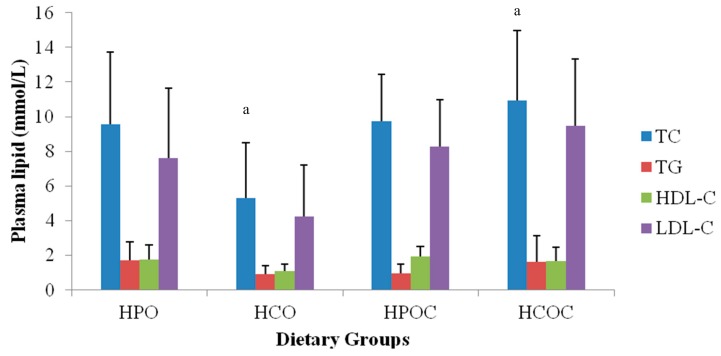
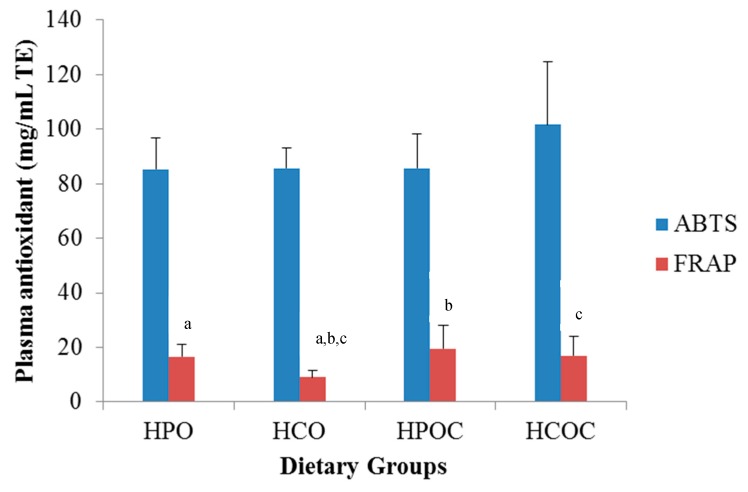
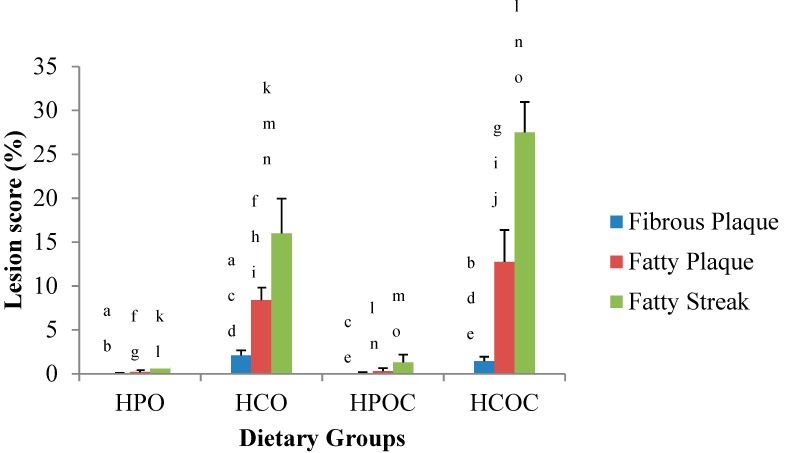
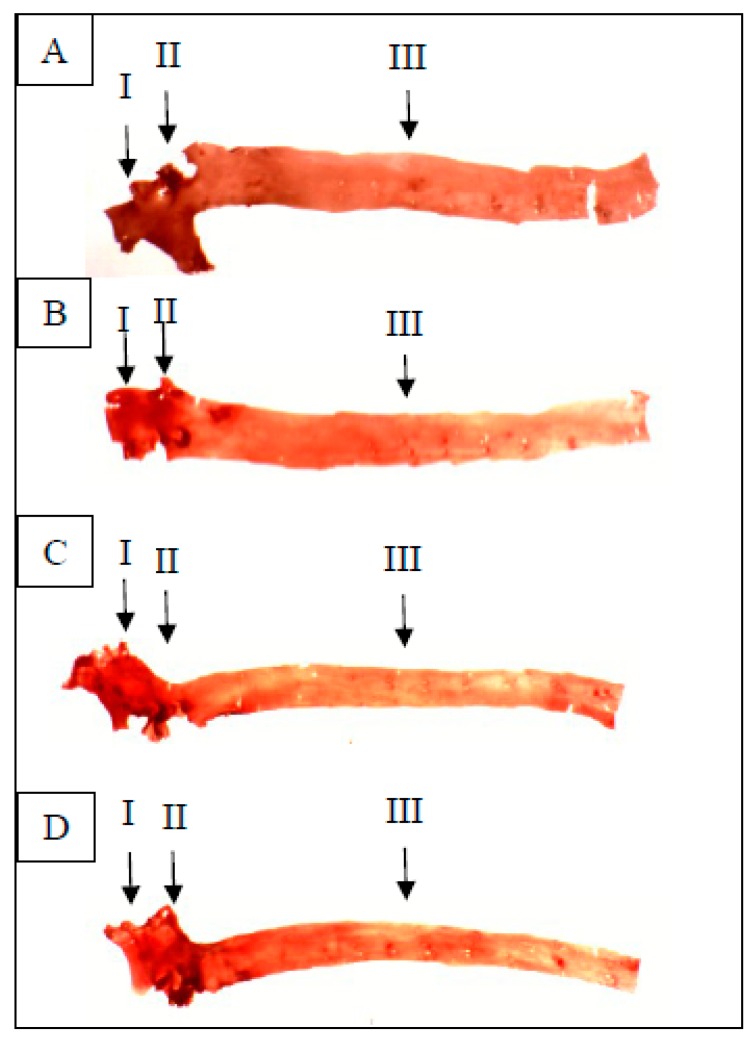
Heating oils and fats for a considerable length of time results in chemical reactions, leading to the aggravation of a free radical processes, which ultimately contributes to atherosclerosis. Our study focused on elucidating the effect of feeding heated oils with or without dietary cholesterol on the development of atherosclerosis in rabbits. We heated palm olein and corn oil at 180 °C for 18 h and 9 h per day, respectively, for two consecutive days. Next, 20 male rabbits were divided into four groups and fed the following diet for 12 weeks: (i) heated palm olein (HPO); (ii) HPO with cholesterol (HPOC); (iii) heated corn oil (HCO); and (iv) HCO with cholesterol (HCOC). Plasma total cholesterol (TC) was significantly lower in the HCO group compared to the HCOC group. Atherosclerotic lesion scores for both fatty plaques and fatty streaks were significantly higher in the HCO and HCOC groups as compared to the HPO and HPOC groups. Additionally, fibrous plaque scores were also higher in the HCO and HCOC groups as compared to the HPO and HPOC groups. These results suggest that heated palm oil confers protection against the onset of atherosclerosis compared to heated polyunsaturated oils in a rabbit model.
Keywords: atherosclerosis; cholesterol; corn oil; heated fats; palm olein.
Conflict of interest statement
The authors declare no conflict of interest.
Figures
References
-
- Hausding M., Jurk K., Daub S., Kröller-Schön S., Stein J., Schwenk M., Oelze M., Mikhed Y., Kerahrodi J.G., Kossmann S., et al. CD40L contributes to angiotensin II-induced pro-thrombotic state, vascular inflammation, oxidative stress and endothelial dysfunction. Basic Res. Cardiol. 2013;108:386. doi: 10.1007/s00395-013-0386-5. - DOI - PubMed
MeSH terms
Substances
Grants and funding
LinkOut - more resources
Full Text Sources
Medical
