


Inhibition of store-operated channels by carboxyamidotriazole sensitizes ovarian carcinoma cells to anti-BclxL strategies through Mcl-1 down-regulation
- PMID: 30338034
- PMCID: PMC6188062
- DOI: 10.18632/oncotarget.26084
Inhibition of store-operated channels by carboxyamidotriazole sensitizes ovarian carcinoma cells to anti-BclxL strategies through Mcl-1 down-regulation
Abstract
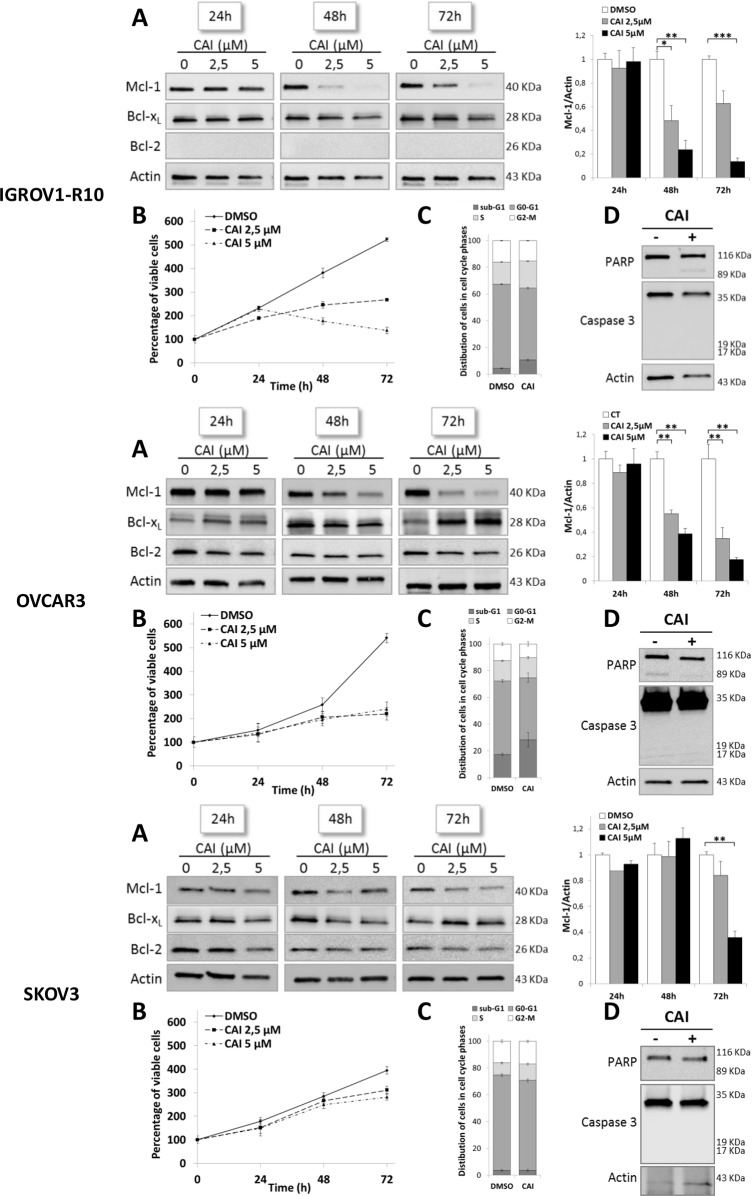
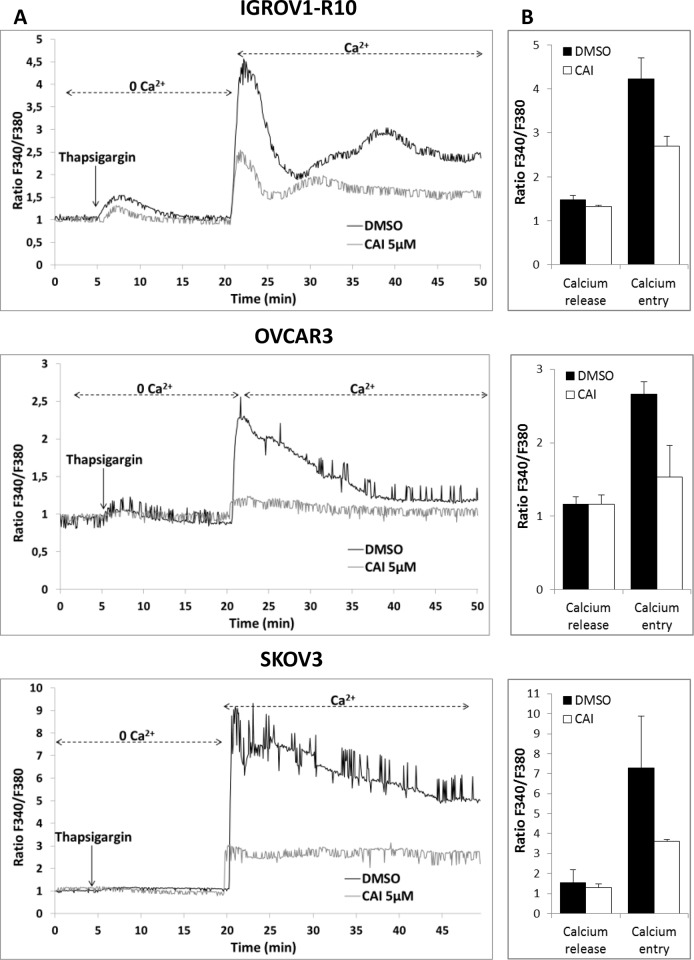
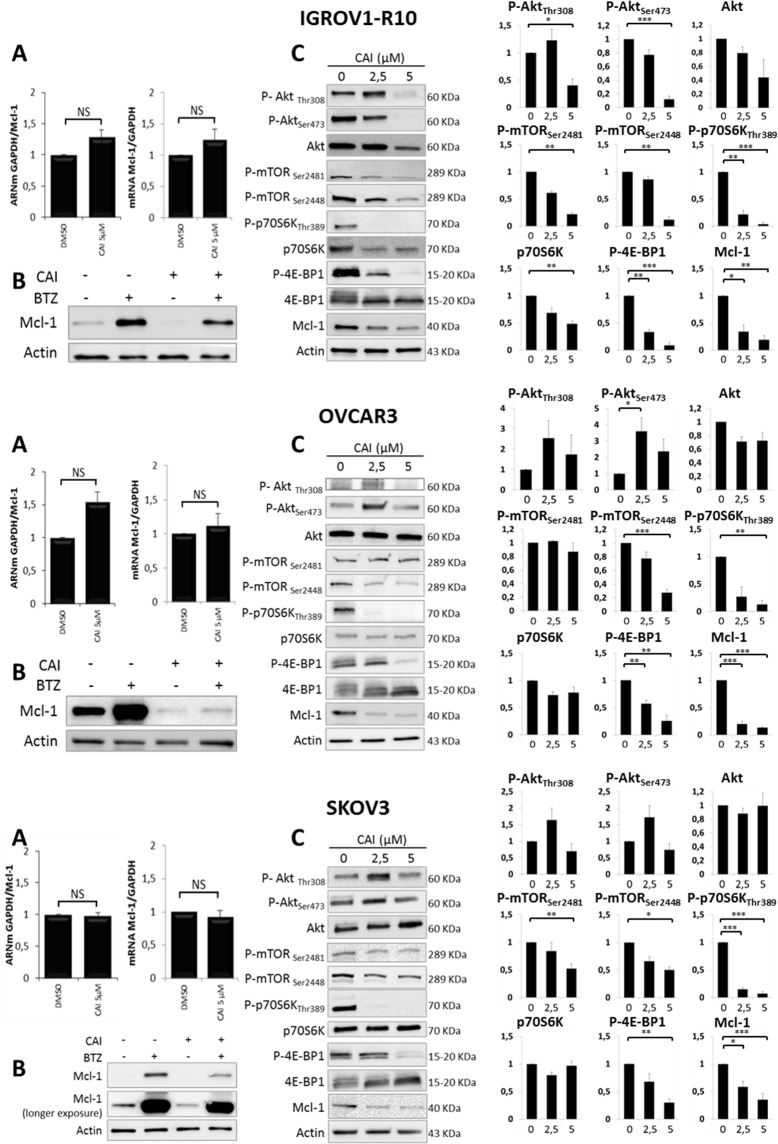
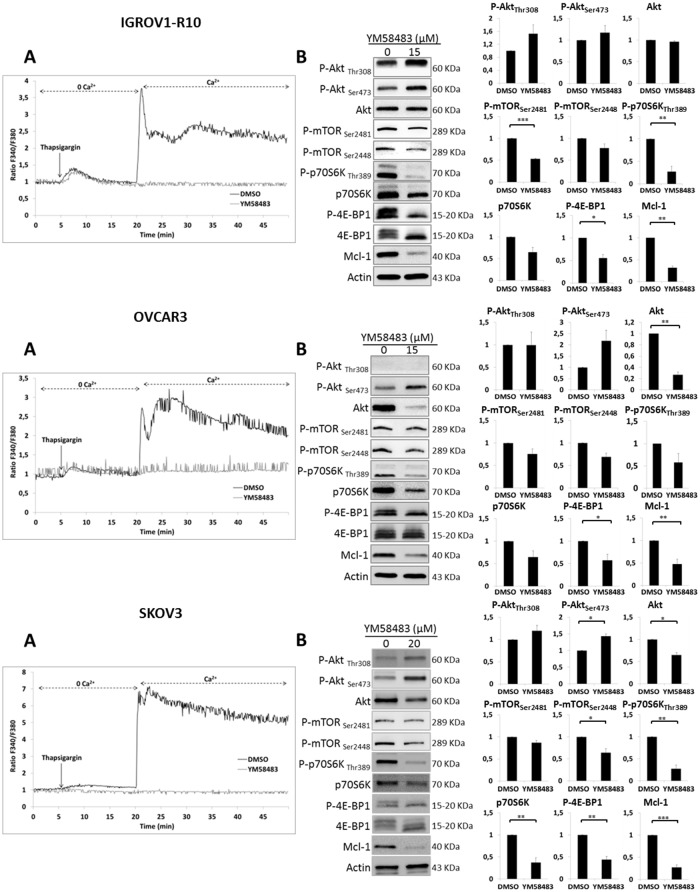
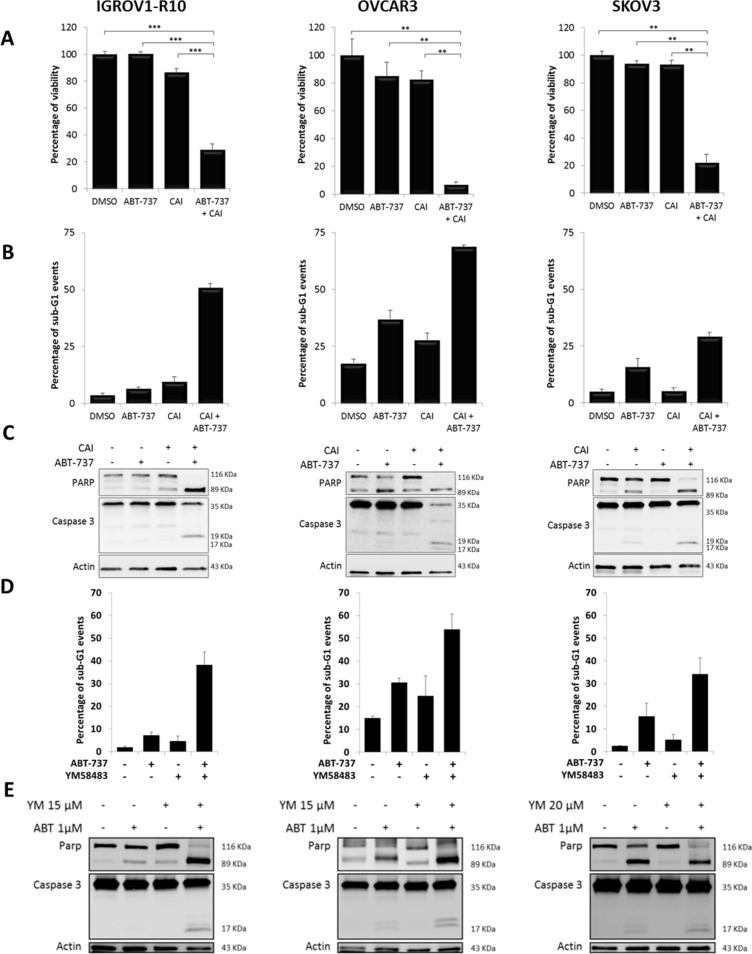
The anti-apoptotic proteins Bcl-xL and Mcl-1 have been identified to play a pivotal role in apoptosis resistance in ovarian cancer and constitute key targets for innovative therapeutic strategies. Although BH3-mimetics (i.e. ABT-737) potently inhibit Bcl-xL activity, targeting Mcl-1 remains a hurdle to the success of these strategies. Calcium signaling is profoundly remodeled during carcinogenesis and was reported to activate the signaling pathway controlling Mcl-1 expression. In this context, we investigated the effect of carboxyamidotriazole (CAI), a calcium channel inhibitor used in clinical trials, on Mcl-1 expression. CAI had an anti-proliferative effect on ovarian carcinoma cell lines and strongly down-regulated Mcl-1 expression. It inhibited store-operated calcium entry (SOCE) and Mcl-1 translation through mTORC1 deactivation. Moreover, it sensitized ovarian carcinoma cells to anti-Bcl-xL strategies as their combination elicited massive apoptosis. Its effect on mTORC1 and Mcl-1 was mimicked by the potent SOCE inhibitor, YM58483, which also triggered apoptosis when combined with ABT-737. As a whole, this study suggests that CAI sensitizes to anti-Bcl-xL strategies via its action on Mcl-1 translation and that modulation of SOCE could extend the therapeutic arsenal for treatment of ovarian carcinoma.
Keywords: ABT-737; MCL-1; Store-operated calcium channels; mTORC1; ovarian cancer.
Conflict of interest statement
CONFLICTS OF INTEREST The authors declare no conflicts of interest.
Figures
References
-
- Siegel RL, Miller KD, Jemal A. Cancer Statistics, 2017. CA Cancer J Clin. 2017;67:7–30. - PubMed
-
- Ledermann JA, Raja FA, Fotopoulou C, Gonzalez-Martin A, Colombo N, Sessa C, ESMO Guidelines Working Group Newly diagnosed and relapsed epithelial ovarian carcinoma: ESMO Clinical Practice Guidelines for diagnosis, treatment and follow-up. Ann Oncol. 2013;24(Suppl 6):vi24–32. - PubMed
-
- Hanahan D, Weinberg RA. Hallmarks of cancer: the next generation. Cell. 2011;144:646–74. - PubMed
-
- Juin P, Geneste O, Gautier F, Depil S, Campone M. Decoding and unlocking the BCL-2 dependency of cancer cells. Nat Rev Cancer. 2013;13:455–65. - PubMed
-
- Gloaguen C, Voisin-Chiret AS, Sopkova-de Oliveira Santos J, Fogha J, Gautier F, De Giorgi M, Burzicki G, Perato S, Pétigny-Lechartier C, Simonin-Le Jeune K, Brotin E, Goux D, N'Diaye M, et al. First evidence that oligopyridines, α-helix foldamers, inhibit Mcl-1 and sensitize ovarian carcinoma cells to Bcl-xL-targeting strategies. J Med Chem. 2015;58:1644–68. - PubMed
LinkOut - more resources
Full Text Sources
Other Literature Sources
Research Materials
