


Links between looking and speaking in autism and first-degree relatives: insights into the expression of genetic liability to autism
- PMID: 30338047
- PMCID: PMC6180594
- DOI: 10.1186/s13229-018-0233-5
Links between looking and speaking in autism and first-degree relatives: insights into the expression of genetic liability to autism
Abstract
Background: Rapid automatized naming (RAN; naming of familiar items presented in an array) is a task that taps fundamental neurocognitive processes that are affected in a number of complex psychiatric conditions. Deficits in RAN have been repeatedly observed in autism spectrum disorder (ASD), and also among first-degree relatives, suggesting that RAN may tap features that index genetic liability to ASD. This study used eye tracking to examine neurocognitive mechanisms related to RAN performance in ASD and first-degree relatives, and investigated links to broader language and clinical-behavioral features.
Methods: Fifty-one individuals with ASD, biological parents of individuals with ASD (n = 133), and respective control groups (n = 45 ASD controls; 58 parent controls) completed RAN on an eye tracker. Variables included naming time, frequency of errors, and measures of eye movement during RAN (eye-voice span, number of fixations and refixations).
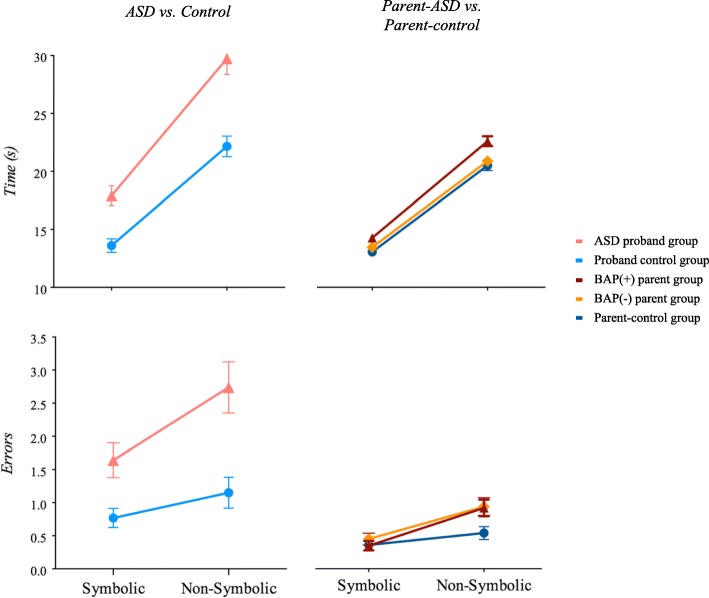
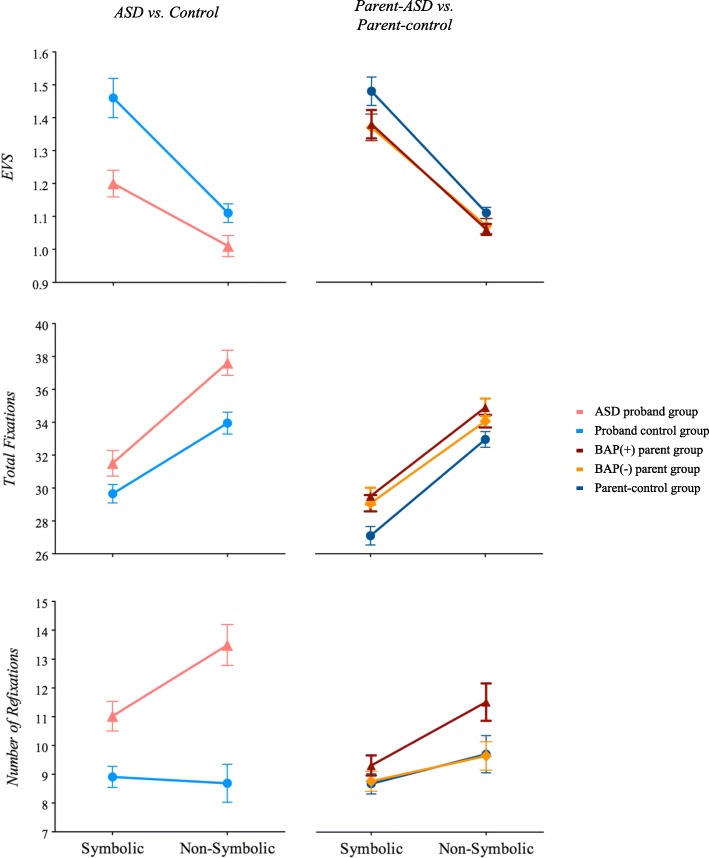
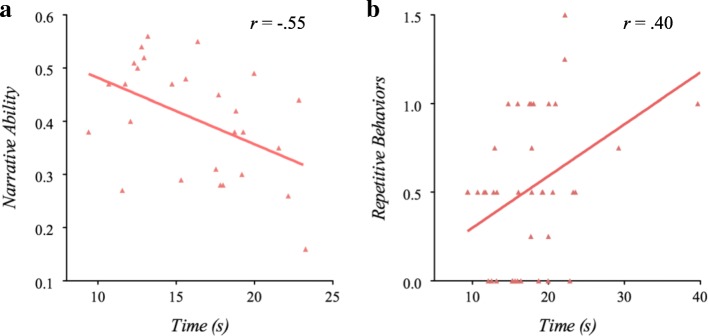
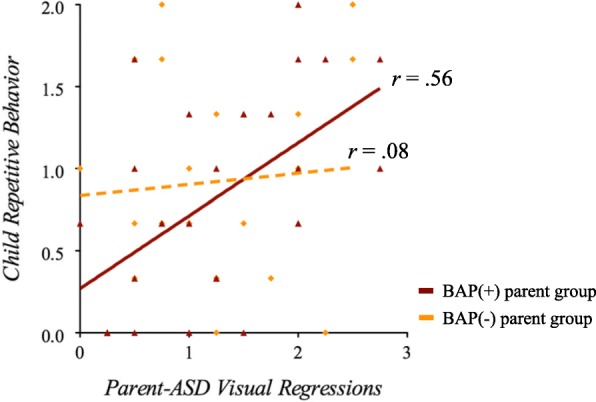
Results: Both the ASD and parent-ASD groups showed slower naming times, more errors, and atypical eye-movement patterns (e.g., increased fixations and refixations), relative to controls, with differences persisting after accounting for spousal resemblance. RAN ability and associated eye movement patterns were correlated with increased social-communicative impairment and increased repetitive behaviors in ASD. Longer RAN times and greater refixations in the parent-ASD group were driven by the subgroup who showed clinical-behavioral features of the broad autism phenotype (BAP). Finally, parent-child dyad correlations revealed associations between naming time and refixations in parents with the BAP and increased repetitive behaviors in their child with ASD.
Conclusions: Differences in RAN performance and associated eye movement patterns detected in ASD and in parents, and links to broader social-communicative abilities, clinical features, and parent-child associations, suggest that RAN-related abilities might constitute genetically meaningful neurocognitive markers that can help bridge connections between underlying biology and ASD symptomatology.
Keywords: Autism spectrum disorder; Broad autism phenotype; Endophenotype; Eye movement; Eye-voice span; Gaze; Language; Rapid automatized naming; Restricted and repetitive behaviors; Social communication.
Conflict of interest statement
All procedures performed in this study were in accordance with the ethical standards of the institutional research committee and with the 1964 Helsinki Declaration and its later amendments or comparable ethical standards. Informed consent was obtained from all individual participants included in the study.Not applicableThe authors declare that they have no competing interests.Springer Nature remains neutral with regard to jurisdictional claims in published maps and institutional affiliations.
Figures
References
Publication types
MeSH terms
Grants and funding
LinkOut - more resources
Full Text Sources
Medical
Miscellaneous
