


Fill "half your child's plate with fruits and vegetables": Correlations with food-related practices and the home food environment
- PMID: 30339784
- PMCID: PMC6944192
- DOI: 10.1016/j.appet.2018.10.017
Fill "half your child's plate with fruits and vegetables": Correlations with food-related practices and the home food environment
Abstract
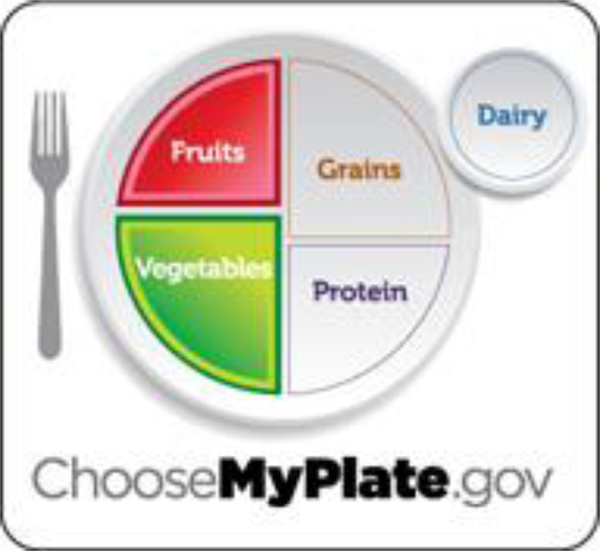
This study examined the prevalence of parental report of children's adherence to USDA's MyPlate guidelines of 'half of plate filled with fruits and vegetables (FV)' and associations with child and parent/guardian report of food-related practices and the home food environment. Data for this study represent the baseline assessment (n = 160 parent-child dyads) of the Healthy Home Offerings via the Mealtime Environment (HOME) Plus study, a randomized controlled trial to prevent excess weight gain among 8-12 year-old children. Multiple logistic regression models examined associations between a newly created 'half plate FV' variable 'During the past seven days how many times was half of your child's plate filled with fruits and vegetables at dinner?" and personal and home food environmental factors, including food availability, child fruit/vegetable intake, and healthy eating index (HEI), adjusted for race and receipt of public assistance. Parents reported their children had half their plates filled with FV at dinner on average 2.7 times in the past week. With each reported child intake of FV, the odds of having half their plates filled with FV were almost one and a half times greater; there were significantly higher odds of children having half their plates filled with FV with greater children's HEI, parent and child cooking skills and self-efficacy to cook healthy meals, family meal frequency, and availability of more types of fruits and vegetables in the home. The findings demonstrate that the MyPlate campaign's message of "half the plate filled with FV" can be used in nutrition interventions focusing on improving the home food environment and increasing children's FV intake; the survey item used in the present study may be effective in capturing adherence to the MyPlate message.
Trial registration: ClinicalTrials.gov NCT01538615.
Keywords: Child nutrition; Family meals; Fruit & vegetable intake; Healthy eating index; Home food availability; MyPlate message; Parent cooking skills.
Copyright © 2018 Elsevier Ltd. All rights reserved.
Conflict of interest statement
Declaration of Conflicts of Interest
The authors declared no potential conflicts of interest with respect to the research, authorship, and/or publication of this article
References
-
- US Department of Health and Human Services and US Department of Agricultre 2015–2020 Dietary Guidelines for Americans. 8th Edition. December 2015. Available at https://health.gov/dietaryguidelines/2015/resources/2015-2020_Dietary_Gu...
-
- Arcan C, Neumark-Sztainer D, Hannan P, van den Berg P, Story M, & Larson N. (2007). Parental eating behaviours, home food environment and adolescent intakes of fruits, vegetables and dairy foods: longitudinal findings from Project EAT. Public Health Nutrition, 10(11), 1257–1265. doi: 10.1017/S1368980007687151 - DOI - PubMed
Publication types
MeSH terms
Associated data
Grants and funding
LinkOut - more resources
Full Text Sources
Medical
Miscellaneous
