


Efficacy of tenofovir in preventing perinatal transmission of HBV infection in pregnant women with high viral loads
- PMID: 30341345
- PMCID: PMC6195597
- DOI: 10.1038/s41598-018-33833-w
Efficacy of tenofovir in preventing perinatal transmission of HBV infection in pregnant women with high viral loads
Abstract
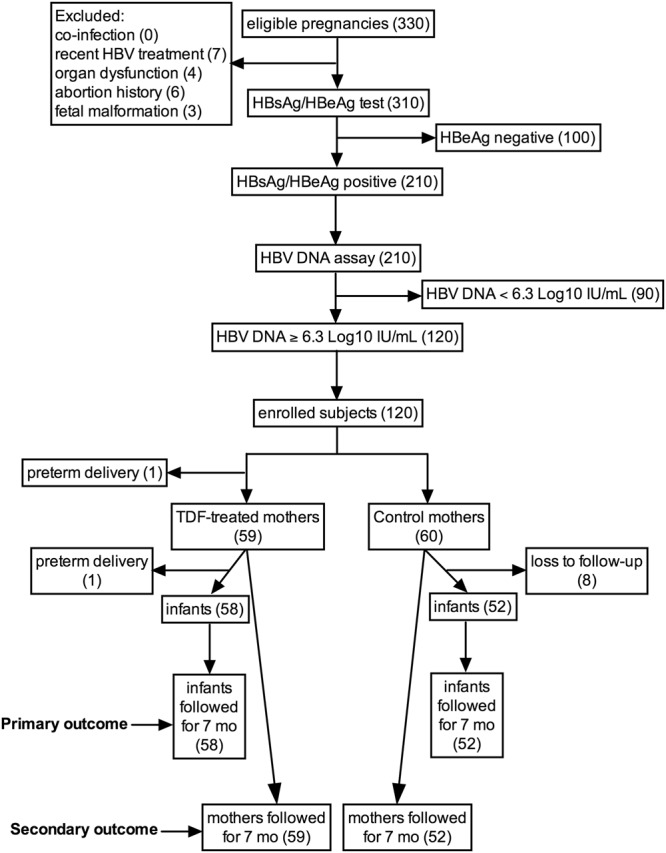
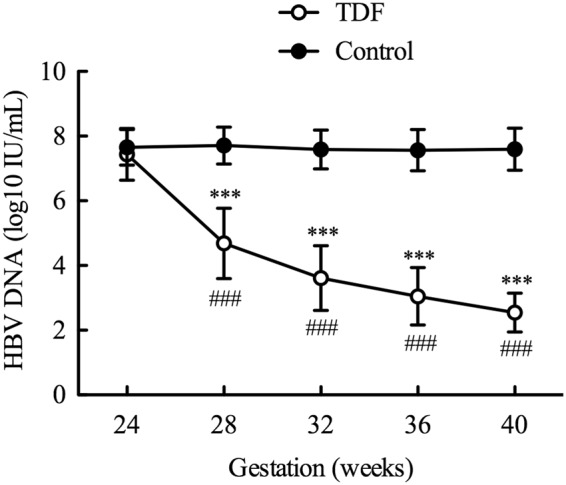
Mother-to-child transmission is the major cause of chronic hepatitis B virus (HBV) infection. This double-blind trial tested the effect of tenofovir disoproxil fumarate (TDF) in preventing vertical transmission. Pregnant women who were HBsAg/HBeAg-positive with a HBV DNA titer ≥ 2×10⁶ IU/mL were randomly assigned to the control (n = 60) and TDF-treated (n = 60) groups. TDF treatment (oral dose 300 mg/day) was initiated at 24 weeks of gestation and continued to 4 weeks after delivery. The subjects were followed up to 28 weeks postpartum. The effects of TDF on vertical transmission, outcomes of the mothers and infants and virological changes were monitored. TDF dynamically reduced the serum HBV DNA level of the mothers, particularly during the first 4 weeks of treatment. The lower viral loads were maintained in the pregnancies until delivery. Approximately 90% and 33.9% of the TDF-treated mothers had viral loads ≤2000 IU/mL after delivery and at 28 weeks postpartum, respectively. No cervical transmission or adverse effects were observed in the TDF-treated individuals, whereas 13.5% of the infants were infected with HBV in the control group. We conclude that TDF treatment initiated at 24 weeks of gestation in high-viremia, HBsAg/HBeAg-positive mothers efficiently prevents mother-to-child HBV transmission without adverse events in mothers and infants.
Conflict of interest statement
The authors declare no competing interests.
Figures
References
-
- Tavakolpour, S., Darvishi, M., Mirsafaei, H. S. & Ghasemiadl, M. Nucleoside/nucleotide analogues in the treatment of chronic hepatitis B infection during pregnancy: a systematic review. Infect Dis (Lond), 1–12, 10.1080/23744235.2017.1384957 (2017). - PubMed
Publication types
MeSH terms
Substances
Grants and funding
LinkOut - more resources
Full Text Sources
