. 2018 Dec;17(6):e12837.
doi: 10.1111/acel.12837. Epub 2018 Oct 19.

Heme oxygenase-1 induction attenuates senescence in chronic obstructive pulmonary disease lung fibroblasts by protecting against mitochondria dysfunction

Affiliations

Heme oxygenase-1 induction attenuates senescence in chronic obstructive pulmonary disease lung fibroblasts by protecting against mitochondria dysfunction

Benjamin Even et al. Aging Cell. 2018 Dec.

Abstract

Chronic obstructive pulmonary disease (COPD) is associated with lung fibroblast senescence, a process characterized by an irreversible proliferation arrest associated with secretion of inflammatory mediators. ROS production, known to induce senescence, is increased in COPD fibroblasts and mitochondria dysfunction participates in this process. Among the battery of cellular responses against oxidative stress damage, heme oxygenase (HO)-1 plays a critical role in defending the lung against oxidative stress and inflammation. Therefore, we investigated whether pharmacological induction of HO-1 by chronic hemin treatment attenuates senescence and improves dysfunctional mitochondria in COPD fibroblasts. Fibroblasts from smoker controls (S-C) and COPD patients were isolated from lung biopsies. Fibroblasts were long-term cultured in the presence or absence of hemin, and/or ZnPP or QC-15 (HO-1 inhibitors). Lung fibroblasts from smokers and COPD patients displayed in long-term culture a senescent phenotype, characterized by a reduced replicative capacity, an increased senescence and inflammatory profile. These parameters were significantly higher in senescent COPD fibroblasts which also exhibited decreased mitochondrial activity (respiration, glycolysis, and ATP levels) which led to an increased production of ROS, and mitochondria biogenesis and impaired mitophagy process. Exposure to hemin increased the gene and protein expression level of HO-1 in fibroblasts and diminished ROS levels, senescence, the inflammatory profile and simultaneously rescued mitochondria dysfunction by restoring mitophagy in COPD cells. The effects of hemin were abolished by a cotreatment with ZnPP or QC-15. We conclude that HO-1 attenuates senescence in COPD fibroblasts by protecting, at least in part, against mitochondria dysfunction and restoring mitophagy.

Keywords: chronic obstructive pulmonary disease; fibroblasts; heme oxygenase-1; mitochondria; mitophagy; senescence.


Figures

Figure 1
Figure 1
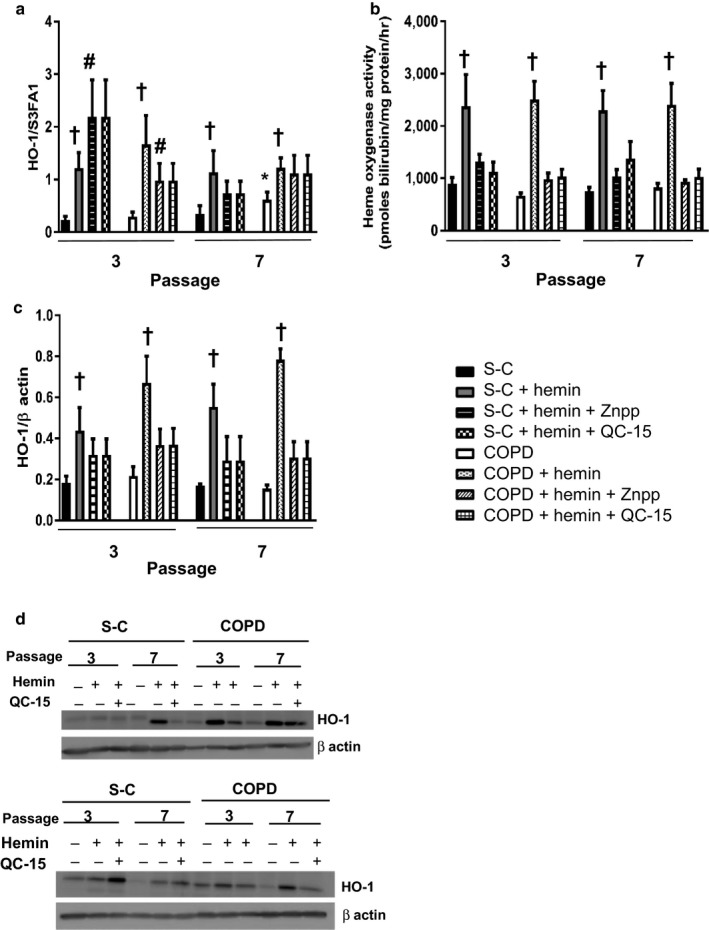
Hemin induces gene, protein expression, and activity of heme oxygenase 1 (HO‐1). Fibroblasts from COPD patients (n = 14) and smoker controls (S‐C, n = 13) were treated chronically with either hemin (10 µM) alone or in the presence of inhibitors of HO‐1 activity: ZnPPIX (1 µM) or QC‐15 (15 µM) for 4 weeks. (a) Quantitative transcriptional expression of HMOX1 by real‐time qPCR. (b) Heme oxygenase activity. (c) Quantification of HO‐1 protein expression by western blot. (d) Two examples of western blot. Data are presented as mean ± SEM in the whole Figure. *p < 0.05 passage 7 (senescent stage) vs. passage 3 (nonsenescent stage), p < 0.05, †† p < 0.01 cells treated with hemin vs. cells treated with DMSO, # p < 0.05 cells treated with inhibitors of HO‐1 activity vs. cells treated with solvent
Figure 2
Figure 2
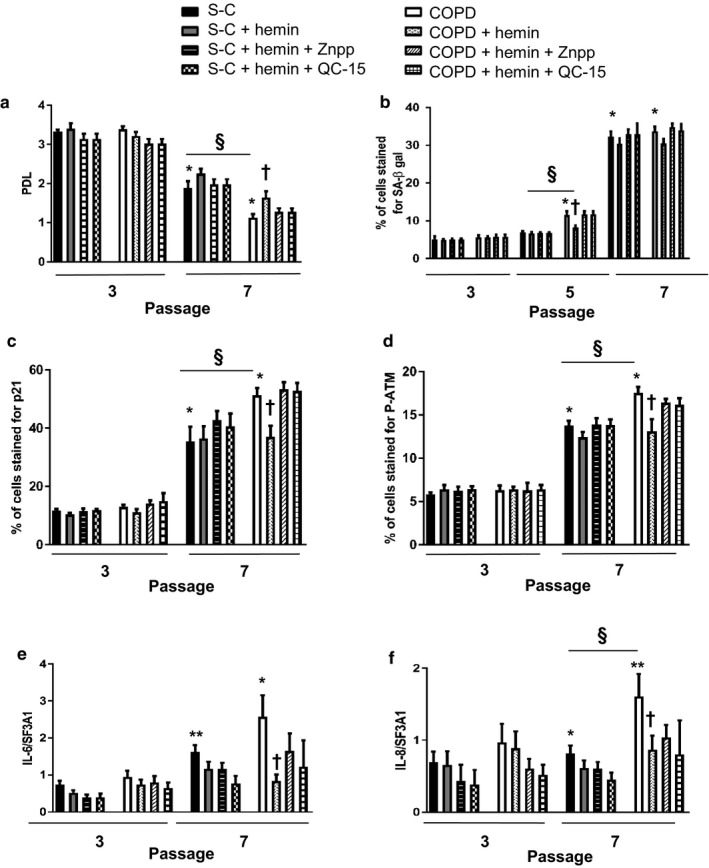
Hemin attenuates replicative senescence in COPD fibroblasts. Fibroblasts from COPD patients (n = 14) and smoker controls (S‐C, n = 13) were treated chronically with either hemin (10 µM) alone or in the presence of inhibitors of HO‐1 activity: ZnPPIX (1 µM) or QC‐15 (15 µM) for 4 weeks. (a) The rate of proliferation was evaluated by the population doubling level (PDL). (b) Percentage of senescence‐associated (SA) β‐gal‐positive cells. (c, d) Quantification of p21 and P‐ATM obtained by immunostaining. Transcriptional expression of inflammatory mediators (IL‐6, IL‐8). (e, f) by real‐time qPCR in pulmonary fibroblasts. Data are presented as mean ± SEM in the whole Figure. *p < 0.05, **p < 0.01 passage 7 (senescent stage) vs. passage 3 (nonsenescent stage), p < 0.05 cells treated with hemin vs. cells treated with DMSO, § p < 0.05 COPD vs. S‐C
Figure 3
Figure 3
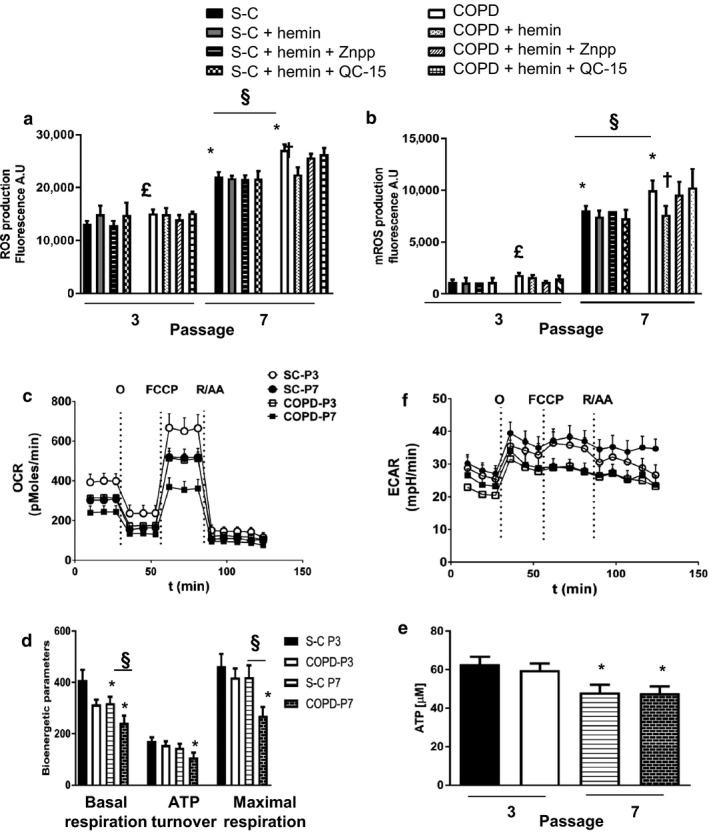
Hemin decreases total ROS and mROS linked to mitochondrial dysfunction Fibroblasts from COPD patients (n = 14) and smoker controls (S‐C, n = 13) were treated chronically with either Hemin (10 µM) alone or with inhibitors of HO‐1 activity: ZnPPIX (1 µM) or QC‐15 (15 µM) for 4 weeks. (a) Production of ROS was measured by DCFH‐DA fluorescence. Values are expressed as the percentage of control (ratio of fluorescence at 90 min over T0). (b) Production of mitochondrial ROS was measured by MitoSOX fluorescence. Values are expressed as the percentage of control (ratio of fluorescence at 15 min over T0). (c, d,) Bioenergetic parameters and extracellular acidification rate (ECAR, an index of glycolysis (f)) were measured using the Seahorse XF analyzer. (e) ATP levels, n = 7 in each group. Data are presented as mean ± SEM in the whole Figure. *p < 0.05 passage 7 (senescent stage) vs. passage 3 (nonsenescent stage), § p < 0.05 COPD passage 7 (vs. S‐C at passage 7, £p < 0.05 COPD at passage 3 vs. S‐C at passage 3, p < 0.05 cells treated with hemin vs. cells treated with DMSO, § p < 0.05 COPD vs. S‐C
Figure 4
Figure 4
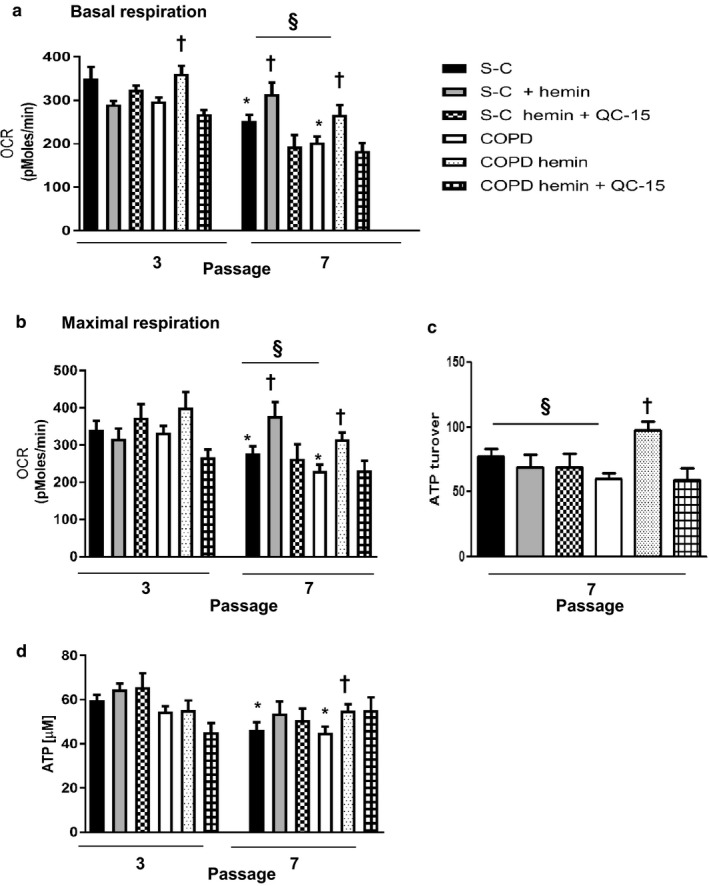
Hemin protects against mitochondria dysfunction. Fibroblasts from COPD patients (n = 14) and smoker controls (S‐C, n = 13) were treated chronically with either Hemin (10 µM) alone or with an inhibitor of HO‐1 activity: QC‐15 (15 µM) for 4 weeks. Bioenergetic parameters (a) basal respiration, (b) maximum respiration, (c) ATP turnover were measured using the Seahorse XF analyzer. (d) ATP levels. Data are presented as mean ± SEM in the whole Figure. *p < 0.05 passage 7 (senescent stage) vs. passage 3 (nonsenescent stage), p < 0.05 cells treated with hemin vs. cells treated with DMSO, § p < 0.05 COPD vs. S‐C
Figure 5
Figure 5
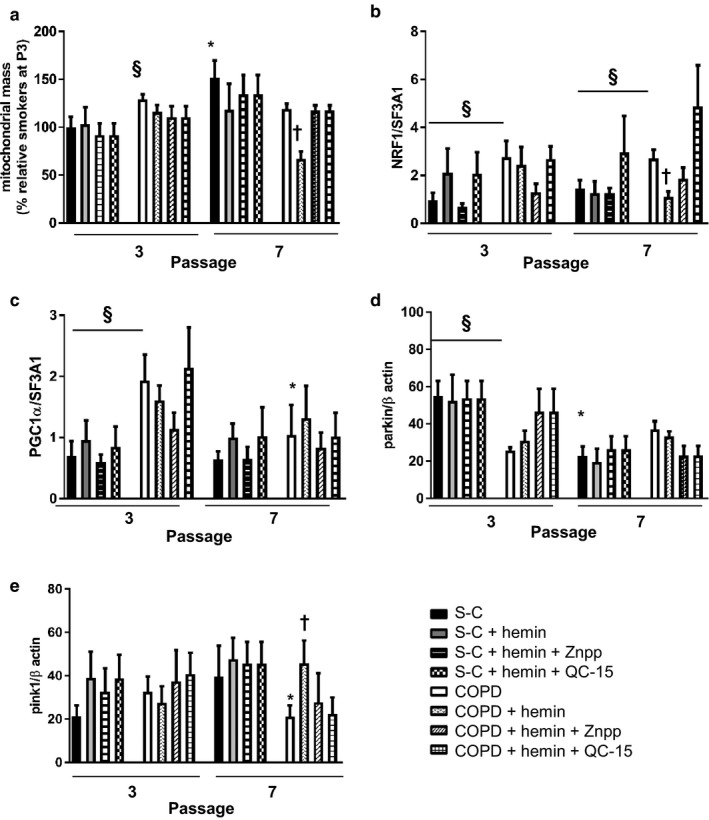
Hemin decreases the biogenesis of mitochondria and increases mitophagy in COPD fibroblasts. Pulmonary fibroblasts derived from COPD patients (n = 14) and smoker controls (S‐C, n = 13) were treated chronically with either hemin (10 µM) alone or in the presence of inhibitors of heme oxygenase activity: ZnPPIX (1 µM) or QC‐15 (15 µM). (a) Mitochondria mass detection was performed by using acridine orange 10‐nonyl bromide staining. Cells were analyzed with flow cytometry. (b, c) Quantitative transcriptional expression of gene involved in biogenesis (NRF‐1 and PGC1α) by real‐time qPCR in pulmonary fibroblasts. (d, e) Expression of proteins involved in mitophagy (PARKIN and PINK‐1) by western blot. Data are presented as mean ± SEM in the whole Figure. *p < 0.05, passage 7 (senescent stage vs. passage 3 (nonsenescent stage), p < 0.05 cells treated with hemin vs. cells treated with DMSO, § p < 0.05 COPD vs. S‐C
Figure 6
Figure 6
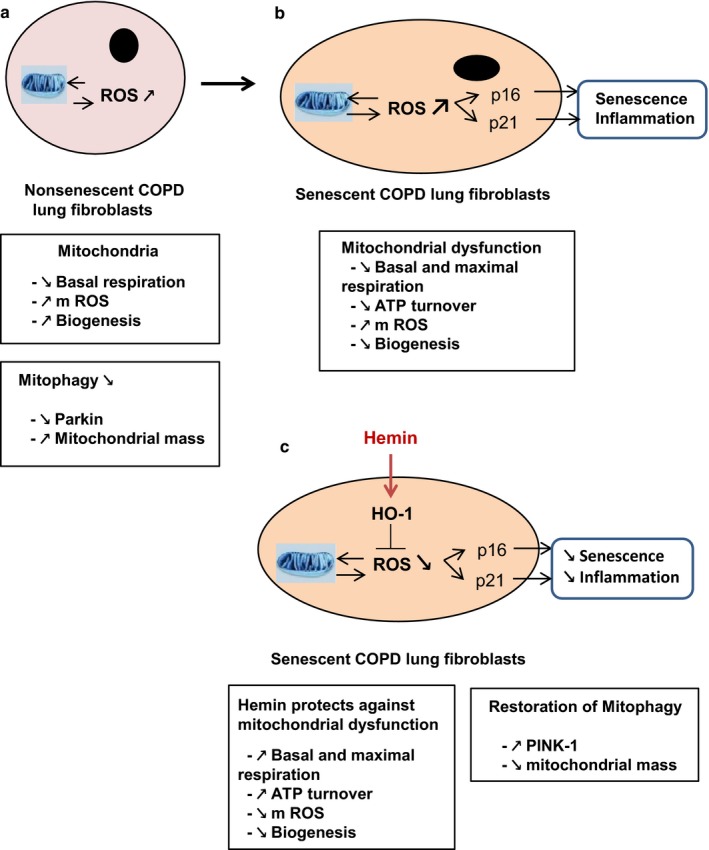
Senescence prevention by HO‐1 activation. (a) Mitochondrial dysfunction, characterized by a decrease in basal respiration and an increase in mROS production, is observed at nonsenescent passage in COPD lung fibroblasts. At the same time, defective mitophagy is also present (increase in mitochondria mass and decrease in Parkin), which ensures the maintenance of malfunctional mitochondria. To compensate for this effect, fibroblasts increase mitochondria biogenesis. (b) At the onset of senescence state, mitochondria dysfunction is exacerbated as evidenced by a further decrease in basal and maximal respiration, ATP turnover, and increased mROS production. However, mitochondria biogenesis compensatory pathway is lost. All of this contributes to the induction of senescence in senescent lung fibroblasts. (c) The induction of HO‐1 by hemin exerts a protective effect on mitochondria function (improvement of all parameters) and increases mitophagy (decrease in mitochondria mass and increase in PINK‐1). Thus, HO‐1 prevents the induction of senescence in COPD fibroblasts by protecting against mitochondria dysfunction

References

    1. Ahmad, T. , Sundar, I. K. , Lerner, C. A. , Gerloff, J. , Tormos, A. M. , Yao, H. , & Rahman, I. (2015). Impaired mitophagy leads to cigarette smoke stress‐induced cellular senescence: Implications for chronic obstructive pulmonary disease. FASEB Journal, 29, 2912–2929. 10.1096/fj.14-268276 - DOI - PMC - PubMed
    1. Amsellem, V. , Gary‐Bobo, G. , Marcos, E. , Maitre, B. , Chaar, V. , Validire, P. , … Adnot, S. (2011). Telomere dysfunction causes sustained inflammation in chronic obstructive pulmonary disease. American Journal of Respiratory and Critical Care Medicine, 184, 1358–1366. 10.1164/rccm.201105-0802OC - DOI - PubMed
    1. Bankier, A. A. , De Maertelaer, V. , Keyzer, C. , & Gevenois, P. A. (1999). Pulmonary emphysema: Subjective visual grading versus objective quantification with macroscopic morphometry and thin‐section CT densitometry. Radiology, 211, 851–858. 10.1148/radiology.211.3.r99jn05851 - DOI - PubMed
    1. Barnes, P. J. (2017). Senescence in COPD and Its Comorbidities. Annual Review of Physiology, 79, 517–539. 10.1146/annurev-physiol-022516-034314 - DOI - PubMed
    1. Bueno, M. , Lai, Y. C. , Romero, Y. , Brands, J. , St Croix, C. M. , Kamga, C. , … Mora, A. L. (2015). PINK1 deficiency impairs mitochondrial homeostasis and promotes lung fibrosis. Journal of Clinical Investigation, 125, 521–538. 10.1172/JCI74942 - DOI - PMC - PubMed

MeSH terms