


Prevalence and antibiotic susceptibility pattern of CTX-M type extended-spectrum β-lactamases among clinical isolates of gram-negative bacilli in Jimma, Ethiopia
- PMID: 30342476
- PMCID: PMC6196031
- DOI: 10.1186/s12879-018-3436-7
Prevalence and antibiotic susceptibility pattern of CTX-M type extended-spectrum β-lactamases among clinical isolates of gram-negative bacilli in Jimma, Ethiopia
Abstract
Background: The prevalence of extended-spectrum β-lactamases (ESBLs) have been reported in clinical isolates obtained from various hospitals in Ethiopia. However, there is no data on the prevalence and antibiotic susceptibility patterns of CTX-M type ESBL produced by Gram-negative bacilli. The aim of this study was to determine the frequency and distribution of the blaCTX-M genes and the susceptibility patterns in ESBL producing clinical isolates of Gram-negative bacilli in Jimma University Specialized Hospital (JUSH), southwest Ethiopia.
Methods: A total of 224 non-duplicate and pure isolates obtained from clinically apparent infections, were included in the study. Identification of the isolates was performed by MALDI-TOF mass spectrometry. Susceptibility testing and ESBL detection was performed using VITEK® 2, according to EUCAST v4.0 guidelines. Genotypic analysis was performed using Check-MDR CT103 Microarrays.
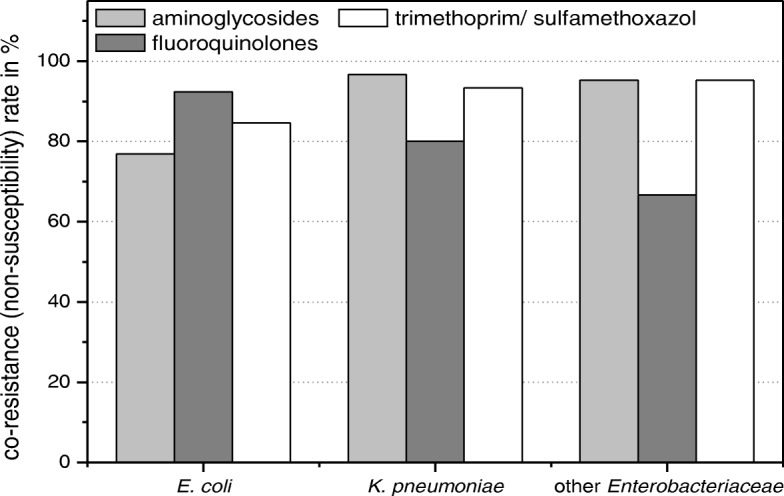
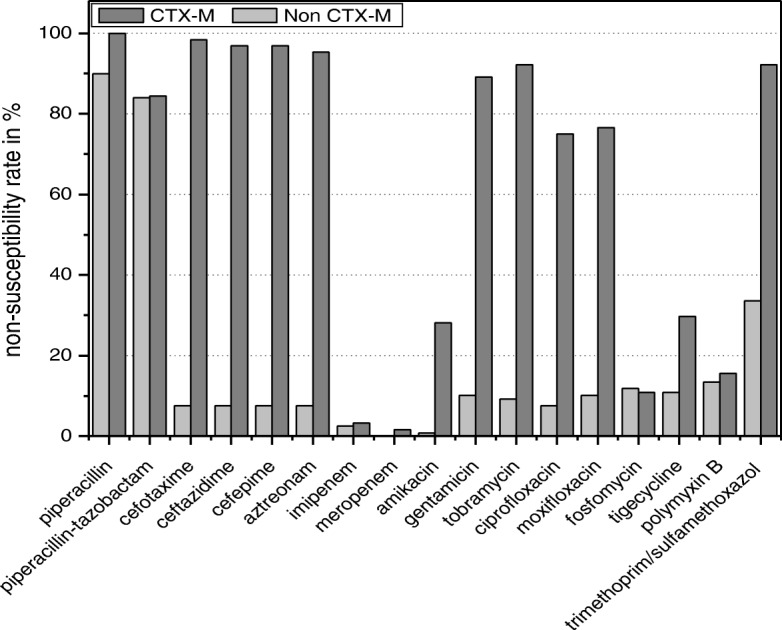
Results: Of the total 112 (50.0%) isolates screen positive for ESBLs, 63.4% (71/112) tested positive for ESBL encoding genes by Check-MDR array, which corresponds to 91.8% (67/73) of the total Enterobacteriaceae and 10.3% (4/39) of nonfermenting Gram-negative bacilli. Among the total ESBL gene positive isolates, 95.8% (68/71) carried blaCTX-M genes with CTX-M group 1 type15 being predominant (66/68; 97.1% of CTX-M genes). The blaCTX-M carrying Enterobacteriaceae (n = 64) isolates showed no resistance against imipenem and meropenem and a moderate resistance rate against tigecycline (14.1%), fosfomycin (10.9%) and amikacin (1.6%) suggesting the effectiveness of these antibiotics against most isolates. On the other hand, all the blaCTX-M positive Enterobacteriaceae showed a multidrug resistant (MDR) phenotype with remarkable co-resistances (non-susceptibility rates) to aminoglycosides (92.2%), fluoroquinolones (78.1%) and trimethoprim/sulfamethoxazol (92.2%).
Conclusions: This study demonstrates a remarkably high prevalence of blaCTX-M genes among ESBL-producing isolates. The high level of resistance to β-lactam and non-β-lactam antibiotics as well as the trend to a MDR profile associated with the blaCTX-M genes are alarming and emphasize the need for routine diagnostic antimicrobial susceptibility testing for appropriate choice of antimicrobial therapy.
Keywords: Antimicrobial susceptibility; CTX-M; Ethiopia; Extended-spectrum beta-lactamase; Gram-negative bacilli.
Conflict of interest statement
Ethics approval and consent to participate
The study was approved by Jimma University Ethical Review Board. Bacterial isolates were anonymized and re-analyzed in LMU Munich (Germany) as purified bacterial strains. For such analysis, no ethical clearance is required at LMU Munich.
Consent for publication
Not applicable.
Competing interests
The authors declare that they have no competing interests.
Publisher’s Note
Springer Nature remains neutral with regard to jurisdictional claims in published maps and institutional affiliations.
Figures
References
-
- Sutton SS. What are extended-spectrum beta-lactamases? JAAPA. 2014;27(3):14–17. - PubMed
-
- Chong Y, Shimoda S, Yakushiji H, Ito Y, Miyamoto T, Kamimura T, et al. Community spread of extended-spectrum β-lactamase-producing Escherichia coli, Klebsiella pneumoniae and Proteus mirabilis: a long-term study in Japan. J Med Microbiol. 2013;62(7):1038–1043. doi: 10.1099/jmm.0.059279-0. - DOI - PubMed
-
- WHO . Antimicrobial resistance: global report on surveillance. 2014.
MeSH terms
Substances
LinkOut - more resources
Full Text Sources
