


Harvesting the wisdom of the crowd: using online ratings to explore care experiences in regions
- PMID: 30342518
- PMCID: PMC6195971
- DOI: 10.1186/s12913-018-3566-z
Harvesting the wisdom of the crowd: using online ratings to explore care experiences in regions
Abstract
Background: Regional population health management (PHM) initiatives need an understanding of regional patient experiences to improve their services. Websites that gather patient ratings have become common and could be a helpful tool in this effort. Therefore, this study explores whether unsolicited online ratings can provide insight into (differences in) patient's experiences at a (regional) population level.
Methods: Unsolicited online ratings from the Dutch website Zorgkaart Nederland (year = 2008-2017) were used. Patients rated their care providers on six dimensions from 1 to 10 and these ratings were geographically aggregated based on nine PHM regions. Distributions were explored between regions. Multilevel analyses per provider category, which produced Intraclass Correlation Coefficients (ICC), were performed to determine clustering of ratings of providers located within regions. If ratings were clustered, then this would indicate that differences found between regions could be attributed to regional characteristics (e.g. demographics or regional policy).
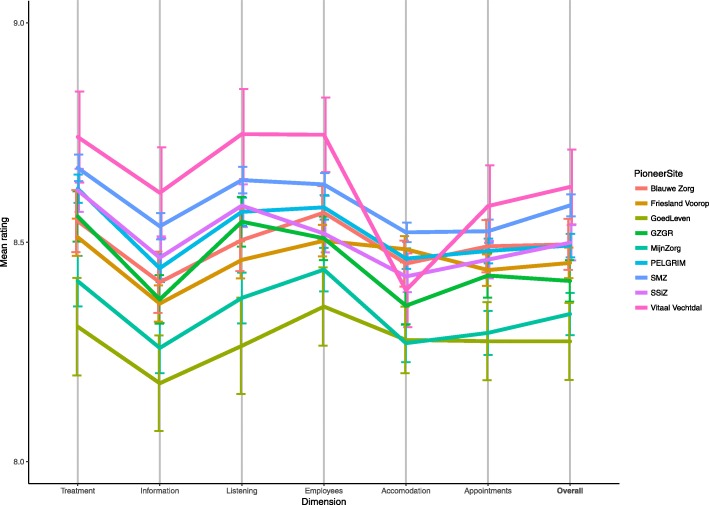
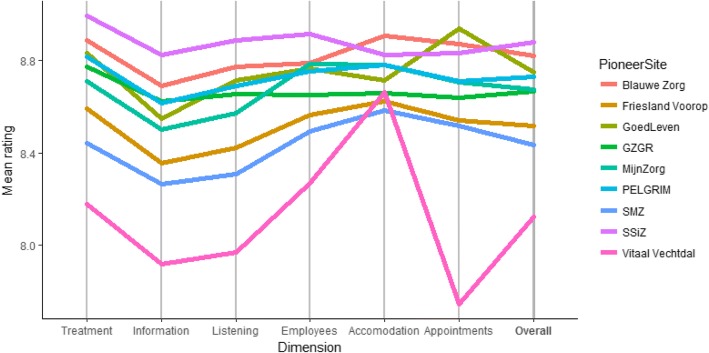
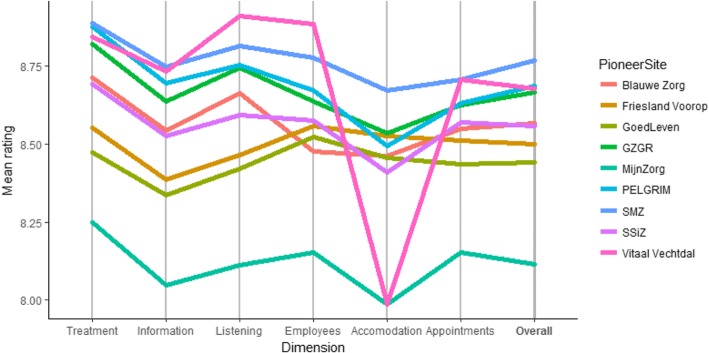
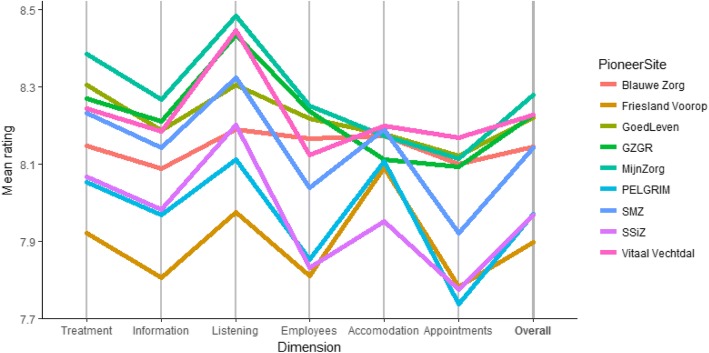
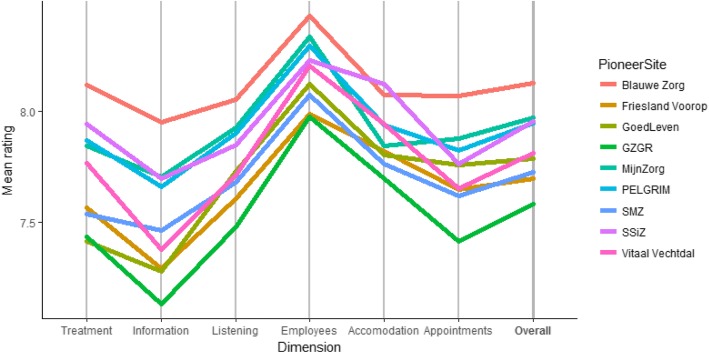
Results: In the nine regions, 70,889 ratings covering 4100 care providers were available. Overall, average regional scores (range = 8.3-8.6) showed significant albeit small differences. Multilevel analyses indicated little clustering between unsolicited provider ratings within regions, as the regional level ICCs were low (ICC pioneer site < 0.01). At the provider level, all ICCs were above 0.11, which showed that ratings were clustered.
Conclusions: Unsolicited online provider-based ratings are able to discern (small) differences between regions, similar to solicited data. However, these differences could not be attributed to the regional level, making unsolicited ratings not useful for overall regional policy evaluations. At the provider level, ratings can be used by regions to identify under-performing providers within their regions.
Keywords: Online ratings; Population health management; Quality of care; Regional evaluation; Unsolicited data.
Conflict of interest statement
Ethics approval and consent to participate
The Medical Research Involving Human Subjects Act (WMO) does not apply to this study, and official approval was not required [34]. Participants agreed to the terms of service of Zorgkaart Nederland, which states that their submission can be used anonymously for research purposes [35].
Consent for publication
Not applicable.
Competing interests
The authors declare that they have no competing interest.
Publisher’s Note
Springer Nature remains neutral with regard to jurisdictional claims in published maps and institutional affiliations.
Figures
References
-
- Corrigan JM, Fisher ES. Accountable health communities: insights from state health reform initiatives. In. The Dartmouth Institute for Health Policy & Clinical Practice: Lebanon; 2014.
-
- Alderwick H, Ham C, Buck D. Population health systems: Going beyond integrated care. 2015. http://www.kingsfund.org.uk/sites/files/kf/field/field_publication_file/....
-
- McNally D, Sharples MA. Improving experience of care through people who use services. In. London: NHS England; 2015.
-
- Agency for Healthcare Research and Quality. Section 2. Why Improve Patient Experience? 2016. https://www.ahrq.gov/cahps/quality-improvement/improvement-guide/2-why-i.... Accessed 13 Oct 2017.
MeSH terms
Grants and funding
LinkOut - more resources
Full Text Sources
Medical
