


Low-dose hip abductor-adductor power training improves neuromechanical weight-transfer control during lateral balance recovery in older adults
- PMID: 30343209
- PMCID: PMC6293473
- DOI: 10.1016/j.clinbiomech.2018.10.018
Low-dose hip abductor-adductor power training improves neuromechanical weight-transfer control during lateral balance recovery in older adults
Abstract
Background: Age-related neuromuscular changes in the hip abductor-adductor muscles lead to reduced performance, especially in the rate of force development and power production. These alterations may impair weight transfer control and lateral balance recovery through protective stepping. This study compared the effects of eight weeks of low-dose hip abductor-adductor power and strength training on the performance of isometric maximal voluntary contractions, and lateral balance recovery at different initial weight-bearing conditions in older individuals.
Methods: Eighteen healthy older adults (71.3 (0.9) years) underwent eight weeks of low-dose hip abductor-adductor exercise training involving either power training (n = 10) or lower velocity strength training (n = 8). Outcomes were assessed for hip abductor-adductor isometric maximal voluntary contractions and lateral waist-pull balance perturbations with three initial stepping limb-load conditions (50%, 65%, or 80% body mass).
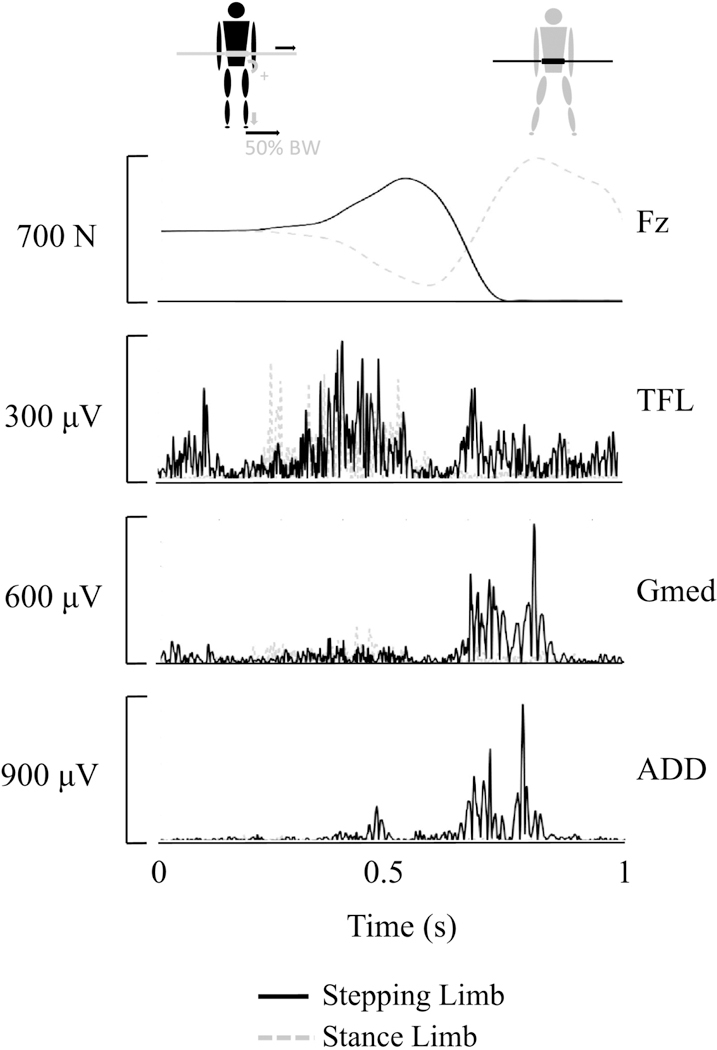
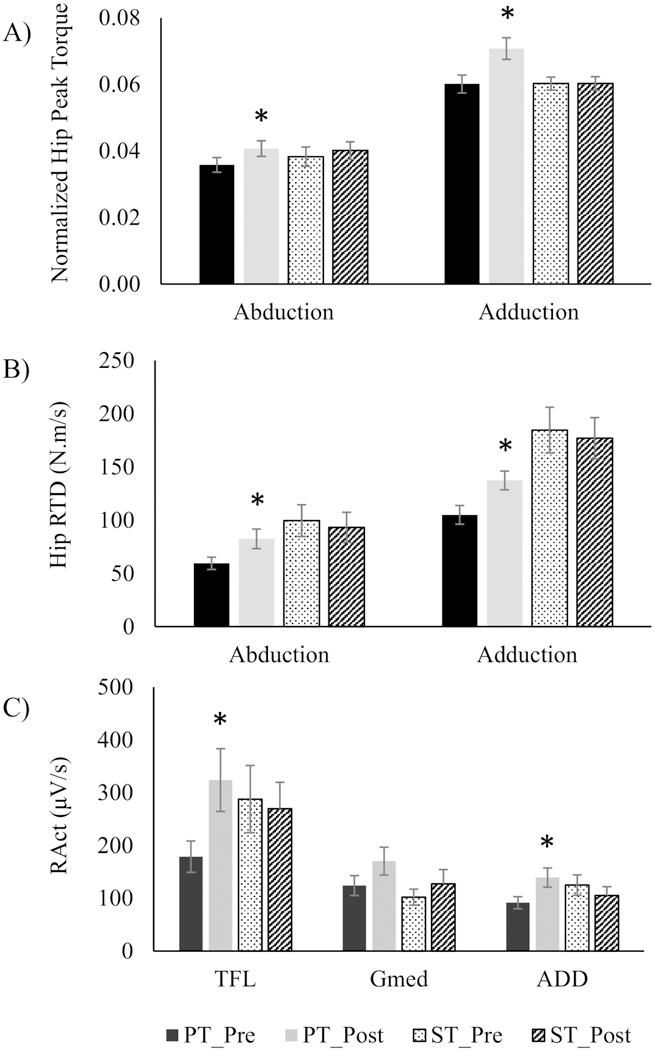
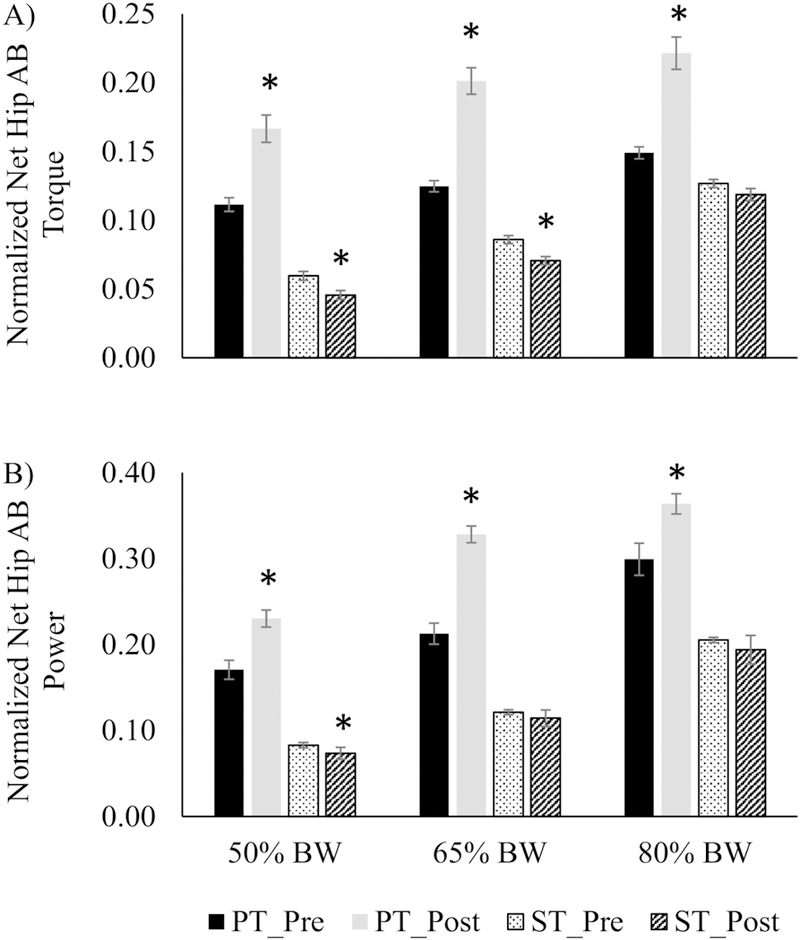
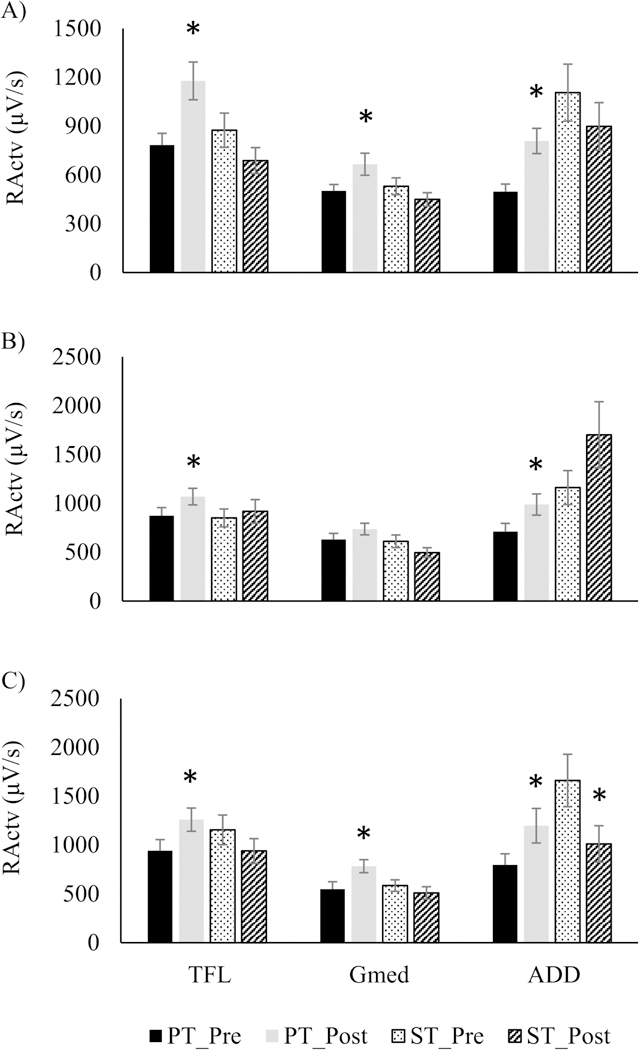
Findings: Power training increased isometric maximal voluntary contractions abductor-adductor peak torque (14%-18%, p < 0.05), rate of torque development (31%-39%, p < 0.05) and rate of neuromuscular activation (37%-81%, p < 0.05). During lateral balance recovery, power training increased the incidence of stabilizing single lateral steps at 80% body mass pre-load (by 43%, p < 0.05), reduced step lift-off time by 27 ms at 50% body mass (p < 0.05) and decreased downward momentum of the body center of mass at 80% body mass (32%, p < 0.05). Power training also increased in task hip abductor net joint torque (49%-61%, p < 0.05), power (21%-54%, p < 0.05), and abductor-adductor rate of neuromuscular activation (17%-62%, p < 0.05).
Interpretation: Low-dose hip abductor-adductor power training was more effective than strength training at eliciting improvements in maximal neuromuscular performance and enhanced medio-lateral balance recovery.
Keywords: Hip abductors; Lateral balance; Neuromuscular performance; Power training.
Copyright © 2018 Elsevier Ltd. All rights reserved.
Figures
References
-
- Aagaard P, and Andersen JL. Correlation between contractile strength and myosin heavy chain isoform composition in human skeletal muscle. Med Sci Sports Exerc 30: 1217–1222, 1998. - PubMed
-
- Aagaard P, Simonsen EB, Andersen JL, Magnusson P, and Dyhre-Poulsen P. Increased rate of force development and neural drive of human skeletal muscle following resistance training. J Appl Physiol 93: 1318–1326, 2002. - PubMed
-
- Aagaard P, Suetta C, Caserotti P, Magnusson SP, and Kjaer M. Role of the nervous system in sarcopenia and muscle atrophy with aging: strength training as a countermeasure. Scand J Med Sci Sports 20: 49–64, 2010. - PubMed
Publication types
MeSH terms
Grants and funding
LinkOut - more resources
Full Text Sources
