


Retrospective study of regorafenib and trifluridine/tipiracil efficacy as a third-line or later chemotherapy regimen for refractory metastatic colorectal cancer
- PMID: 30344762
- PMCID: PMC6176362
- DOI: 10.3892/ol.2018.9421
Retrospective study of regorafenib and trifluridine/tipiracil efficacy as a third-line or later chemotherapy regimen for refractory metastatic colorectal cancer
Abstract
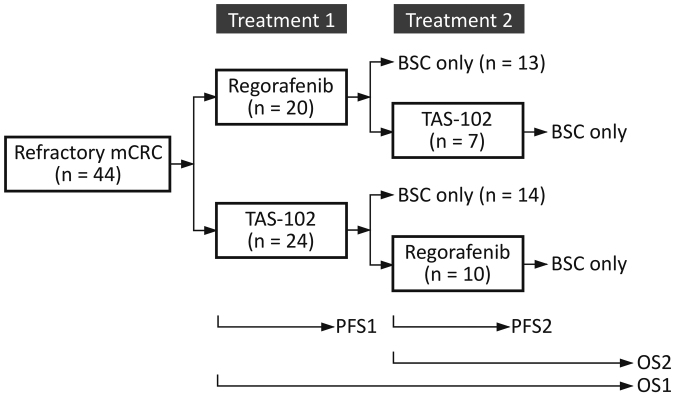
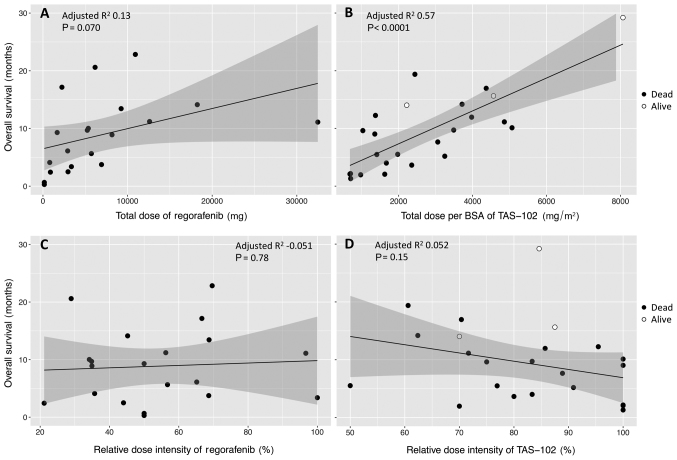
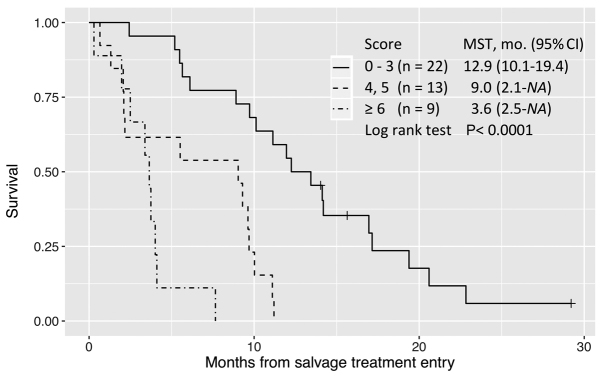
Regorafenib and trifluridine/tipiracil (TAS-102) are novel antitumor agents for patients with refractory metastatic colorectal cancer. However, it is unclear which patients may derive a survival benefit from these drugs in real-life clinical practice. We evaluated retrospectively the efficacy and safety of regorafenib and TAS-102 at a single institution between June 2013 and November 2015. Cox regression analysis was carried out to obtain predictive scores (the nearest integers of hazard ratio) for survival benefit. Forty-four patients treated with regorafenib or TAS-102 were included in the analysis; among them, 17 received crossover treatment. The median overall survival (OS) was 9.1 months for regorafenib and 9.3 months for TAS-102, and the corresponding values after crossover were 7.1 and 5.3 months, respectively. OS was not correlated to relative dose intensity, but was proportional to the total administered dose of each drug. Adverse events were tolerable even after crossover. We identified three variables as significant for prediction of OS with good discrimination (C-statistic=0.70): Poor Eastern Cooperative Oncology Group performance status, time since diagnosis of metastatic disease ≤18 months, and previous chemotherapy continued ≥2 months beyond progression were all predictors of poor OS. Regorafenib and TAS-102 can be recommended for patients with better performance status and slow progression of metastatic disease. Optimal survival benefit was provided by prompt administration of either drug after failure of previous chemotherapy, with flexible titration to the optimal dose for each individual patient.
Keywords: colorectal cancer; prognostic score; regorafenib; salvage-line chemotherapy; trifluridine/tipiracil.
Figures
References
-
- Howlader N, Noone A, Krapcho M, Garshell J, Miller D, Altekruse SF, Kosary CL, Yu M, Ruhl J, Tatalovich Z, et al. SEER Cancer Statistics Review, 1975–2012. National Cancer Institute; Bethesda, MD, USA: 2015.
-
- Wilhelm SM, Dumas J, Adnane L, Lynch M, Carter CA, Schütz G, Thierauch KH, Zopf D. Regorafenib (BAY 73–4506): A new oral multikinase inhibitor of angiogenic, stromal and oncogenic receptor tyrosine kinases with potent preclinical antitumor activity. Int J Cancer. 2011;129:245–255. doi: 10.1002/ijc.25864. - DOI - PubMed
LinkOut - more resources
Full Text Sources