New insights on the pathogenesis of paraganglioma and pheochromocytoma
- PMID: 30345003
- PMCID: PMC6173107
- DOI: 10.12688/f1000research.14568.1
New insights on the pathogenesis of paraganglioma and pheochromocytoma
Abstract
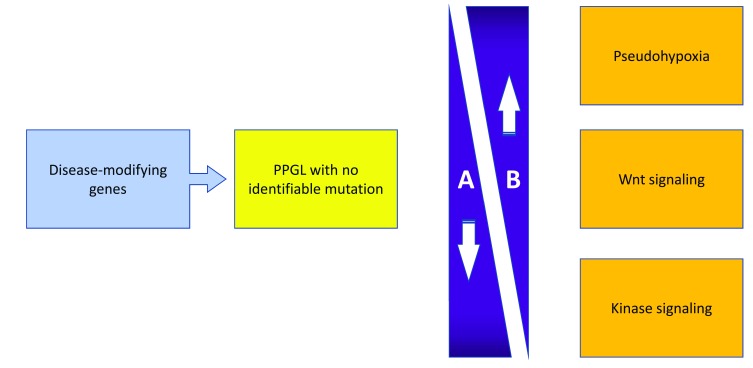
Pheochromocytomas (PCCs) and paragangliomas (PGLs) are rare chromaffin cell tumors (PPGLs) that at times raise significant challenges in clinical recognition, diagnosis, and therapy and when undiagnosed could associate with severe morbidity. Recent discoveries in PPGL genetics propelled our understanding in the pathophysiology of tumorigenesis and allowed the application of functional classification of pathogenetically distinct groups of PPGLs. This also resulted in a qualitative change in our approach to clinical assessment, diagnosis, and therapy of different subgroups of PPGLs. Establishment of the fact that mutations in multiple components of the PHD-VHL-HIF-2α pathway associate with pseudohypoxia-driven tumorigenesis allowed us not only to better understand the effect of this phenomenon but also to more deeply appreciate the value of functional abnormalities in the physiologic tissue oxygen-sensing mechanism. Mutations in the tricarboxylic acid cycle-related genes opened an additional window into understanding the physiology of one of the basic cellular metabolic pathways and consequences of its disruption. Mutations in the kinase signaling-related genes allow the PPGL field to join a massive innovative process in therapeutic advances in current oncology. New pathophysiologically distinct groups of mutations will widen and deepen our understanding of additional pathways in PPGL tumorigenesis and hopefully introduce additional diagnostic and therapeutic approaches. All of these developments are tremendously important in our understanding of both the normal physiology and pathophysiology of PPGLs and are strong tools and stimuli in the development of modern approaches to all components of medical management.
Keywords: PPGL; Pheochromocytoma; paraganglioma.
Conflict of interest statement
No competing interests were disclosed.No competing interests were disclosed.No competing interests were disclosed.
Figures
References
Publication types
MeSH terms
LinkOut - more resources
Full Text Sources
Medical
Miscellaneous