


PACAP deficiency as a model of aging
- PMID: 30345481
- PMCID: PMC6294727
- DOI: 10.1007/s11357-018-0045-8
PACAP deficiency as a model of aging
Abstract
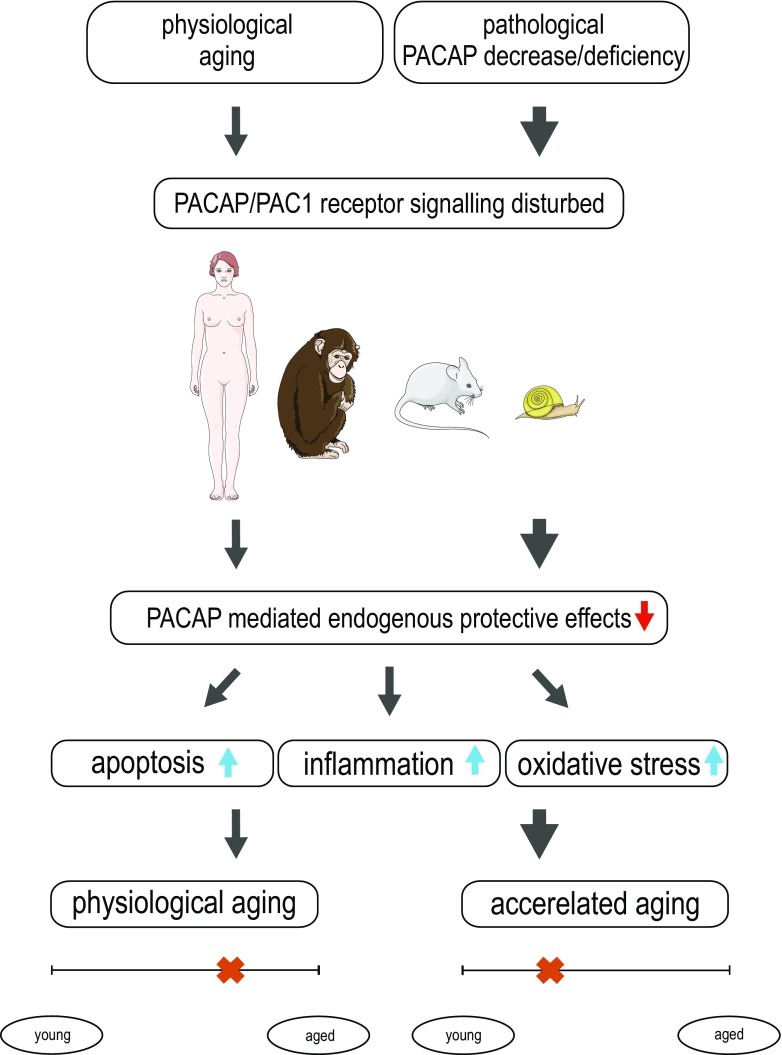
Dysregulation of neuropeptides may play an important role in aging-induced impairments. In the long list of neuropeptides, pituitary adenylate cyclase-activating polypeptide (PACAP) represents a highly effective cytoprotective peptide that provides an endogenous control against a variety of tissue-damaging stimuli. PACAP has neuro- and general cytoprotective effects due to anti-apoptotic, anti-inflammatory, and antioxidant actions. As PACAP is also a part of the endogenous protective machinery, it can be hypothesized that the decreased protective effects in lack of endogenous PACAP would accelerate age-related degeneration and PACAP knockout mice would display age-related degenerative signs earlier. Recent results support this hypothesis showing that PACAP deficiency mimics aspects of age-related pathophysiological changes including increased neuronal vulnerability and systemic degeneration accompanied by increased apoptosis, oxidative stress, and inflammation. Decrease in PACAP expression has been shown in different species from invertebrates to humans. PACAP-deficient mice display numerous pathological alterations mimicking early aging, such as retinal changes, corneal keratinization and blurring, and systemic amyloidosis. In the present review, we summarize these findings and propose that PACAP deficiency could be a good model of premature aging.
Keywords: Aging; Amyloidosis; Apoptosis; Degeneration; PACAP.
Figures
References
-
- Abad C, Tan Y (2018) Immunomodulatory roles of PACAP and VIP: lessons from knockout mice. J Mol Neurosci. 10.1007/s12031-018-1150-y - PubMed
-
- Armstrong BD, Abad C, Chhith S, Cheung-Lau G, Hajji OE, Nobuta H, Waschek JA. Impaired nerve regeneration and enhanced neuroinflammatory response in mice lacking pituitary adenylyl cyclase activating peptide. Neuroscience. 2008;151:63–73. doi: 10.1016/j.neuroscience.2007.09.084. - DOI - PMC - PubMed
-
- Ashpole NM, Logan S, Yabluchanskiy A, Mitschelen MC, Yan H, Farley JA, Hodges EL, Ungvari Z, Csiszar A, Chen S, Georgescu C, Hubbard GB, Ikeno Y, Sonntag WE. IGF-1 has sexually dimorphic, pleiotropic, and time-dependent effects on healthspan, pathology, and lifespan. Geroscience. 2017;39:129–145. doi: 10.1007/s11357-017-9971-0. - DOI - PMC - PubMed
-
- Banki E, Sosnowska D, Tucsek Z, Gautam T, Toth P, Tarantini S, Tamas A, Helyes Z, Reglodi D, Sonntag WE, Csiszar A, Ungvari Z. Age-related decline of autocrine pituitary adenylate cyclase-activating polypeptide impairs angiogenic capacity of rat cerebromicrovascular endothelial cells. J Gerontol A Biol Sci Med Sci. 2015;70:665–674. doi: 10.1093/gerona/glu116. - DOI - PMC - PubMed
Publication types
MeSH terms
Substances
LinkOut - more resources
Full Text Sources
Medical
Research Materials
