


Investigating the landscape of US orphan product approvals
- PMID: 30348193
- PMCID: PMC6198498
- DOI: 10.1186/s13023-018-0930-3
Investigating the landscape of US orphan product approvals
Abstract
Background: The Orphan Drug Act was enacted in 1983 to encourage the development of drugs for rare diseases. Previous research has attempted to examine the impact of the Act by assessing either the number of orphan designations that have been granted or the number of new orphan drugs approved for marketing. This study provides a more in-depth understanding of the effect of the Orphan Drug Act by investigating all types of drug approvals with an orphan designation, along with multiple characteristics of the drugs, over the entire 35 years of the Act. These orphan approvals include: new molecular entities (new drugs approved first for a rare disease), secondary indications (an expansion from the first approved indication), and new formulations.
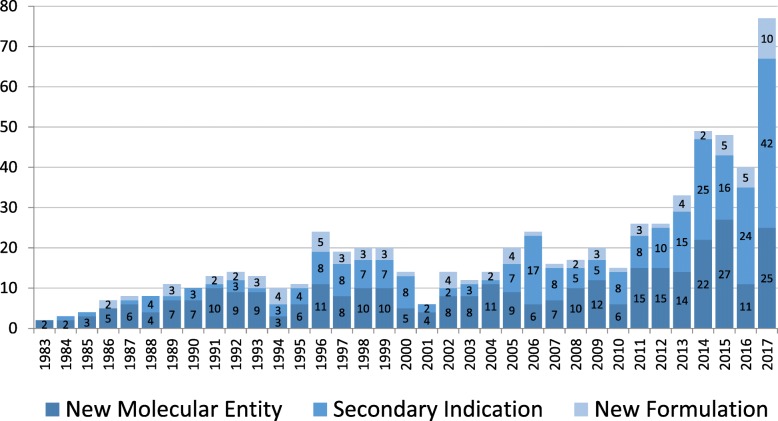
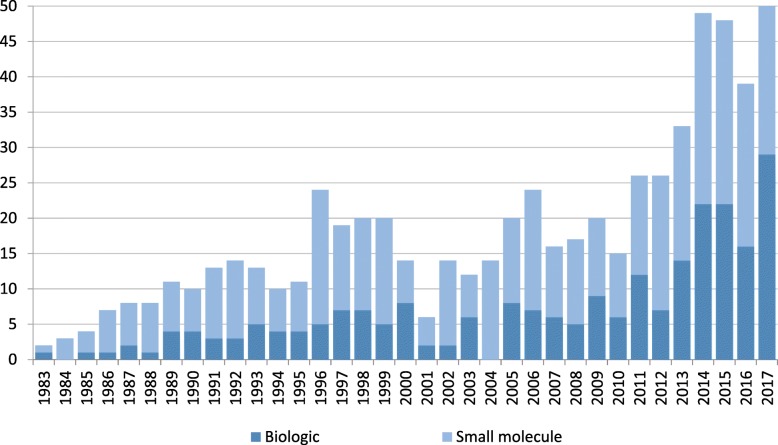
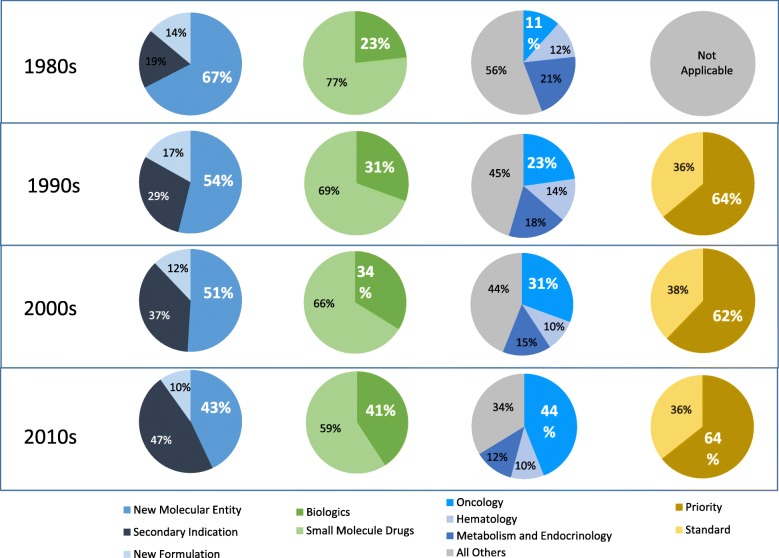
Results: The results show that the number of approvals for orphan indications has been increasing over time, and the upward trend is especially large in the most recent years. Much of this increase has been driven by the increase in secondary indications being approved for previously approved drugs, although there have also been increases in the number of approved new drugs. We also find that while oncology indications have been increasing significantly, there has also been an increase in other therapeutic areas. Additionally, we find that the proportion of biologic drugs being approved has increased over time. Lastly, while other parts of this drug landscape have dramatically altered over time, the proportion of orphan approvals receiving priority review has not changed.
Conclusions: Our data suggest that the Orphan Drug Act appears to have stimulated significant drug development for rare diseases. Additionally, approvals of orphan indications have been increasing over time. This increasing effect has not targeted a single area of the rare disease space, rather, gains in approvals have been seen across: therapeutic areas, approval types (both new drugs and secondary indications), and for both biologics and small molecule drugs.
Keywords: FDA; Orphan drug act; Orphan products.
Conflict of interest statement
Ethics approval and consent to participate
Not applicable.
Consent for publication
Not applicable.
Competing interests
The authors declare that they have no competing interests.
Publisher’s Note
Springer Nature remains neutral with regard to jurisdictional claims in published maps and institutional affiliations.
Figures



References
MeSH terms
LinkOut - more resources
Full Text Sources
