


Identification and genetic characterization of a novel parvovirus associated with serum hepatitis in horses in China
- PMID: 30348940
- PMCID: PMC6198012
- DOI: 10.1038/s41426-018-0174-2
Identification and genetic characterization of a novel parvovirus associated with serum hepatitis in horses in China
Abstract
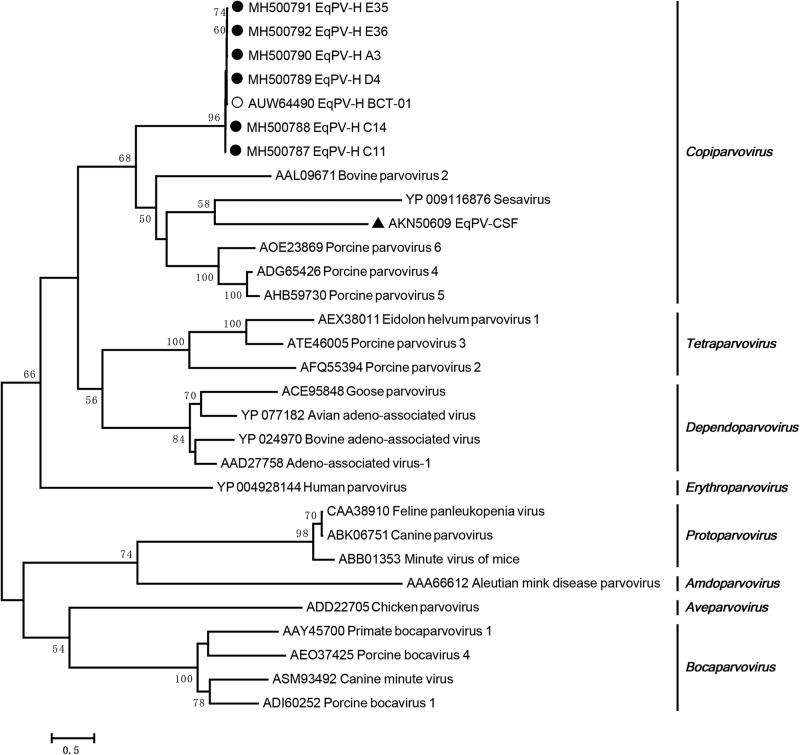
A novel equine parvovirus, equine parvovirus-hepatitis (EqPV-H), was first discovered in a horse that died of equine serum hepatitis in the USA in 2018. EqPV-H was shown to be a novel etiological agent associated with equine serum hepatitis. Following this initial report, no additional studies on EqPV-H have been published. In this study, a total of 143 serum samples were collected from racehorses at 5 separate farms in China and were analyzed to detect EqPV-H DNA via nested PCR. The results indicated a high prevalence of EqPV-H (11.9%, 17/143) in the studied animals. In addition, a remarkably high coinfection rate (58.8%, 10/17) with 2 equine flaviviruses (equine hepacivirus and equine pegivirus) was observed in the EqPV-H positive equines. However, all equines tested negative for Theiler's disease-associated virus, an etiological agent associated with equine serum hepatitis. The genomes of six field EqPV-H strains were sequenced and analyzed, with the results indicating that the Chinese EqPV-H strains have low genetic diversity and high genetic similarity with the USA EqPV-H strain BCT-01. A phylogenetic analysis demonstrated that the Chinese EqPV-H strains clustered with BCT-01 in the genus Copiparvovirus but were distantly related to another equine parvovirus identified in horse cerebrospinal fluid. In addition, liver enzyme levels were detected in the EqPV-H positive serum samples, and all the values were in the normal range, indicating that infection can occur without concurrent liver disease. This study will promote an understanding of the geographical distribution, genetic diversity, and pathogenicity of EqPV-H.
Conflict of interest statement
The authors declare that they have no conflict of interest.
Figures
References
MeSH terms
LinkOut - more resources
Full Text Sources
Other Literature Sources
