


A genosensor for detection of HTLV-I based on photoluminescence quenching of fluorescent carbon dots in presence of iron magnetic nanoparticle-capped Au
- PMID: 30348974
- PMCID: PMC6197194
- DOI: 10.1038/s41598-018-32756-w
A genosensor for detection of HTLV-I based on photoluminescence quenching of fluorescent carbon dots in presence of iron magnetic nanoparticle-capped Au
Abstract
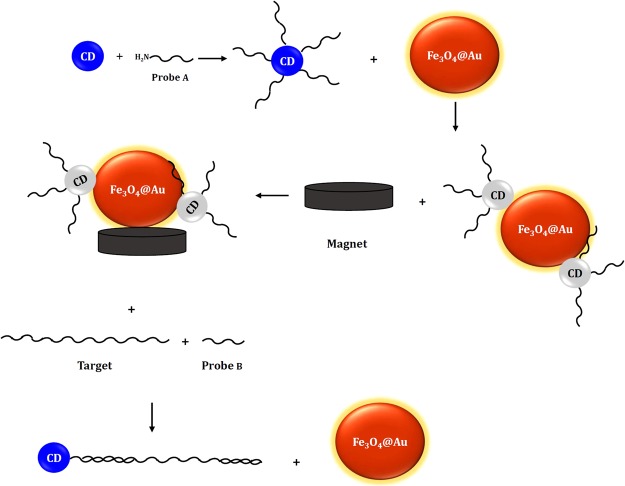
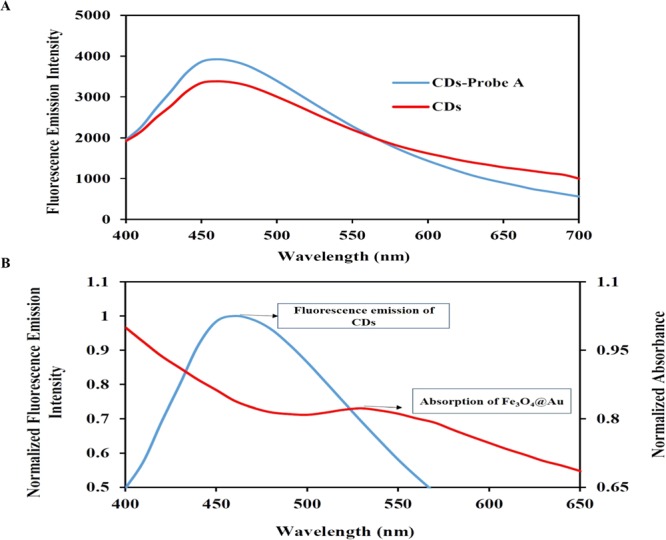
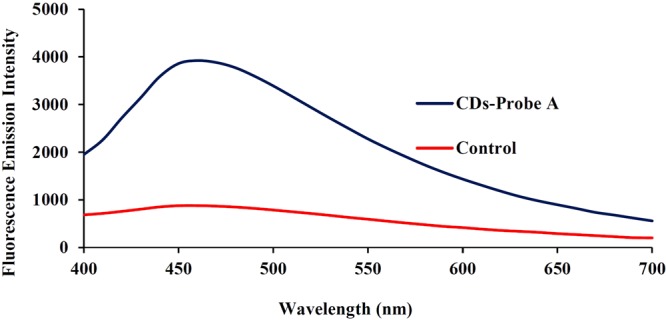
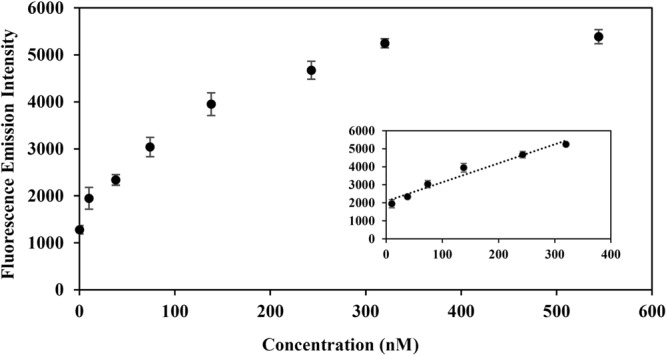
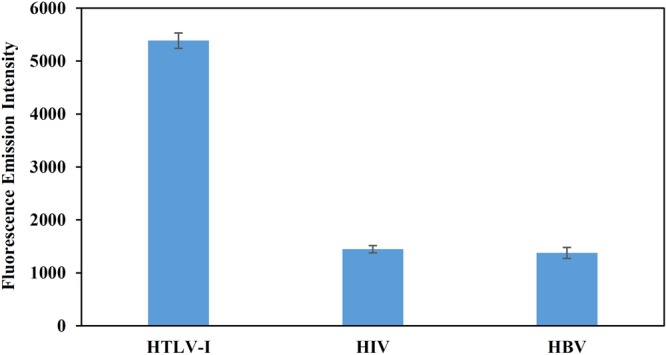
Carbon dots and Fe3O4@Au were synthesized to develop a new biosensor to detect DNA target. We investigated the photoluminescence property of carbon dots (CDs) in the presence of Fe3O4-capped Au (Fe3O4@Au). Firstly, we designed two dedicated probes for unique long sequence region of human T-lymphotropic virus type 1 genome. One of the probes was covalently bound to the CDs. In the absence of target, CDs-probe was adsorbed on the surface of Fe3O4@Au through two possible mechanisms, leading to quenching the fluorescence emission of CDs. The fluorescence emission of CDs was recovered in the presence of target since double-stranded DNA cannot adsorb on the Fe3O4@Au. Also, Fe3O4@Au can adsorb the unhybridized oligonucleotides and improves the accuracy of detection. The specificity of the proposed biosensor was confirmed by BLAST search and assessed by exposing the biosensor to other virus targets. The experimental detection limit of the biosensor was below 10 nM with linear range from 10 to 320 nM.
Conflict of interest statement
The authors declare no competing interests.
Figures
References
-
- Karunakaran Chandran, Rajkumar Raju, Bhargava Kalpana. Biosensors and Bioelectronics. 2015. Introduction to Biosensors; pp. 1–68.
Publication types
MeSH terms
Substances
Grants and funding
LinkOut - more resources
Full Text Sources
Research Materials
