. 2018 Oct 2;9(77):34495-34505.
doi: 10.18632/oncotarget.26130.

Transglutaminase is a mesothelioma cancer stem cell survival protein that is required for tumor formation

Affiliations

Transglutaminase is a mesothelioma cancer stem cell survival protein that is required for tumor formation

Gautam Adhikary et al. Oncotarget. .

Abstract

Mesothelioma is a rare cancer of the mesothelial cell layer of the pleura, peritoneum, pericardium and tunica vaginalis. It is typically caused by asbestos, notoriously resistant to chemotherapy and generally considered incurable with a poor life expectancy. Transglutaminase 2 (TG2), a GTP binding regulatory protein, is an important cancer stem cell survival and therapy resistance factor. We show that TG2 is highly expressed in human mesothelioma tumors and in mesothelioma cancer stem cells (MCS cells). TG2 knockdown or TG2 inhibitor treatment reduces MCS cell spheroid formation, matrigel invasion, migration and tumor formation. Time to tumor first appearance is doubled in TG2 knockout cells as compared to wild-type. In addition, TG2 loss is associated with reduced expression of stemness, and epithelial mesenchymal transition markers, and enhanced apoptosis. These studies indicate that TG2 is an important MCS cell survival protein and suggest that TG2 may serve as a mesothelioma cancer stem cell therapy target.

Keywords: EMT; TGM2; cancer stem cell; mesothelioma; transglutaminase.


Conflict of interest statement

CONFLICTS OF INTEREST The authors have no conflict of interest. Funded by a National Institutes of Health award (R01 CA211909 and R01 CA184027) to Richard L. Eckert.

Figures
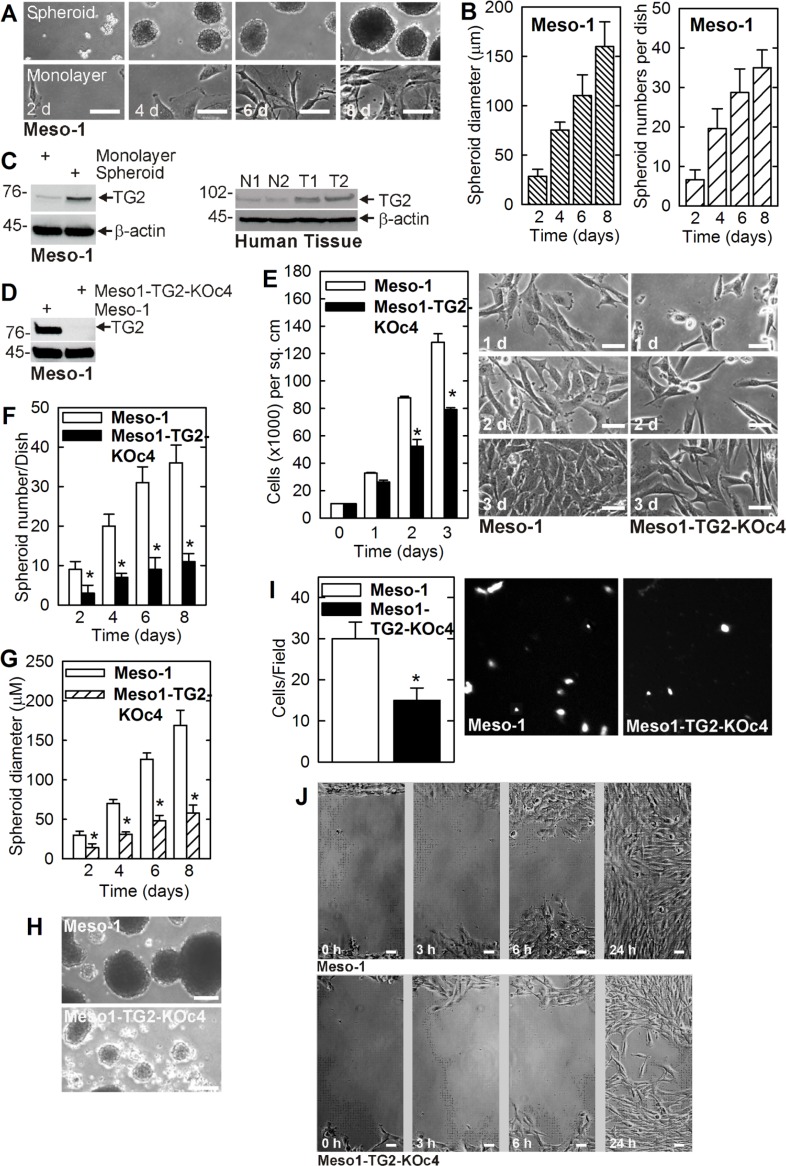
Figure 1
Figure 1. TG2 is enriched in MCS cells and required for survival
(A, B) Meso-1 monolayer cells were harvested and seeded in ultra-low attachment plates for growth as spheroids (MCS cells). (C) TG2 level is markedly enriched in MCS cells and human tumors (T1/T2 = tumors, N1/N2 = control tissue). (DJ) TG2 is required for optimal cell proliferation, spheroid formation, invasion and migration. The values are mean ± SEM and the asterisks indicate a significant change compared to control, n = 3, p < 0.005. The bars = 50 microns in all panels.
Figure 2
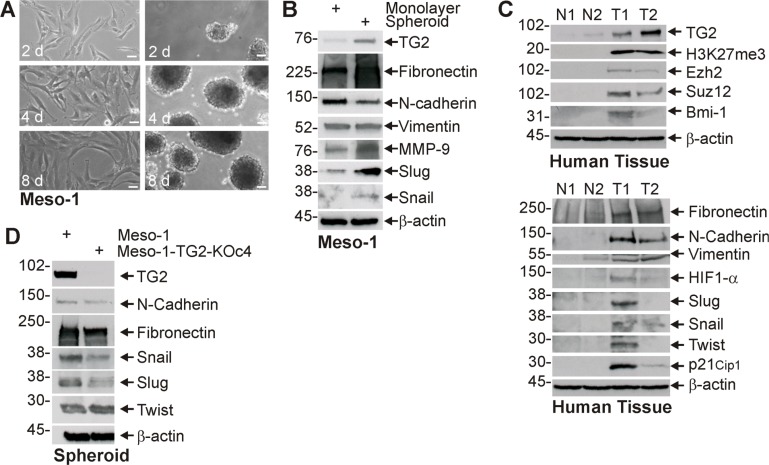
Figure 2. TG2 expression is associated with enhanced EMT marker expression
(A, B) Monolayer and spheroid cultures were grown for 8 d and extracts were prepared for detection of the indicated epitopes. (C) Extracts were prepared from normal human tissue (N1/N2) and tumors (T1/T2) for epitope detection by immunoblot. (D) Meso-1 and Meso-1-TG2-KOc4 cells were grown as spheroids and extract was prepared for detection of the indicated proteins. Similar results were observed in multiple experiments. Each experiment indicated in this figure were repeated a minimum of three times. Bars = 50 microns in all panels.
Figure 3
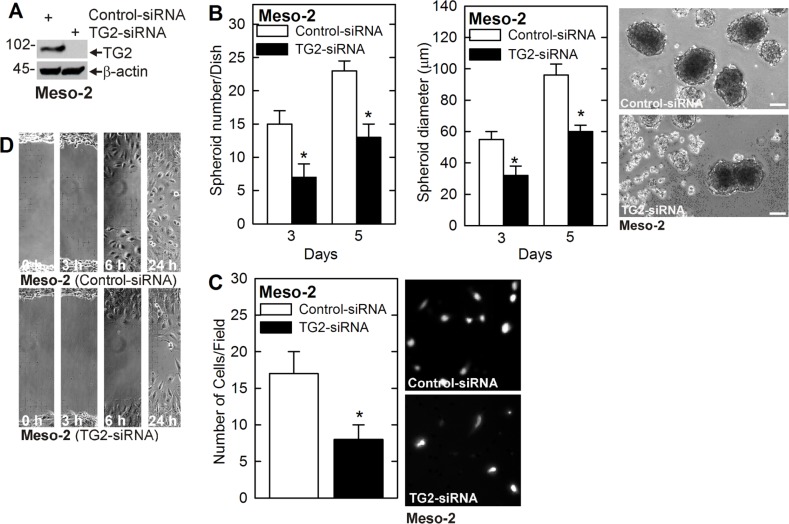
Figure 3. TG2 knockdown reduces MCS cell properties in Meso-2 cells
(A) Meso-2 cells were treated with 3 µg of control- or TG2-siRNA and after 48 h extracts were prepared to monitored TG2 level. (BD) TG2 knockdown in Meso-2 cells reduces spheroid number and size, matrigel invasion and migration. The values are mean ± SEM and asterisks indicate a significant change compared to control, n = 3, p < 0.05. Bars = 50 microns in all panels.
Figure 4
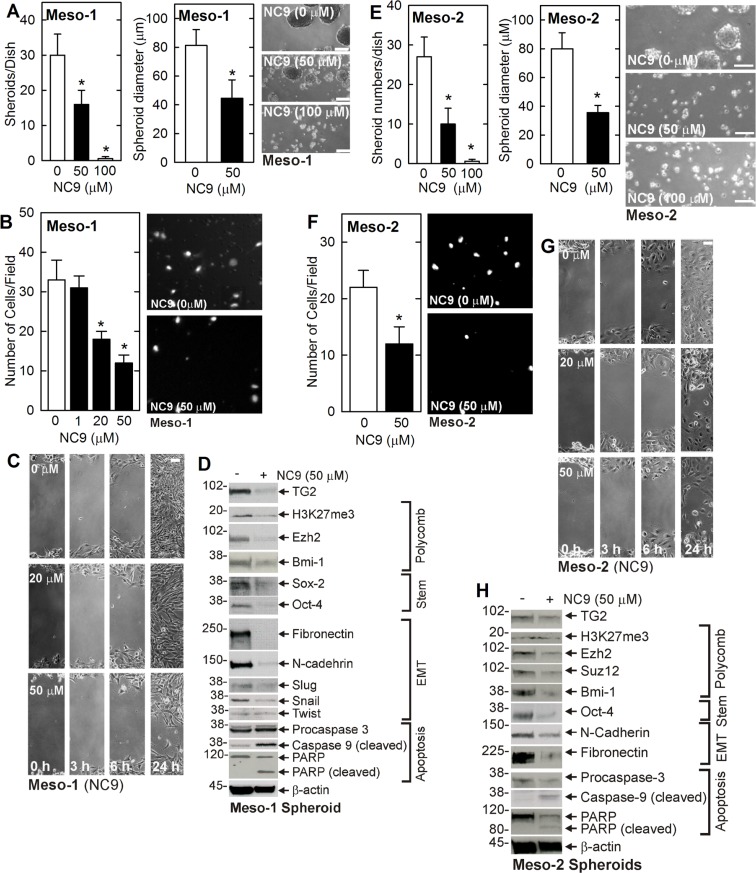
Figure 4. NC9 treatment suppresses the MCS cell phenotype
(AD) Meso-1 cells were monitored for spheroid formation, invasion and migration, and expression of MCS cell-associated markers following treatment with 0, 50 and 100 µM NC9. (EH) Meso-2 cells were monitored as described for Meso-1. The values are mean ± SEM and asterisks indicate a significant change compared to control, n = 3, p < 0.05. Bars = 50 microns in all panels.
Figure 5
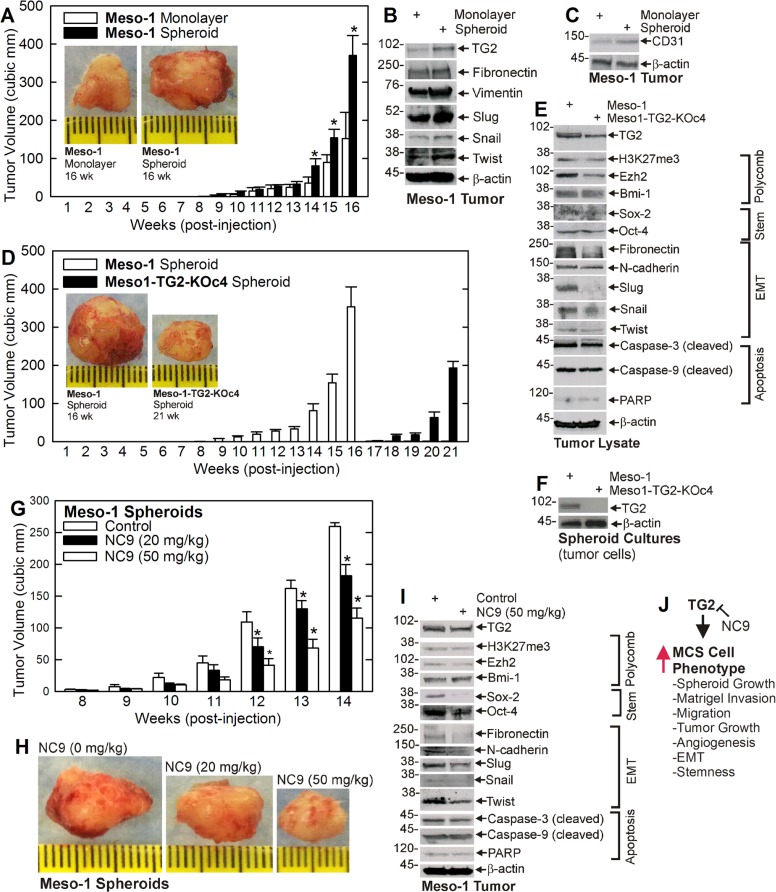
Figure 5. TG2 is required for optimal tumor formation
(AC) Monolayer- and spheroid-derived Meso-1 cells were injected (3 million/injection) into each front flank in NSG mice and tumor formation was monitored. Extracts were prepared from 16 wks tumors for detection of the indicated epitopes. (D, E) Meso-1 and Meso1-TG2-KOc4 cells were grown as spheroids and tumor formation was monitored in NSG mice. Extracts were prepared from 16 wk Meso-1 cell and 21 wk Meso1-TG2-KOc4 cells for detection of the indicated epitopes. (F) Meso-1 and Meso1-TG2-KOc4 tumors were harvested and tumor cells were isolated and grown in culture for preparation of extracts to measure TG2 level. (GI) Spheroid derived Meso-1 cells were injected at 3 million cells per each front flank in five NSG mice per treatment, and at 8 wks post-injection treatment was initiated with the indicated levels of NC9. Tumor growth was monitored and at 14 wks images were collected and extracts prepared to monitor the impact of NC9 treatment on the indicated epitopes. Similar results were observed in multiple experiments. The values are mean ± SEM and the asterisks indicate a significant change compared to control, n = 3 experiments, p < 0.05. (J) A schematic of TG2 impact on MSC cell phenotype. TG2 increases the indicated processes and this can be inhibited by the TG2 inhibitor, NC9.

References

    1. Cao S, Jin S, Cao J, Shen J, Hu J, Che D, Pan B, Zhang J, He X, Ding D, Gu F, Yu Y. Advances in malignant peritoneal mesothelioma. Int J Colorectal Dis. 2015;30:1–10. - PubMed
    1. Hassan R, Alexander R, Antman K, Boffetta P, Churg A, Coit D, Hausner P, Kennedy R, Kindler H, Metintas M, Mutti L, Onda M, Pass H, et al. Current treatment options and biology of peritoneal mesothelioma: meeting summary of the first NIH peritoneal mesothelioma conference. Ann Oncol. 2006;17:1615–19. - PubMed
    1. Vogelzang NJ, Rusthoven JJ, Symanowski J, Denham C, Kaukel E, Ruffie P, Gatzemeier U, Boyer M, Emri S, Manegold C, Niyikiza C, Paoletti P. Phase III study of pemetrexed in combination with cisplatin versus cisplatin alone in patients with malignant pleural mesothelioma. J Clin Oncol. 2003;21:2636–44. - PubMed
    1. Varghese S, Whipple R, Martin SS, Alexander HR. Multipotent cancer stem cells derived from human malignant peritoneal mesothelioma promote tumorigenesis. PLoS One. 2012;7:e52825. - PMC - PubMed
    1. Zhang J, Lesort M, Guttmann RP, Johnson GV. Modulation of the in situ activity of tissue transglutaminase by calcium and GTP. J Biol Chem. 1998;273:2288–95. - PubMed