


Ovarian Carcinoma-Associated Mesenchymal Stem Cells Arise from Tissue-Specific Normal Stroma
- PMID: 30353617
- PMCID: PMC6392140
- DOI: 10.1002/stem.2932
Ovarian Carcinoma-Associated Mesenchymal Stem Cells Arise from Tissue-Specific Normal Stroma
Abstract
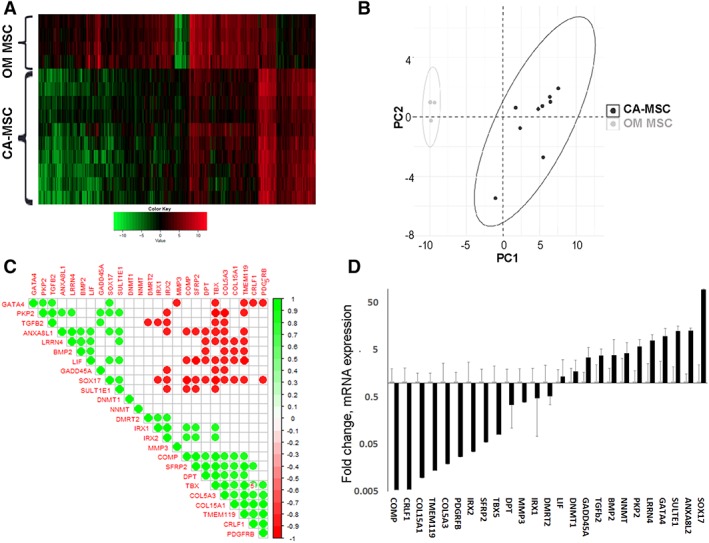
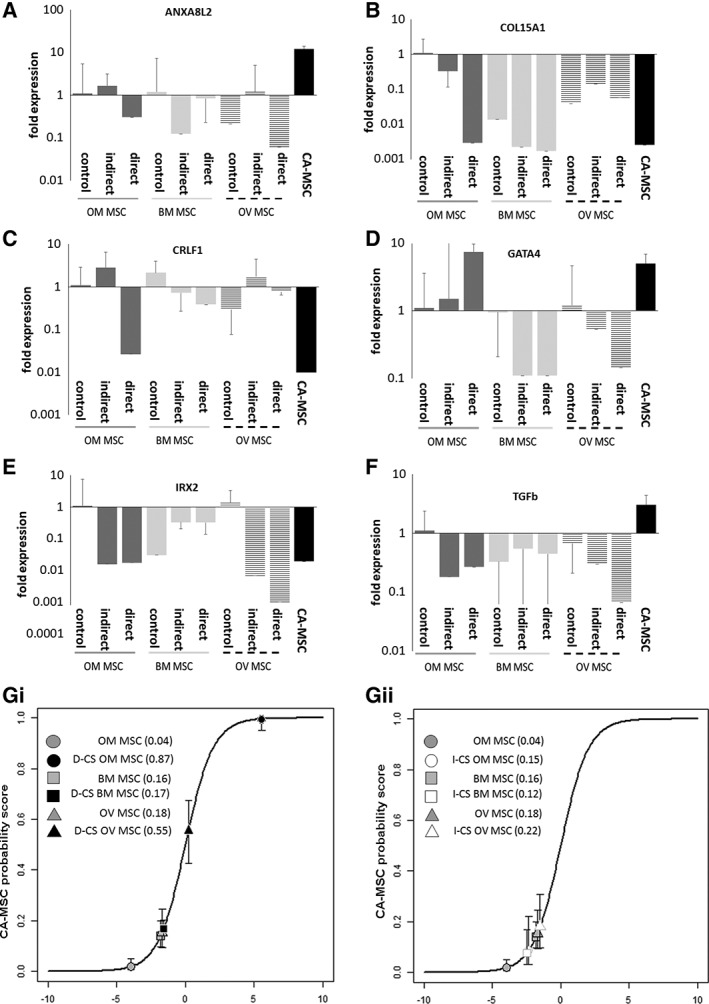
Carcinoma-associated mesenchymal stem cells (CA-MSCs) are critical stromal progenitor cells within the tumor microenvironment (TME). We previously demonstrated that CA-MSCs differentially express bone morphogenetic protein family members, promote tumor cell growth, increase cancer "stemness," and chemotherapy resistance. Here, we use RNA sequencing of normal omental MSCs and ovarian CA-MSCs to demonstrate global changes in CA-MSC gene expression. Using these expression profiles, we create a unique predictive algorithm to classify CA-MSCs. Our classifier accurately distinguishes normal omental, ovary, and bone marrow MSCs from ovarian cancer CA-MSCs. Suggesting broad applicability, the model correctly classifies pancreatic and endometrial cancer CA-MSCs and distinguishes cancer associated fibroblasts from CA-MSCs. Using this classifier, we definitively demonstrate ovarian CA-MSCs arise from tumor mediated reprograming of local tissue MSCs. Although cancer cells alone cannot induce a CA-MSC phenotype, the in vivo ovarian TME can reprogram omental or ovary MSCs to protumorigenic CA-MSCs (classifier score of >0.96). In vitro studies suggest that both tumor secreted factors and hypoxia are critical to induce the CA-MSC phenotype. Interestingly, although the breast cancer TME can reprogram bone marrow MSCs into CA-MSCs, the ovarian TME cannot, demonstrating for the first time that tumor mediated CA-MSC conversion is tissue and cancer type dependent. Together these findings (a) provide a critical tool to define CA-MSCs and (b) highlight cancer cell influence on distinct normal tissues providing powerful insights into the mechanisms underlying cancer specific metastatic niche formation. Stem Cells 2019;37:257-269.
Keywords: Hypoxia; Mesenchymal stem cell; Ovarian cancer; Tumor microenvironment.
© 2018 The Authors. Stem Cells published by Wiley Periodicals, Inc. on behalf of AlphaMed Press 2018.
Conflict of interest statement
D.B. declared research support from Roche‐Genentech and AstraZeneca. R.B. declared a leadership position with Tradewind Biosciences and two patents with the University of Michigan. The other authors indicated no potential conflicts of interest.
Figures



References
-
- Surveillance, Epidemiology, and End Results (SEER) Program (www.seer.cancer.gov) Research Data (1973–2010), National Cancer Institute, DCCPS, Surveillance Research Program, Surveillance Systems Branch, released April 2013, based on the November 2012; submission.
-
- Musrap N, Diamandis EP. Revisiting the complexity of the ovarian cancer microenvironment—Clinical implications for treatment strategies. Mol Cancer Res 2012;10:1254–1264. - PubMed
-
- da Silva Meirelles L, Chagastelles PC, Nardi NB. Mesenchymal stem cells reside in virtually all post‐natal organs and tissues. J Cell Sci 2006;119:2204–2213. - PubMed
Publication types
MeSH terms
Grants and funding
LinkOut - more resources
Full Text Sources
Other Literature Sources
Medical
Molecular Biology Databases
