


Vascular Smooth Muscle Remodeling in Conductive and Resistance Arteries in Hypertension
- PMID: 30354262
- PMCID: PMC6205219
- DOI: 10.1161/ATVBAHA.118.311229
Vascular Smooth Muscle Remodeling in Conductive and Resistance Arteries in Hypertension
Abstract
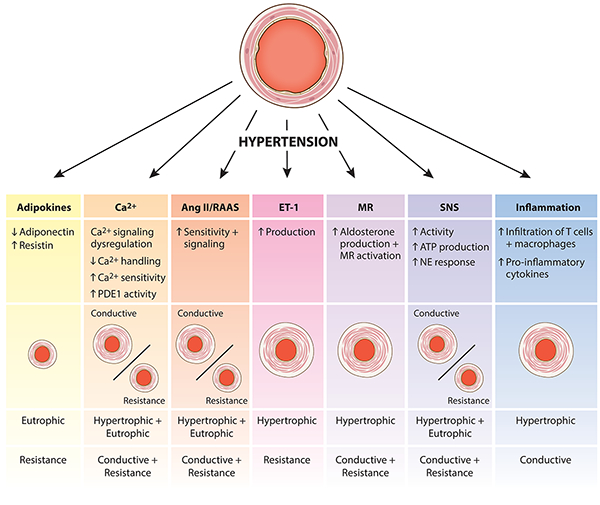
Cardiovascular disease is a leading cause of death worldwide and accounts for >17.3 million deaths per year, with an estimated increase in incidence to 23.6 million by 2030. 1 Cardiovascular death represents 31% of all global deaths 2 -with stroke, heart attack, and ruptured aneurysms predominantly contributing to these high mortality rates. A key risk factor for cardiovascular disease is hypertension. Although treatment or reduction in hypertension can prevent the onset of cardiovascular events, existing therapies are only partially effective. A key pathological hallmark of hypertension is increased peripheral vascular resistance because of structural and functional changes in large (conductive) and small (resistance) arteries. In this review, we discuss the clinical implications of vascular remodeling, compare the differences between vascular smooth muscle cell remodeling in conductive and resistance arteries, discuss the genetic factors associated with vascular smooth muscle cell function in hypertensive patients, and provide a prospective assessment of current and future research and pharmacological targets for the treatment of hypertension.
Keywords: hypertension; myocardial infarction; smooth muscle; vascular remodeling.
Figures
References
Publication types
MeSH terms
Substances
Grants and funding
LinkOut - more resources
Full Text Sources
Medical
