


Loss of Renal Peritubular Capillaries in Hypertensive Patients Is Detectable by Urinary Endothelial Microparticle Levels
- PMID: 30354805
- PMCID: PMC6205754
- DOI: 10.1161/HYPERTENSIONAHA.118.11766
Loss of Renal Peritubular Capillaries in Hypertensive Patients Is Detectable by Urinary Endothelial Microparticle Levels
Abstract
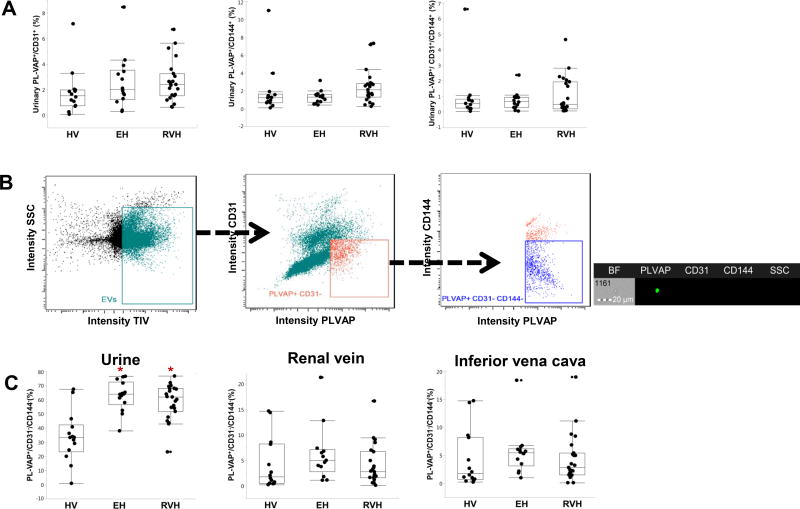
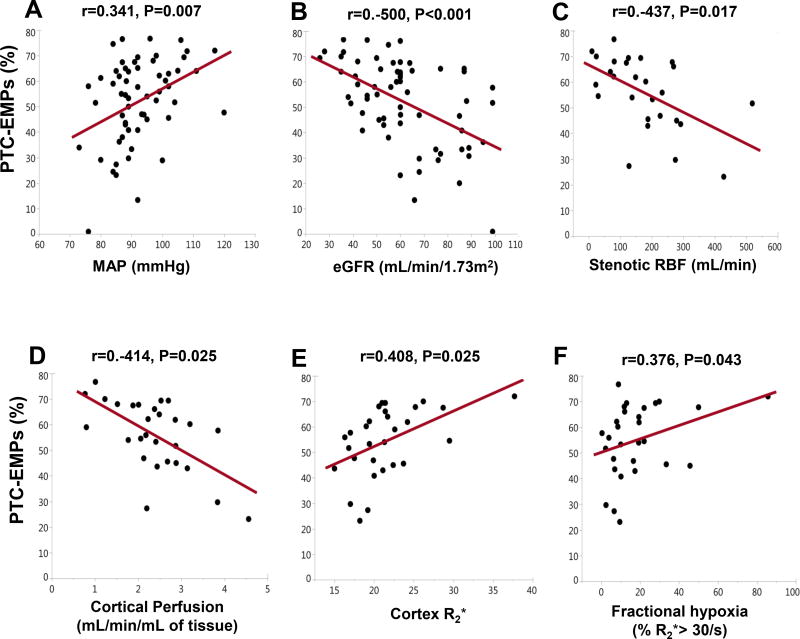
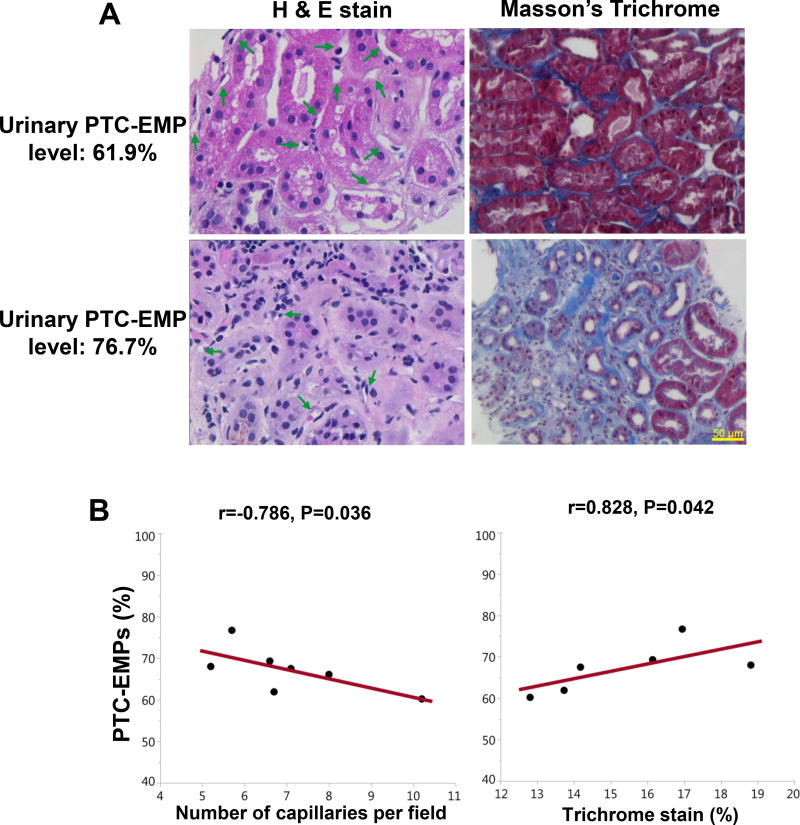
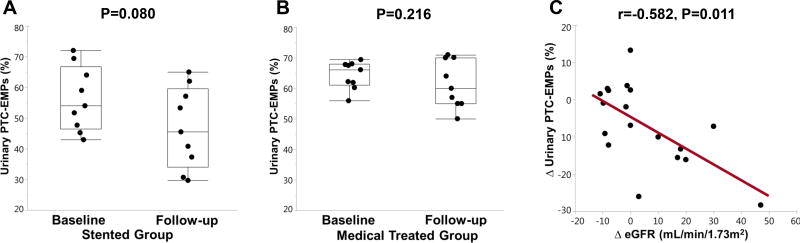
Hypertension, an important cause of chronic kidney disease, is characterized by peritubular capillary (PTC) loss. Circulating levels of endothelial microparticles (EMPs) reflect systemic endothelial injury. We hypothesized that systemic and urinary PTC-EMPs levels would reflect renal microvascular injury in hypertensive patients. We prospectively measured by flow cytometry renal vein, inferior vena cava, and urinary levels of EMPs in essential (n=14) and renovascular (RVH; n=24) hypertensive patients and compared them with peripheral blood and urinary levels in healthy volunteers (n=14). PTC-EMPs were identified as urinary exosomes positive for the PTC marker plasmalemmal-vesicle-associated protein. In 7 RVH patients, PTC and fibrosis were also quantified in renal biopsy, and in 18 RVH patients, PTC-EMPs were measured again 3 months after continued medical therapy with or without stenting (n=9 each). Renal vein and systemic PTC-EMPs levels were not different among the groups, whereas their urinary levels were elevated in both RVH and essential hypertension versus healthy volunteers (56.8%±12.7% and 62.8%±10.7% versus 34.0%±17.8%; both P≤0.001). Urinary PTC-EMPs levels correlated directly with blood pressure and inversely with estimated glomerular filtration rate. Furthermore, in RVH, urinary PTC-EMPs levels correlated directly with stenotic kidney hypoxia, histological PTC count, and fibrosis and inversely with cortical perfusion. Three months after treatment, the change in urinary PTC-EMPs levels correlated inversely with a change in renal function ( r=-0.582; P=0.011). Therefore, urinary PTC-EMPs levels are increased in hypertensive patients and may reflect renal microcirculation injury, whereas systemic PTC-EMPs levels are unchanged. Urinary PTC-EMPs may be useful as novel biomarkers of intrarenal capillary loss.
Keywords: exosomes; glomerular filtration rate; hypertension; microvascular rarefaction; urine.
Conflict of interest statement
All the authors declare no competing interests.
Figures
References
-
- Bohle A, Mackensen-Haen S, Wehrmann M. Significance of postglomerular capillaries in the pathogenesis of chronic renal failure. Kidney Blood Press Res. 1996;19:191–195. - PubMed
-
- Rabelink TJ, Wijewickrama DC, de Koning EJ. Peritubular endothelium: the Achilles heel of the kidney? Kidney Int. 2007;72:926–930. - PubMed
-
- van der Pol E, Boing AN, Harrison P, Sturk A, Nieuwland R. Classification, functions, and clinical relevance of extracellular vesicles. Pharmacol Rev. 2012;64:676–705. - PubMed
Publication types
MeSH terms
Grants and funding
LinkOut - more resources
Full Text Sources
Other Literature Sources
Medical
