Review
. 2019 Feb 10:81:189-209.
doi: 10.1146/annurev-physiol-020518-114504. Epub 2018 Oct 24.

Contribution of Wound-Associated Cells and Mediators in Orchestrating Gastrointestinal Mucosal Wound Repair

Affiliations
Review

Contribution of Wound-Associated Cells and Mediators in Orchestrating Gastrointestinal Mucosal Wound Repair

Miguel Quirós et al. Annu Rev Physiol. .

Abstract

The gastrointestinal mucosa, structurally formed by the epithelium and lamina propria, serves as a selective barrier that separates luminal contents from the underlying tissues. Gastrointestinal mucosal wound repair is orchestrated by a series of spatial and temporal events that involve the epithelium, recruited immune cells, resident stromal cells, and the microbiota present in the wound bed. Upon injury, repair of the gastrointestinal barrier is mediated by collective migration, proliferation, and subsequent differentiation of epithelial cells. Epithelial repair is intimately regulated by a number of wound-associated cells that include immune cells and stromal cells in addition to mediators released by luminal microbiota. The highly regulated interaction of these cell types is perturbed in chronic inflammatory diseases that are associated with impaired wound healing. An improved understanding of prorepair mechanisms in the gastrointestinal mucosa will aid in the development of novel therapeutics that promote mucosal healing and reestablish the critical epithelial barrier function.

Keywords: epithelia; gastrointestinal tract; inflammation; lamina propria; mucosa; repair.


Figures
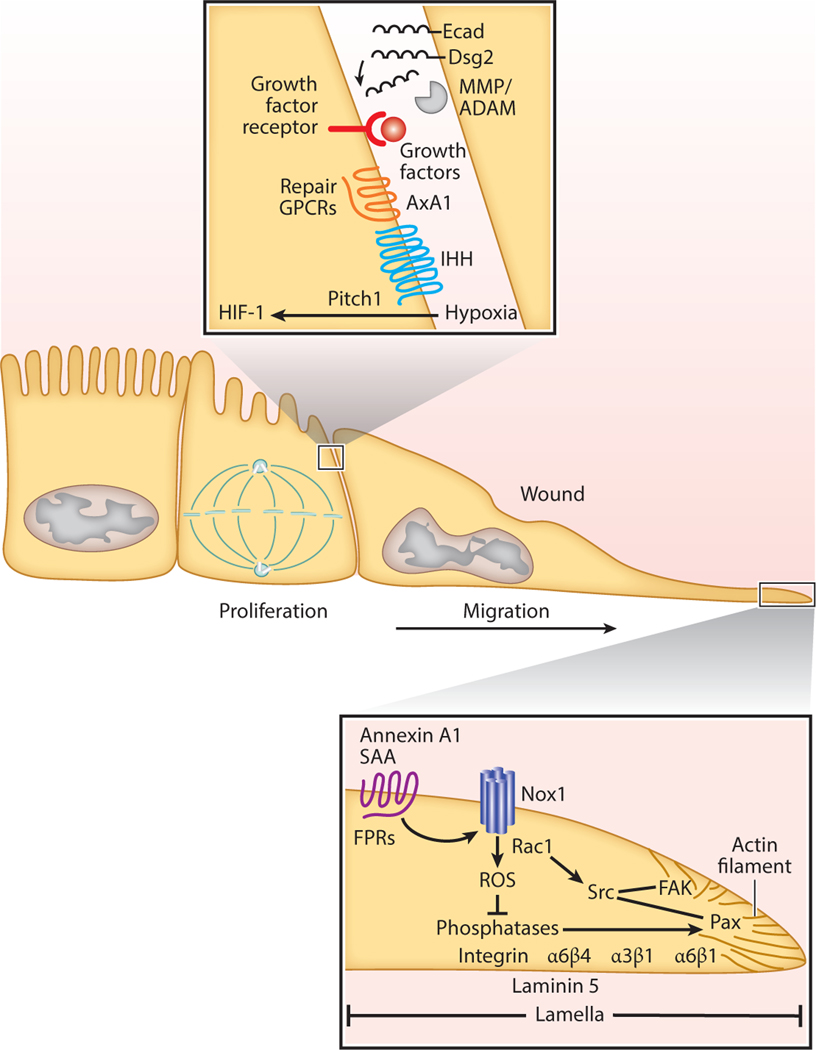
Figure 1
Figure 1
Signaling pathways involved in gastrointestinal epithelial restitution. In order to regain homeostasis after injury, gastrointestinal epithelial cells need to migrate and proliferate. Cells in the edges of wounds migrate to cover denuded surfaces while cells behind the migration front proliferate to accelerate this process. Abbreviations: Dsg2, desmoglein-2 Ecad, E-cadherin; FAK, focal adhesion kinase; FPR, formyl peptide receptor; GPCR, G protein–coupled receptor; HIF-1, hypoxia-induced factor 1; IHH, Indian Hedgehog; MMP, metalloproteinase; Nox1, NADPH oxidase 1; ROS, reactive oxygen species; SAA, serum amyloid factor A.
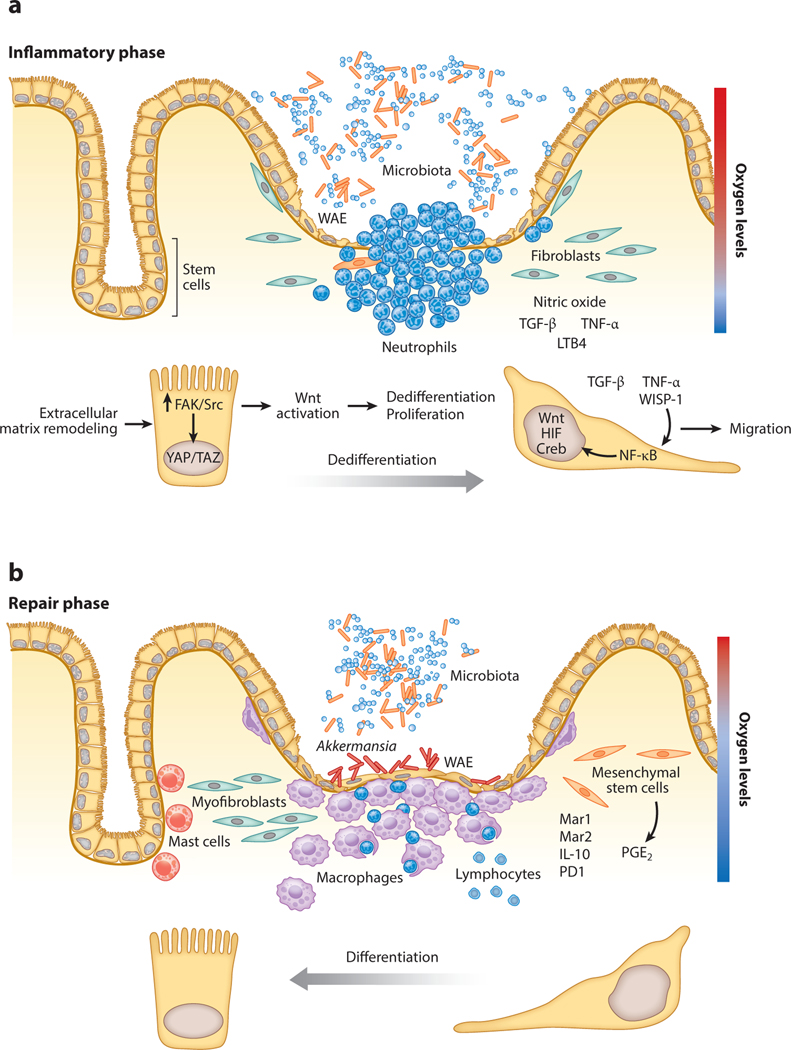
Figure 2
Figure 2
Wound-associated cells and soluble mediators in a microenvironment during different phases of gastrointestinal mucosal wound repair. After injury, the gastrointestinal mucosa goes through a dynamic process that involves immune cell recruitment and proliferation of epithelial and stromal cells. The inflammatory phase (a) of wound healing requires the recruitment of neutrophils and proinflammatory mediators, whereas the repair phase (b) involves the removal of dead cells and the presence of factors that stimulate proliferating and prosurvival signaling pathways. Abbreviations: FAK, focal adhesion kinase; HIF, hypoxia-inducible factor; IL-10, interleukin-10; LTB4, leukotriene B4; Mar, maresin; PD1, protectin D1; PGE2, prostaglandin E2; TGF-β, transforming growth factor-β; TNF-α, tumor necrosis factor-α; WAE, wound-associated epithelia; WISP-1, Wnt-induced secreted protein 1.

References

    1. Moens E, Veldhoen M. 2012. Epithelial barrier biology: good fences make good neighbours. Immunology 135:1–8 - PMC - PubMed
    1. Cheng LK, O’Grady G, Du P, Egbuji JU, Windsor JA, Pullan AJ. 2010. Gastrointestinal system. Wiley Interdisc. Rev. Syst. Biol. Med. 2:65–79 - PMC - PubMed
    1. Iizuka M, Konno S. 2011. Wound healing of intestinal epithelial cells. World J. Gastroenterol. 17:2161–71 - PMC - PubMed
    1. Gurtner GC, Werner S, Barrandon Y, Longaker MT. 2008. Wound repair and regeneration. Nature 453:314–21 - PubMed
    1. Sugimoto MA, Sousa LP, Pinho V, Perretti M, Teixeira MM. 2016. Resolution of inflammation: Whatcontrols its onset? Front. Immunol. 7:160. - PMC - PubMed

Publication types

MeSH terms

LinkOut - more resources