


Focal Cerebral Ischemia and Reperfusion Induce Brain Injury Through α2δ-1-Bound NMDA Receptors
- PMID: 30355118
- PMCID: PMC6205748
- DOI: 10.1161/STROKEAHA.118.022330
Focal Cerebral Ischemia and Reperfusion Induce Brain Injury Through α2δ-1-Bound NMDA Receptors
Abstract
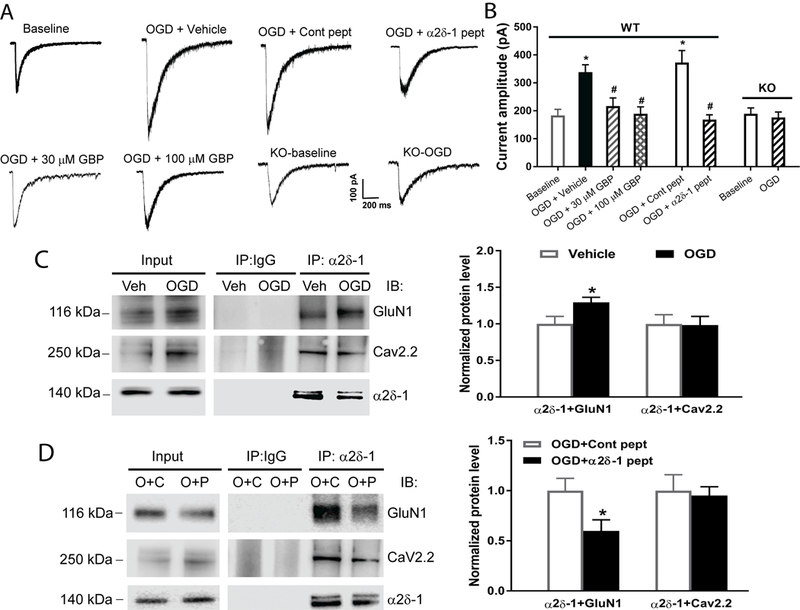
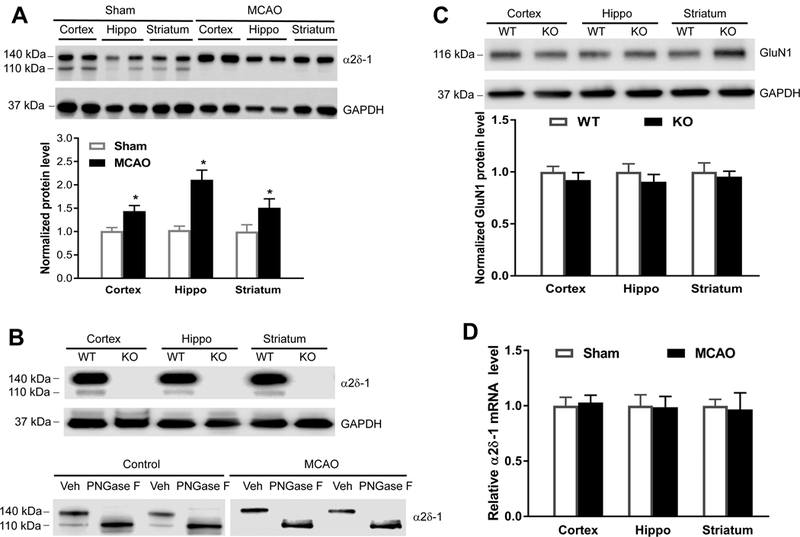
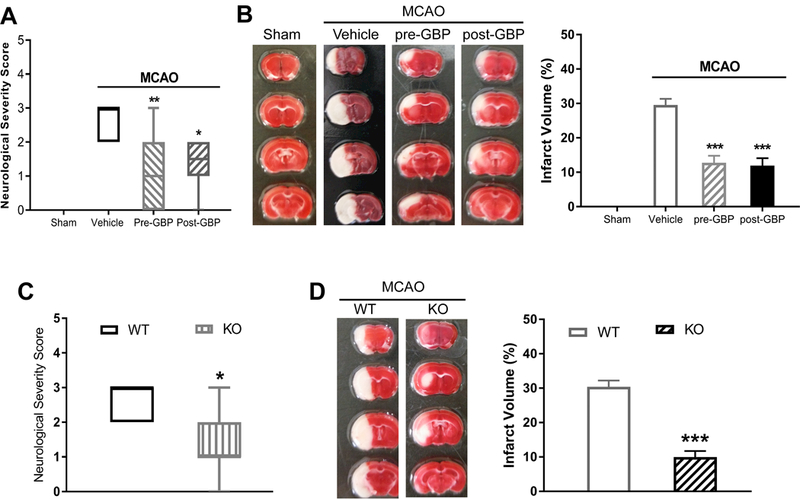
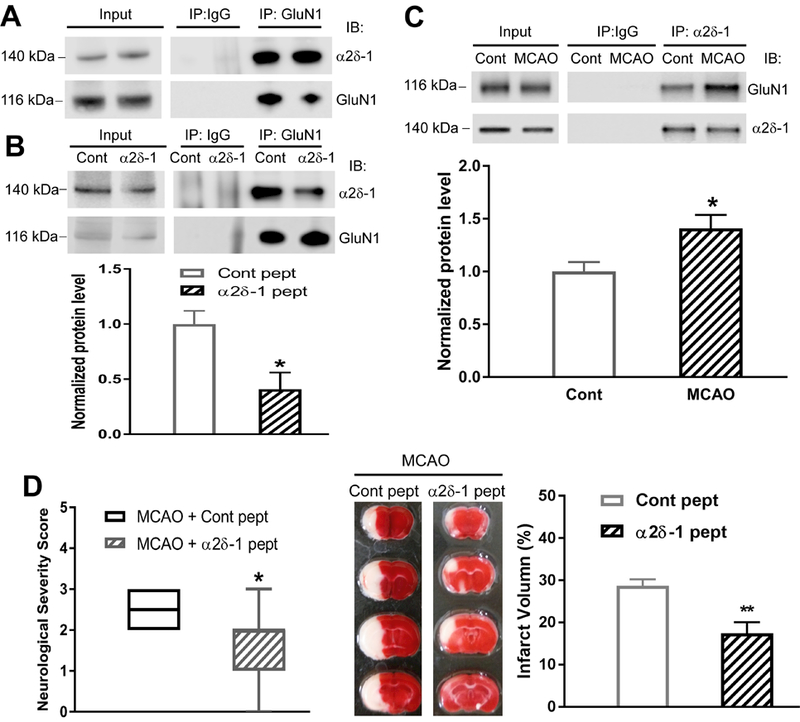
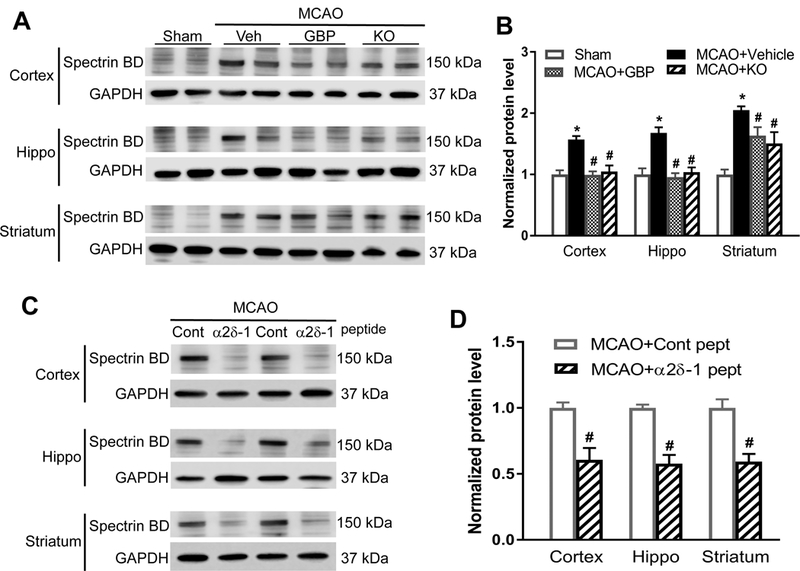
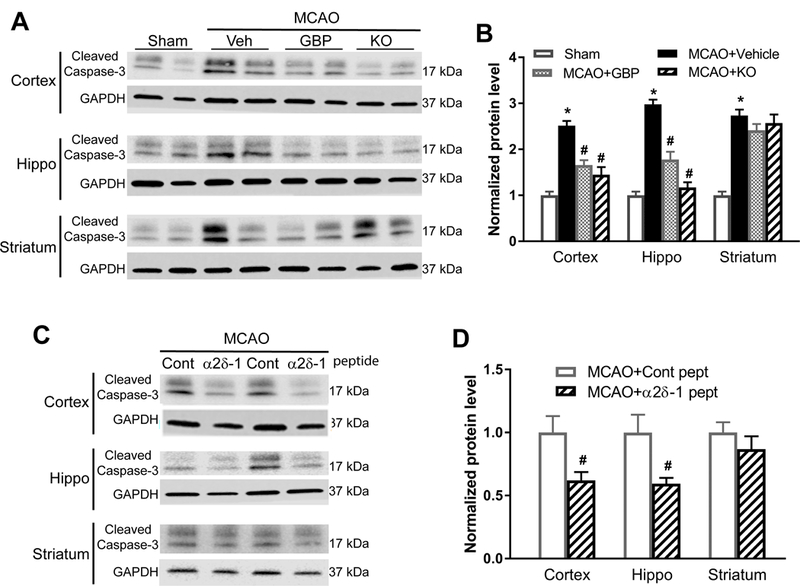
Background and Purpose- Glutamate NMDARs (N-methyl-D-aspartate receptors) play a major role in the initiation of ischemic brain damage. However, NMDAR antagonists have no protective effects in stroke patients, possibly because they impair physiological functions of NMDARs. α2δ-1 (encoded by Cacna2d1) is strongly expressed in many brain regions. We determined the contribution of α2δ-1 to NMDAR hyperactivity and brain injury induced by ischemia and reperfusion. Methods- Mice were subjected to 90 minutes of middle cerebral artery occlusion followed by 24 hours of reperfusion. Neurological deficits, brain infarct volumes, and calpain/caspase-3 activity in brain tissues were measured. NMDAR activity of hippocampal CA1 neurons was measured in an in vitro ischemic model. Results- Middle cerebral artery occlusion increased α2δ-1 protein glycosylation in the cerebral cortex, hippocampus, and striatum. Coimmunoprecipitation showed that ischemia rapidly enhanced the α2δ-1-NMDAR physical interaction in the mouse brain tissue. Inhibiting α2δ-1 with gabapentin, uncoupling the α2δ-1-NMDAR interaction with an α2δ-1 C terminus-interfering peptide, or genetically ablating Cacna2d1 had no effect on basal NMDAR currents but strikingly abolished oxygen-glucose deprivation-induced NMDAR hyperactivity in hippocampal CA1 neurons. Systemic treatment with gabapentin or α2δ-1 C-terminus-interfering peptide or Cacna2d1 genetic knock-out reduced middle cerebral artery occlusion-induced infarct volumes, neurological deficit scores, and calpain/caspase-3 activation in brain tissues. Conclusions- α2δ-1 is essential for brain ischemia-induced neuronal NMDAR hyperactivity, and α2δ-1-bound NMDARs mediate brain damage caused by cerebral ischemia. Targeting α2δ-1-bound NMDARs, without impairing physiological α2δ-1-free NMDARs, may be a promising strategy for treating ischemic stroke.
Keywords: 3; NMDA receptor; brain; caspase; gabapentin; hippocampus; ischemia; neurons; pregabalin.
Figures
References
-
- Rossi DJ, Oshima T and Attwell D. Glutamate release in severe brain ischaemia is mainly by reversed uptake. Nature 2000;403:316–21. - PubMed
-
- Simon RP, Swan JH, Griffiths T and Meldrum BS. Blockade of N-methyl-D-aspartate receptors may protect against ischemic damage in the brain. Science 1984;226:850–2. - PubMed
-
- Lai TW, Shyu WC and Wang YT. Stroke intervention pathways: NMDA receptors and beyond. Trends Mol Med 2011;17:266–75. - PubMed
-
- Lipton SA. NMDA receptors, glial cells, and clinical medicine. Neuron 2006;50:9–11. - PubMed
Publication types
MeSH terms
Substances
Grants and funding
LinkOut - more resources
Full Text Sources
Medical
Research Materials
Miscellaneous
