


Isolation and characterization of novel reassortant H6N1 avian influenza viruses from chickens in Eastern China
- PMID: 30355336
- PMCID: PMC6201551
- DOI: 10.1186/s12985-018-1063-y
Isolation and characterization of novel reassortant H6N1 avian influenza viruses from chickens in Eastern China
Abstract
Background: The H6N1 subtype of avian influenza viruses (AIVs) can infect people with an influenza-like illness; the H6N1 viruses possess the ability for zoonotic transmission from avians into mammals, and possibly pose a threat to human health.
Methods: In 2017, live poultry markets (LPMs) in Zhejiang Province were surveyed for AIVs. To better understand the genetic relationships between these strains from Eastern China and other AIVs, all gene segments of these strains were sequenced and compared with sequences available in GenBank. In this study, we analyzed the receptor-binding specificity, antigenic characteristics, and pathogenicity of these two H6N1 viruses.
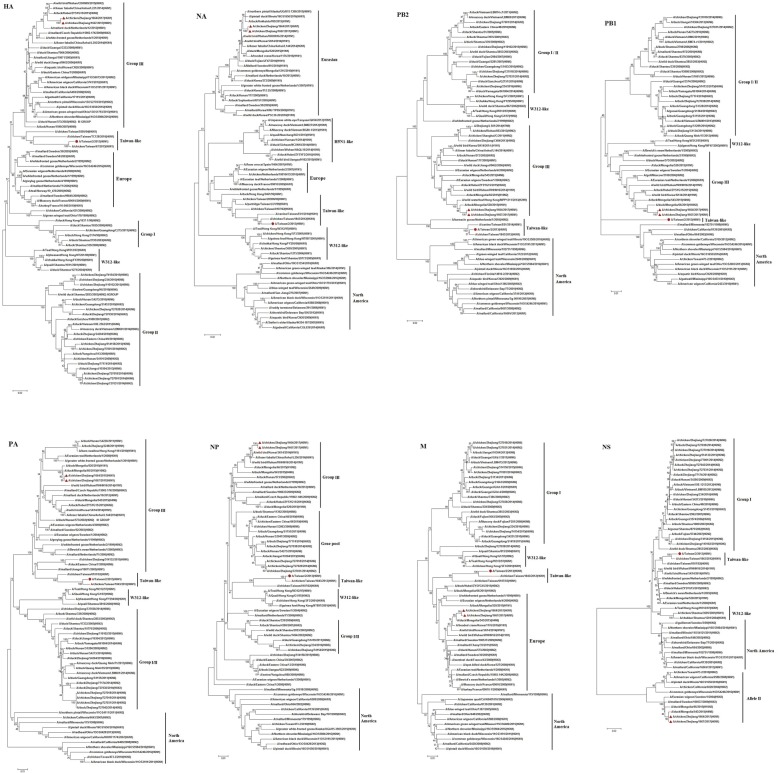
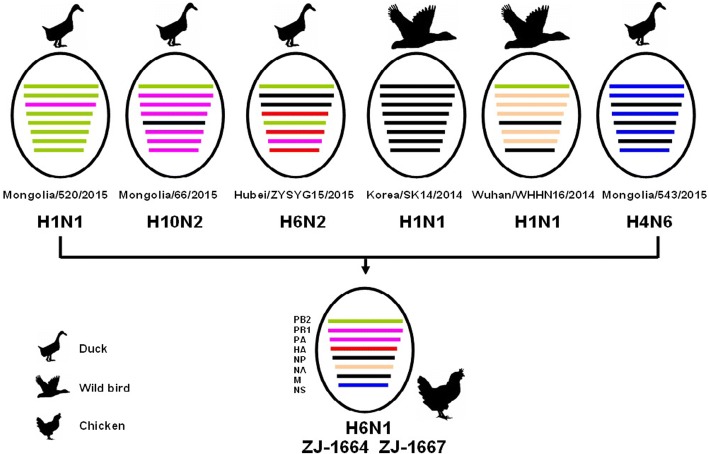
Results: In 2017, two H6N1 AIVs were isolated from chickens during surveillance for AIVs in LPMs in Eastern China. Phylogenetic analysis showed that these strains shared genetic characteristics from H6, H10, H1, and H4 AIVs found in ducks and wild birds in East Asia. These AIV strains were able to replicate in mice without prior adaptation.
Conclusions: In this study, we report the discovery of new strains of H6N1 viruses from chickens with novel gene reassortments. Our results suggest that these chickens play an important role generating novel reassortments in AIVs, and emphasize the need for continued surveillance of AIV strains circulating in poultry.
Keywords: Avian influenza viruses; Chickens; Eastern China; Reassortant; Subtype H6N1.
Conflict of interest statement
Ethics approval
The animal experiments conducted in this study were approved by the First Affiliated Hospital, School of Medicine, Zhejiang University (No. 2015–15).
Consent for publication
Not applicable.
Competing interests
The authors declare that they have no competing interests.
Publisher’s Note
Springer Nature remains neutral with regard to jurisdictional claims in published maps and institutional affiliations.
Figures

References
-
- Zhu X, Yu W, McBride R, Li Y, Chen LM, Donis RO, Tong S, Paulson JC, Wilson IA. Hemagglutinin homologue from H17N10 bat influenza virus exhibits divergent receptor-binding and pH-dependent fusion activities. Proc Natl Acad Sci U S A. 2013;110:1458–1463. doi: 10.1073/pnas.1218509110. - DOI - PMC - PubMed
Publication types
MeSH terms
Substances
Grants and funding
- 81502852/the National Science Foundation of the People's Republic of China/International
- 2017ZZ10 and 2018ZZ06/the Independent Task of State Key Laboratory for Diagnosis and Treatment of Infectious Diseases/International
- Y19H260021 and Y15H190006/Zhejiang Provincial Natural Science Foundation of China/International
LinkOut - more resources
Full Text Sources
Medical
