


Repertoire of the gut microbiota from stomach to colon using culturomics and next-generation sequencing
- PMID: 30355340
- PMCID: PMC6201554
- DOI: 10.1186/s12866-018-1304-7
Repertoire of the gut microbiota from stomach to colon using culturomics and next-generation sequencing
Retraction in
-
Retraction Note: Repertoire of the gut microbiota from stomach to colon using culturomics and next-generation sequencing.BMC Microbiol. 2024 Jan 3;24(1):10. doi: 10.1186/s12866-023-03167-3. BMC Microbiol. 2024. PMID: 38172679 Free PMC article. No abstract available.
Abstract
Background: Most studies on the human microbiota have analyzed stool samples, although a large proportion of the absorption of nutrients takes place in upper gut tract. We collected samples from different locations along the entire gastrointestinal tract from six patients who had simultaneously undergone upper endoscopy and colonoscopy, to perform a comprehensive analysis using culturomics with matrix assisted laser desorption ionisation - time of flight (MALDI-TOF) identification and by metagenomics targeting the 16S ribosomal ribonucleic acid (rRNA) gene.
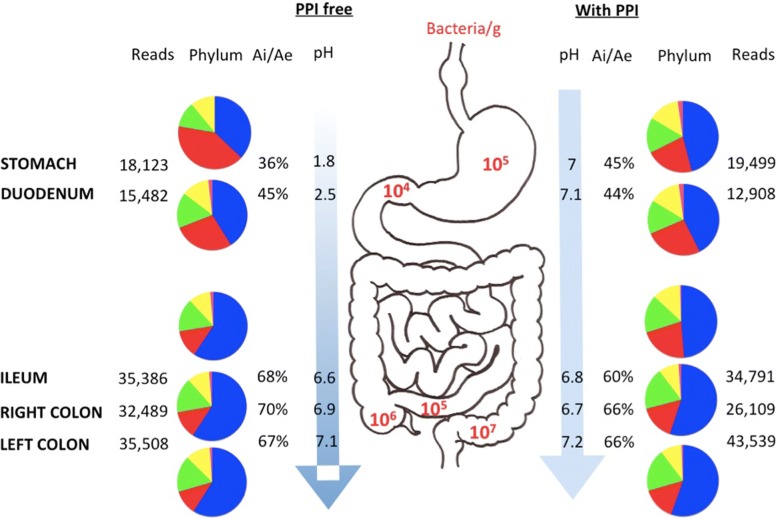
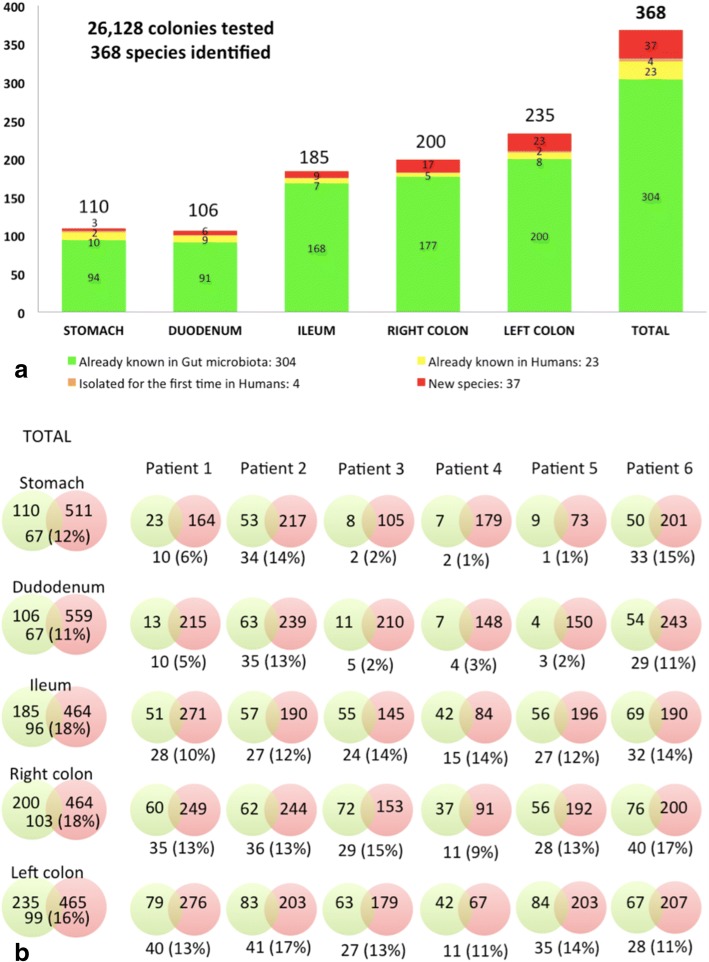
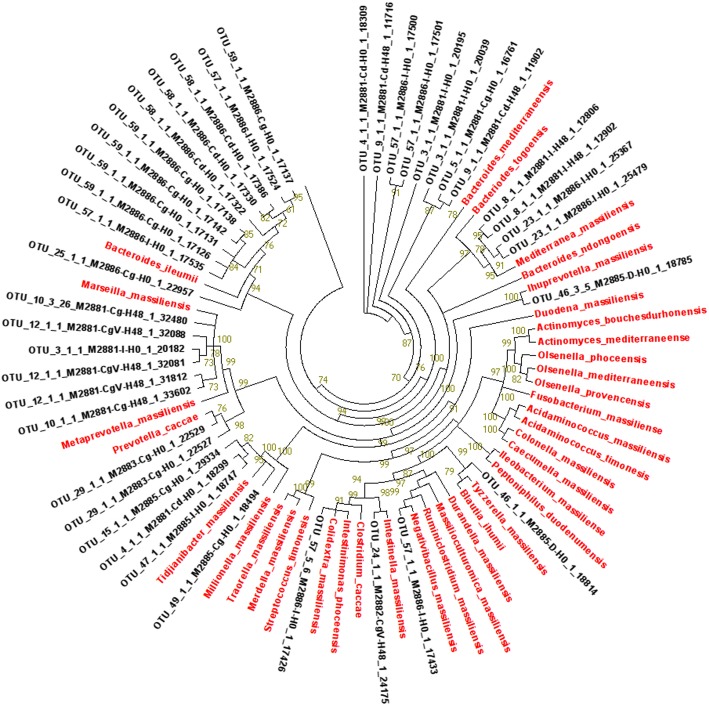
Results: Using culturomics, we isolated 368 different bacterial species, including 37 new species. Fewer species were isolated in the upper gut: 110 in the stomach and 106 in the duodenum, while 235 were isolated from the left colon (p < 0.02). We isolated fewer aero-intolerant species in the upper gut: 37 from the stomach and 150 from the left colon (p < 0.004). Using metagenomics, 1,021 species were identified. The upper gut microbiota was revealed to be less rich than the lower gut microbiota, with 37,622 reads from the stomach, 28,390 from the duodenum, and 79,047 from the left colon (p < 0.009). There were fewer reads for aero-intolerant species in the upper gut (8,656 in the stomach, 5,188 in the duodenum and 72,262 in the left colon, p < 0.02). Patients taking proton pump inhibitors (PPI) were then revealed to have a higher stomach pH and a greater diversity of species in the upper digestive tract than patients not receiving treatment (p < 0.001).
Conclusion: Significant modifications in bacterial composition and diversity exist throughout the gastrointestinal tract. We suggest that the upper gut may be key to understanding the relationship between the gut microbiota and health.
Keywords: Culturomics; Gut microbiota; Metagenomics; New species.
Conflict of interest statement
Ethics approval and consent to participate
Patients gave their signed informed consent and the study was validated by the ethics committee of the Institut Hospitalo-Universitaire (IHU) Méditerranée Infection under number 2016–010.
Consent for publication
Not applicable.
Competing interests
The authors have no competing interests or other interests that might be perceived to influence the results and discussion reported in this paper.
The authors have no personal or financial conflict of interest.
Publisher’s Note
Springer Nature remains neutral with regard to jurisdictional claims in published maps and institutional affiliations.
Figures

References
Publication types
MeSH terms
Substances
LinkOut - more resources
Full Text Sources
