


The Impact of Climate Change on the Food System in Toronto
- PMID: 30355969
- PMCID: PMC6266038
- DOI: 10.3390/ijerph15112344
The Impact of Climate Change on the Food System in Toronto
Abstract
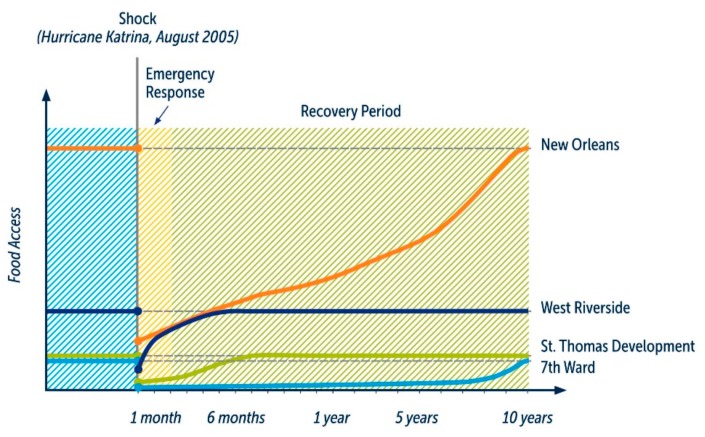
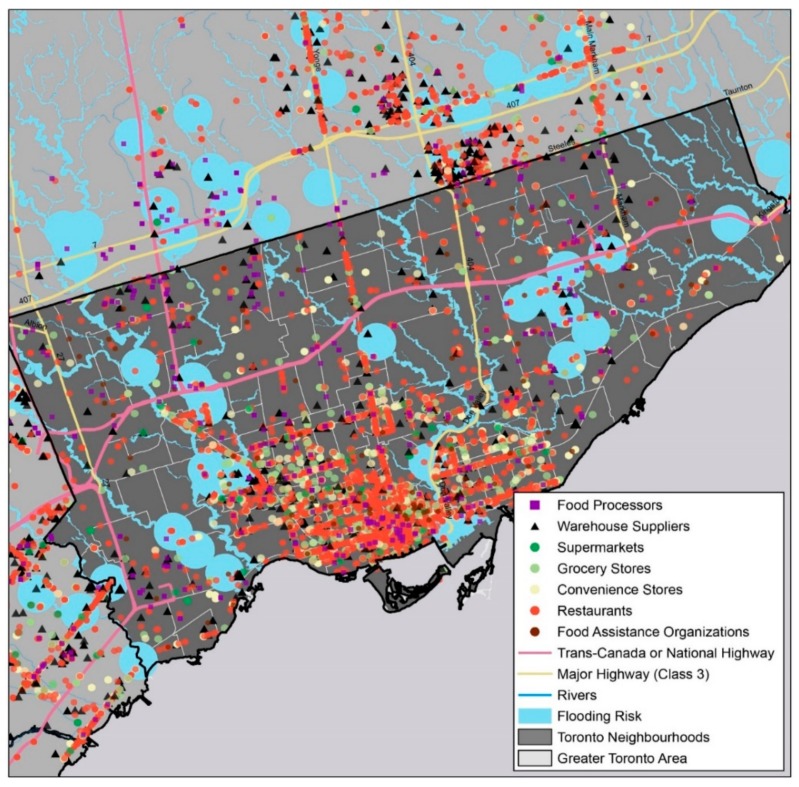
As part of its Climate Change and Health Strategy, in 2017, Toronto Public Health engaged stakeholders from across the food system to complete a high-level vulnerability assessment of the impact of climate change on the food system in Toronto. Using the Ontario Climate Change and Health Vulnerability and Adaptation Assessment Guidelines, the City of Toronto's High-Level Risk Assessment Tool, and a strategic framework developed by the Initiative for a Competitive Inner City, Toronto Public Health identified the most significant extreme weather event risks to food processing, distribution and access in Toronto. Risks associated with three extreme weather events that are the most likely to occur in Toronto due to climate change were analyzed: significant rain and flooding, an extended heat wave, and a major winter ice storm. The analysis finds that while extreme weather events could potentially disrupt Toronto's food supply, the current risk of an extended, widespread food supply disruption is relatively low. However, the findings highlight that a concerted effort across the food system, including electrical and fuel providers, is needed to address other key vulnerabilities that could impact food access, especially for vulnerable populations. Interruptions to electricity will have food access and food safety impacts, while interruptions to the transportation network and fuel will have food distribution and access impacts. Actions to mitigate these risks could include addressing food access vulnerabilities through ongoing city-wide strategies and integrating food access into the City's emergency response planning. The next steps will include engaging with multiple partners across the city to understand and strengthen the "last mile" of food distribution and develop community food resilience action plans for vulnerable neighbourhoods.
Keywords: climate change; extreme weather events; food systems; vulnerable populations.
Conflict of interest statement
The authors declare no conflict of interest.
Figures
References
-
- American Meteorological Society . Explaining Extreme Events of 2016 from A Climate Perspective. American Meteorological Society; Boston, MA, USA: 2018.
-
- National Academies of Sciences, Engineering, and Medicine . Attribution of Extreme Weather Events in the Context of Climate Change. National Academies Press; Washington, DC, USA: 2016.
-
- Toronto Public Health . A Climate of Concern: Climate Change and Health Strategy for Toronto. Toronto Public Health; Toronto, ON, Canada: 2015.
-
- Zeuli K., Nijhuis A. The Resilience of America’s Urban. Food Systems: Evidence from Five Cities. Initiative for a Competitive Inner City; Roxbury, MA, USA: 2017.
-
- Arnold K. Hurricane Irma Challenges Florida Grocery Pipeline. [(accessed on 19 September 2017)]; Available online: https://www.orlandosentinel.com/business/consumer/os-hurricane-irma-groc....
Publication types
MeSH terms
LinkOut - more resources
Full Text Sources
Medical
Research Materials
