


Monitoring Anti-NS1 Antibodies in West Nile Virus-Infected and Vaccinated Horses
- PMID: 30356362
- PMCID: PMC6176291
- DOI: 10.1155/2018/8309816
Monitoring Anti-NS1 Antibodies in West Nile Virus-Infected and Vaccinated Horses
Abstract
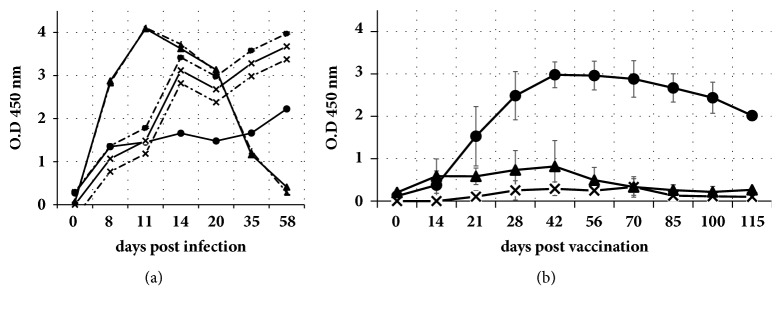
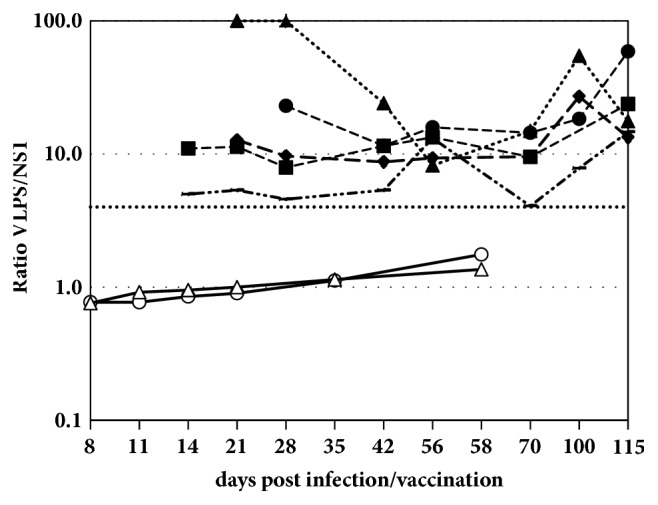
West Nile virus (WNV) is a zoonotic arboviral pathogen affecting humans, birds, and horses. Vaccines are available for veterinary use, which efficiently prevent the infection in horses. Most common diagnostic tools rely on the identification of the agent (RT-PCR, virus isolation), or on the detection of antibodies (IgM and IgG) recognizing structural proteins of the virus or neutralizing virus infection in cell cultures (virus-neutralization tests). The recent emergence of WNV in different parts of the world has resulted in an increase in the vaccination of horses in many countries. Methods for differentiation between infected and vaccinated animals ("DIVA" assays) would be useful for surveillance and control purposes but are still not available. A usual approach in this regard is the use of antibodies to nonstructural proteins as markers of nonvaccinated, infected animals, and the nonstructural NS1 protein of WNV has been proposed as a candidate for such a marker. The aim of this study was to test the hypothesis that NS1 can be a useful antigen in DIVA assays for differentiating WNV vaccinated and infected horses in field conditions. For that, we examined serum samples from either vaccinated and infected horses both from experimental infections/vaccinations (under controlled conditions) and from the field, exposed to natural infection or vaccinated in response to a risk of infection. The overall conclusion of the study is that NS1 antigen can effectively differentiate WNV infected from vaccinated horses in experimental (controlled) conditions, but this differentiation might be difficult depending on the conditions prevailing in the field.
Figures
References
-
- Siger L., Bowen R., Karaca K., et al. Evaluation of the efficacy provided by a recombinant canarypox-vectored Equine West Nile Virus vaccine against an experimental West Nile Virus intrathecal challenge in horses. Veterinary Therapeutics. 2006;7(3):249–256. - PubMed
MeSH terms
Substances
LinkOut - more resources
Full Text Sources
Medical
Molecular Biology Databases
