


Effects of soccer training on health-related physical fitness measures in male adolescents
- PMID: 30356474
- PMCID: PMC6180556
- DOI: 10.1016/j.jshs.2017.10.009
Effects of soccer training on health-related physical fitness measures in male adolescents
Abstract
Purpose: The aims of this study were to (1) investigate the health-related physical fitness profile of untrained adolescent boys in comparison to adolescent soccer players, (2) determine the intensity and enjoyment of 6 v 6 and 4 v 4 small-sided games, and (3) evaluate the health-related effects of a short-period of soccer training in the untrained group.
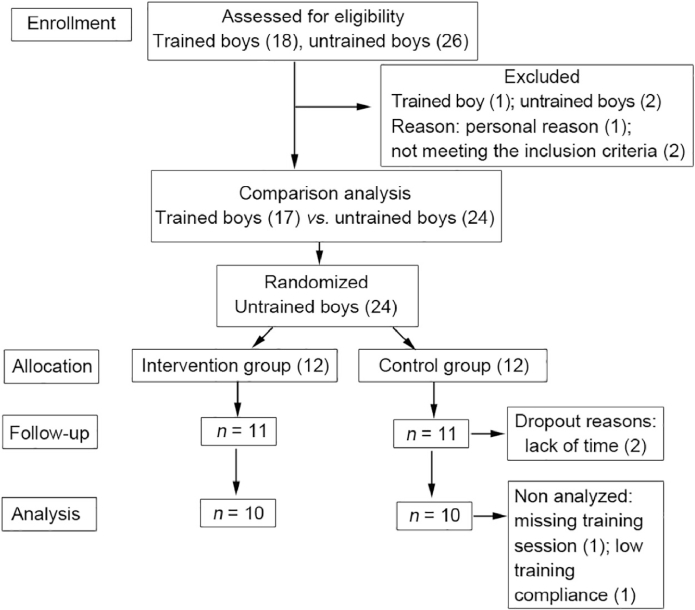
Methods: Forty-one adolescent boys (untrained, n = 24: age = 15.9 ± 0.6 years; trained, n = 17: age = 15.7 ± 0.7 years) were recruited. For Purpose 1, the players (n = 17) and the untrained (n = 24) boys were tested for speed, jumping power, postural balance, flexibility, and aerobic capacity. After baseline testing, Purposes 2 and 3 were addressed by randomly assigning the untrained boys to either a soccer-training group (small-sided games, 2 sessions per week for 8 weeks) or to a control group, followed by identical retesting.
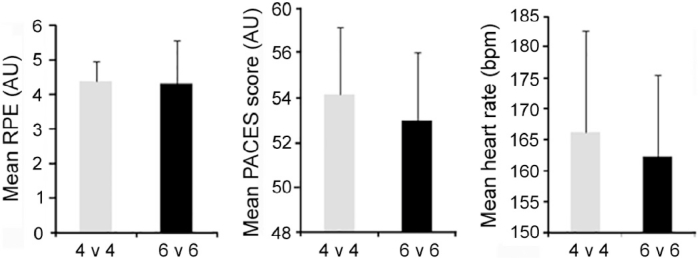
Results: At baseline, physical fitness was higher (p < 0.001) in trained players than in untrained for aerobic fitness, sprinting, jumping power, and postural balance. Small-sided games using 6 v 6 or 4 v 4 elicited similar heart rate (HR) (mean: ~ 85% peak heart rate, HRpeak), rate of perceived exertion, and enjoyment responses. Over 8 weeks, the between-group analysis revealed that soccer training had a large beneficial effect on postural balance (45%) when compared with control group with unclear effects on other fitness parameters.
Conclusion: Adolescent soccer players had markedly higher physical fitness compared with untrained adolescents. Small-sided soccer games practiced by untrained adolescents elicited high exercise intensity. While 8 weeks of twice-weekly soccer training sessions induced significant improvement in postural balance, the short duration of the study was not sufficient to result in between-group differences in sprint and jump performance or aerobic fitness.
Keywords: Enjoyment; Football; Heart rate; Small-sided games; Training.
Figures
References
-
- Telama R., Leskinen E., Yang X. Stability of habitual physical activity and sport participation: a longitudinal tracking study. Scand J Med Sci Sports. 1996;6:371–378. - PubMed
-
- Faigenbaum A.D., Best T.M., MacDonald J., Myer G.D., Stracciolini A. Top 10 research questions related to exercise deficit disorder (EDD) in youth. Res Q Exerc Sport. 2014;85:297–307. - PubMed
-
- Steinberger J., Daniels S.R. Obesity, insulin resistance, diabetes, and cardiovascular risk in children: an American Heart Association scientific statement from the atherosclerosis, hypertension, and obesity in the Young Committee (Council on Cardiovascular Disease in the Young) and the Diabetes Committee (Council on Nutrition, Physical Activity, and Metabolism) Circulation. 2003;107:1448–1453. - PubMed
-
- Nybo L., Pedersen K., Christensen B., Aagaard P., Brandt N., Kiens B. Impact of carbohydrate supplementation during endurance training on glycogen storage and performance. Acta Physiol. 2009;197:117–127. - PubMed
-
- Duvivier B.M., Schaper N.C., Bremers M.A., van Crombrugge G., Menheere P.P., Kars M. Minimal intensity physical activity (standing and walking) of longer duration improves insulin action and plasma lipids more than shorter periods of moderate to vigorous exercise (cycling) in sedentary subjects when energy expenditure is comparable. PLoS One. 2013;8 e55542. - PMC - PubMed
LinkOut - more resources
Full Text Sources
