


The role of physical activity and exercise in obesity and weight management: Time for critical appraisal
- PMID: 30356545
- PMCID: PMC6188737
- DOI: 10.1016/j.jshs.2016.04.001
The role of physical activity and exercise in obesity and weight management: Time for critical appraisal
Abstract
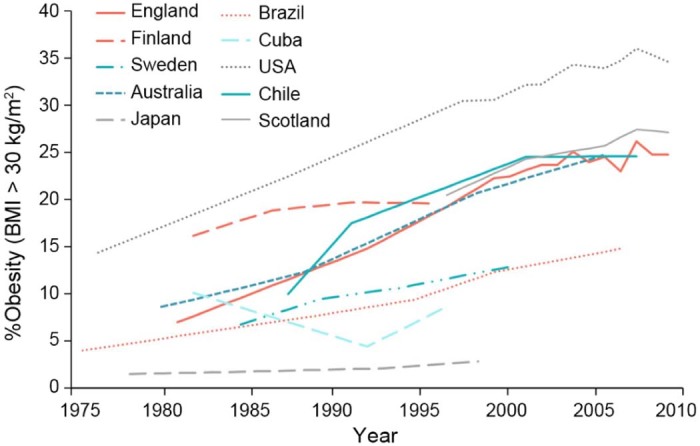
The prevalence of overweight and obesity has increased dramatically during last 3 decades with devastating consequences to public health. Recommended strategies to reduce obesity have focused on healthier diet and physical activity (PA). Clearly, these approaches have not been successful, but whether this is due to failure to restrict energy intake or to maintain high levels of energy expenditure has been the subject of great controversy. Consequently, there has been a great deal of confusion about the role of PA and exercise in obesity and weight management. In this article, the theoretical basis for considering reduced PA and energy expenditure as the cause of obesity is appraised. Further, the role of PA in food intake and weight control is examined. The idea that obesity is caused by consistent decline in daily energy expenditure is not supported either by objective measures of energy expenditure or physiological theory of weight gain alone. However, since voluntary exercise is the most important discretionary component of total daily energy expenditure, it can affect energy balance. Therefore, PA and exercise hold potential as part of the solution for the ongoing obesity epidemic.
Keywords: Energy expenditure; Exercise; Obesity; Overweight; Physical activity.
Figures
References
-
- Finkelstein E.A., Khavjou O.A., Thompson H., Trogdon J.G., Pan L., Sherry B. Obesity and severe obesity forecasts through 2030. Am J Prev Med. 2012;42:563–570. - PubMed
-
- Lu Y., Hajifathalian K., Ezzati M., Woodward M., Rimm E.B., Danaei G. Metabolic mediators of the effects of body-mass index, overweight, and obesity on coronary heart disease and stroke: a pooled analysis of 97 prospective cohorts with 1.8 million participants. Lancet. 2014;383:970–983. - PMC - PubMed
-
- McGee D.L. Body mass index and mortality: a meta-analysis based on person-level data from twenty-six observational studies. Ann Epidemiol. 2005;15:87–97. - PubMed
Publication types
LinkOut - more resources
Full Text Sources
Medical
