. 2019 Jan 8;47(D1):D649-D659.
doi: 10.1093/nar/gky977.

Genomes OnLine database (GOLD) v.7: updates and new features

Affiliations

Genomes OnLine database (GOLD) v.7: updates and new features

Supratim Mukherjee et al. Nucleic Acids Res. .

Abstract

The Genomes Online Database (GOLD) (https://gold.jgi.doe.gov) is an open online resource, which maintains an up-to-date catalog of genome and metagenome projects in the context of a comprehensive list of associated metadata. Information in GOLD is organized into four levels: Study, Biosample/Organism, Sequencing Project and Analysis Project. Currently GOLD hosts information on 33 415 Studies, 49 826 Biosamples, 313 324 Organisms, 215 881 Sequencing Projects and 174 454 Analysis Projects with a total of 541 metadata fields, of which 80 are based on controlled vocabulary (CV) terms. GOLD provides a user-friendly web interface to browse sequencing projects and launch advanced search tools across four classification levels. Users submit metadata on a wide range of Sequencing and Analysis Projects in GOLD before depositing sequence data to the Integrated Microbial Genomes (IMG) system for analysis. GOLD conforms with and supports the rules set by the Genomic Standards Consortium (GSC) Minimum Information standards. The current version of GOLD (v.7) has seen the number of projects and associated metadata increase exponentially over the years. This paper provides an update on the current status of GOLD and highlights the new features added over the last two years.


Figures
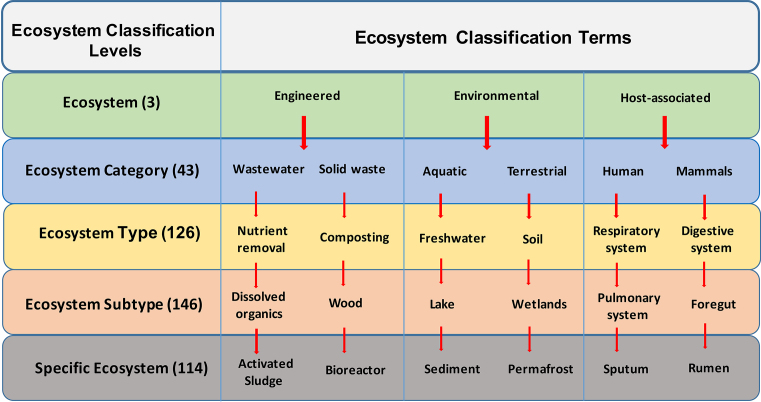
Figure 1.
Figure 1.
Ecosystem classification in GOLD. The five ecosystem classification levels are displayed in the left column with the number of unique terms at each level in parenthesis. Select terms from each classification level are shown in three right columns, with arrows showing possible ecosystem classification paths.
Figure 2.
Figure 2.
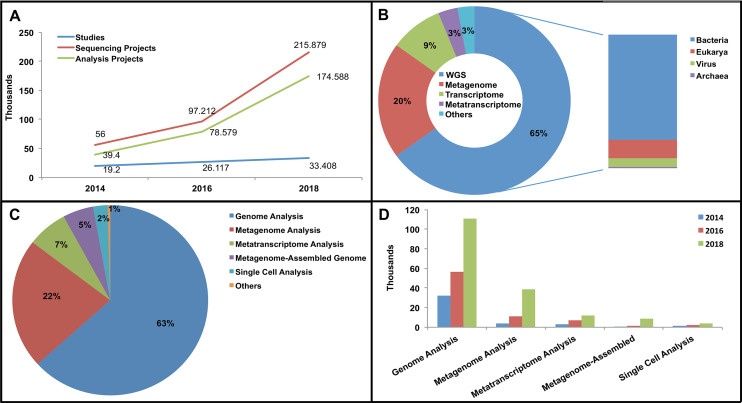
GOLD by the numbers. (A) Growth in Studies, Sequencing Projects and Analysis Projects during the last three releases of GOLD database. (B) Pie diagram showing distribution of Sequencing Project types in the current version. Vertical panel on the right displaying domain level distribution of organisms for WGS. (C) Different types of Analysis Projects and their percentage breakdown in the current release of GOLD. (D) Growth of different Analysis Project types during the last three releases.
Figure 3.
Figure 3.
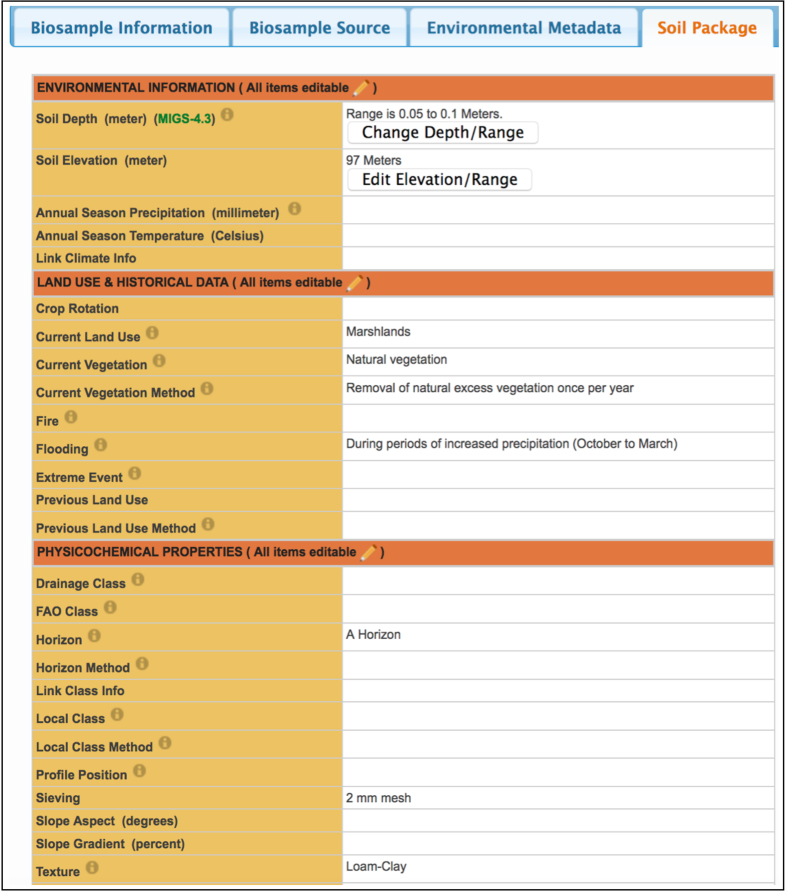
Soil metadata package in GOLD. GOLD Biosample using Soil package. Representative metadata fields from the soil package are displayed here.
Figure 4.
Figure 4.
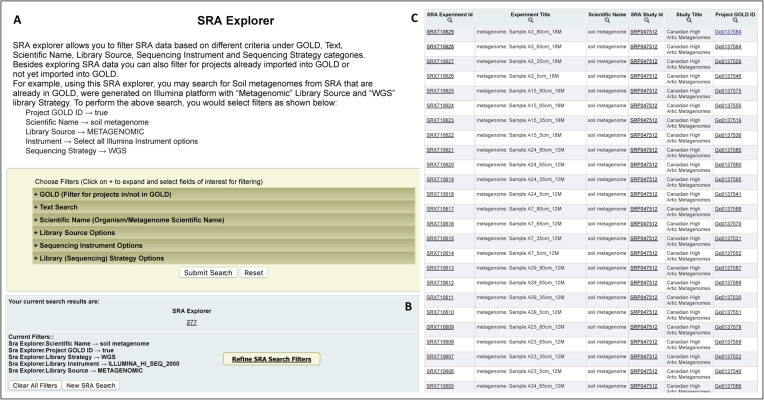
SRA Explorer. (A) SRA Explorer launch page with a description of how to launch search. (B) SRA Explorer search parameters and results. (C) List of SRA Explorer search results obtained along with GOLD project IDs.
Figure 5.
Figure 5.
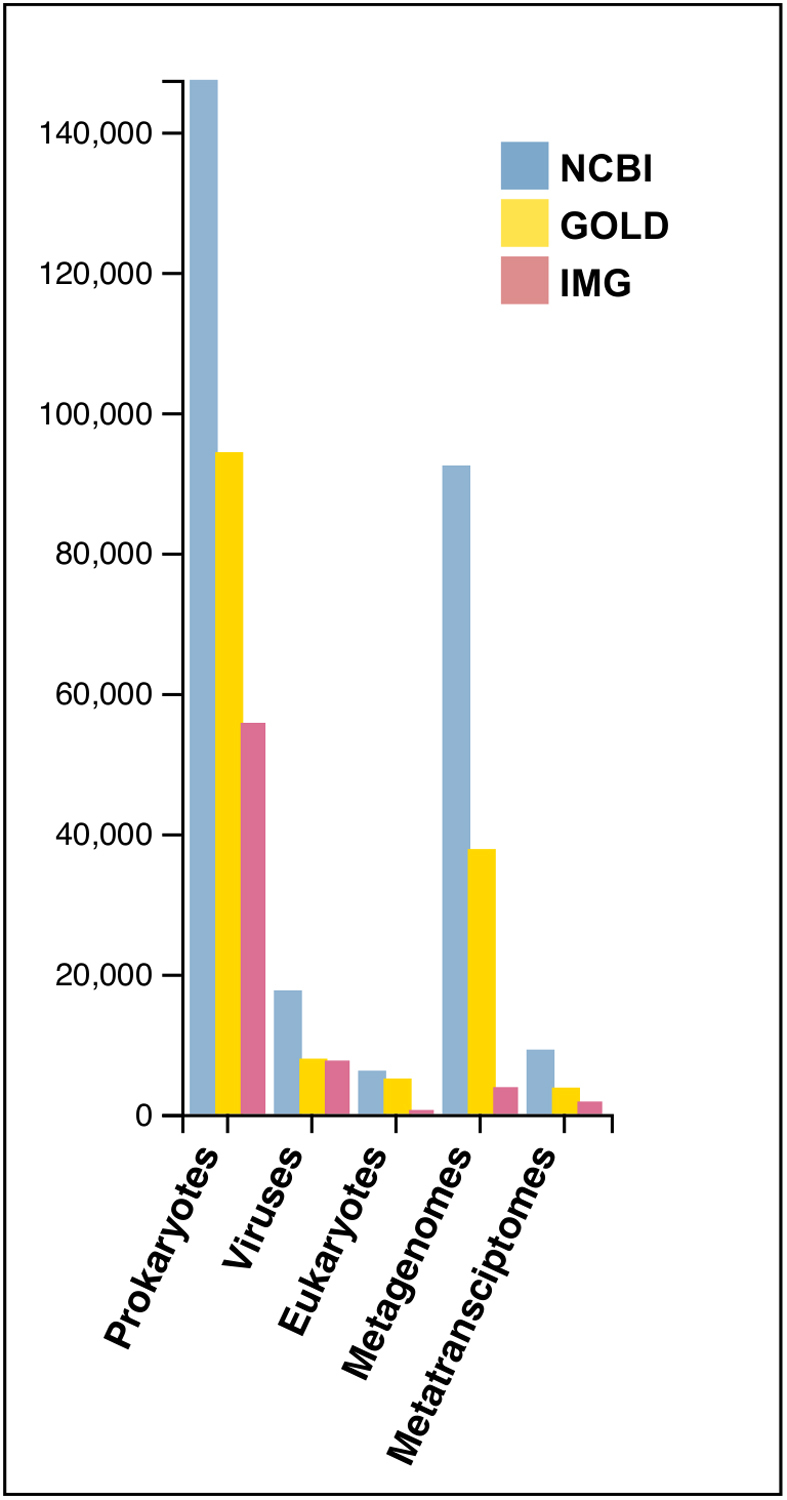
NCBI import tracker displaying the number of projects publicly available at NCBI and GOLD/IMG databases. Metagenome and metatranscriptome projects are displayed separately in the tracker, while WGS projects are displayed by domain: prokaryotes, eukaryotes and viruses.
Figure 6.
Figure 6.
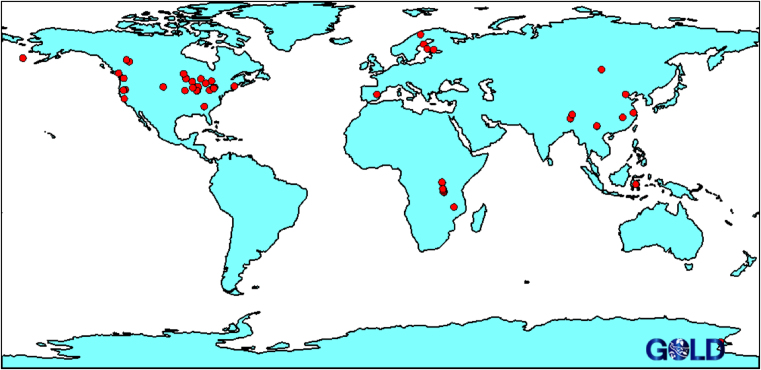
Geographic location map of freshwater Biosamples. Advanced search for Biosamples from freshwater environment was used and those results are plotted onto a downloadable geographic location map.

References

    1. Mukherjee S., Stamatis D., Bertsch J., Ovchinnikova G., Verezemska O., Isbandi M., Thomas A.D., Ali R., Sharma K., Kyrpides N.C. et al. . Genomes OnLine Database (GOLD) v.6: data updates and feature enhancements. Nucleic Acids Res. 2017; 45:D446–D456. - PMC - PubMed
    1. Bernal A., Ear U., Kyrpides N.. Genomes OnLine Database (GOLD): a monitor of genome projects world-wide. Nucleic Acids Res. 2001; 29:126–127. - PMC - PubMed
    1. Sanger F., Nicklen S., Coulson A.R.. DNA sequencing with chain-terminating inhibitors. Proc. Natl. Acad. Sci. U.S.A. 1977; 74:5463–5467. - PMC - PubMed
    1. Shendure J., Balasubramanian S., Church G.M., Gilbert W., Rogers J., Schloss J.A., Waterston R.H.. DNA sequencing at 40: past, present and future. Nature. 2017; 550:345–353. - PubMed
    1. Mukherjee S., Seshadri R., Varghese N.J., Eloe-Fadrosh E.A., Meier-Kolthoff J.P., Göker M., Coates R.C., Hadjithomas M., Pavlopoulos G.A., Paez-Espino D. et al. . 1,003 reference genomes of bacterial and archaeal isolates expand coverage of the tree of life. Nat. Biotechnol. 2017; 35:676–683. - PubMed

Publication types

LinkOut - more resources