. 2019 Jun;8(6):e00742.
doi: 10.1002/mbo3.742. Epub 2018 Oct 25.

Selecting lipopeptide-producing, Fusarium-suppressing Bacillus spp.: Metabolomic and genomic probing of Bacillus velezensis NWUMFkBS10.5

Affiliations

Selecting lipopeptide-producing, Fusarium-suppressing Bacillus spp.: Metabolomic and genomic probing of Bacillus velezensis NWUMFkBS10.5

Adetomiwa Ayodele Adeniji et al. Microbiologyopen. 2019 Jun.

Abstract

The results of this study indicate that the maize rhizosphere remains a reservoir for microbial strains with unique beneficial properties. The study sought to provide an indigenous Bacillus strain with a bioprotective potential to alleviate maize fusariosis in South Africa. We selected seven Bacillus isolates (MORWBS1.1, MARBS2.7, VERBS5.5, MOREBS6.3, MOLBS8.5, MOLBS8.6, and NWUMFkBS10.5) with biosuppressive effects against two maize fungal pathogens (Fusarium graminearum and Fusarium culmorum) based on 16S rDNA gene characterization and lipopeptide gene analysis. The PCR analysis revealed that lipopeptide genes encoding the synthesis of iturin, surfactin, and fengycin might be responsible for their antifungal activities. Few of the isolates also showed possible biosurfactant capability, and their susceptibility to known antibiotics is indicative of their eco-friendly attributes. In addition, in silico genomic analysis of our best isolate (Bacillus velezensis NWUMFkBS10.5) and characterization of its active metabolite with FTIR, NMR, and ESI-Micro-Tof MS confirmed the presence of valuable genes clusters and metabolic pathways. The versatile genomic potential of our Bacillus isolate emphasizes the continued relevance of Bacillus spp. in biological management of plant diseases.

Keywords: Bacillus velezensis; ESI-Micro-Tof MS; genome; in silico; lipopeptides; plant disease.


Conflict of interest statement

The authors declare that they have no conflict of interests.

Figures
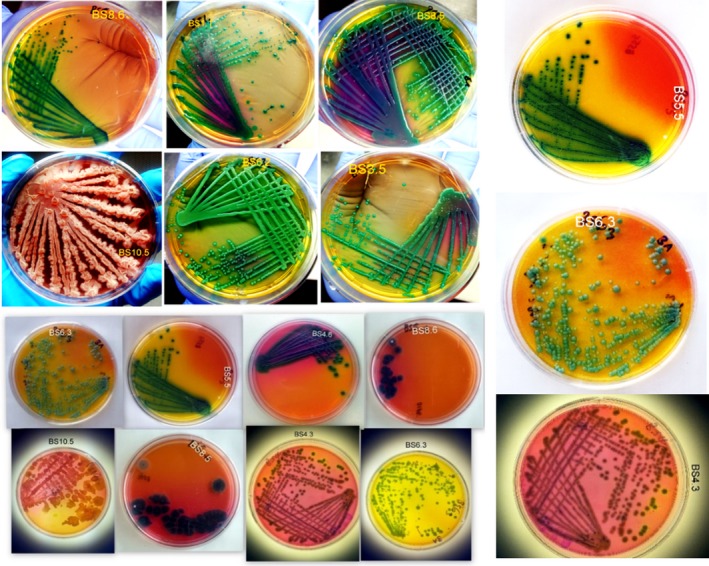
Figure 1
Figure 1
Colonial characteristics and presumptive identification of the isolated Bacillus strains on HiChrome Bacillus agar
Figure 2
Figure 2
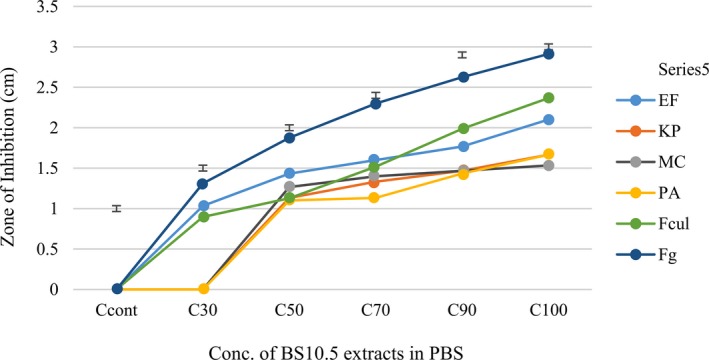
Means of three replicates showing activity of BS10.5 extracts on the microbial pathogens at different concentrations. Values are significantly different according to Duncan's least significant difference test at p ≤ 0.05, and means are significantly different from the control
Figure 3
Figure 3
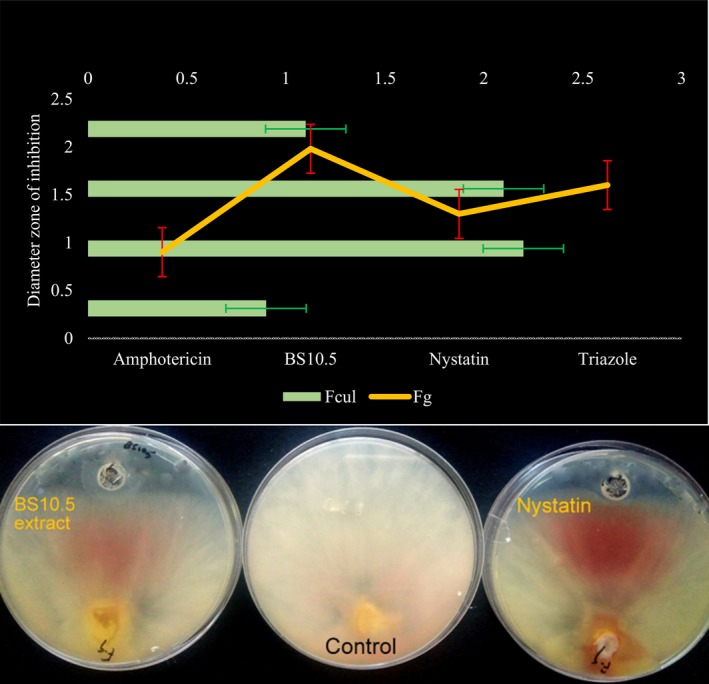
Upper plate: inhibitory effect of the BS10.5 extract (20 mg/ml) and fungicide controls (triazole, amphotericin B, and nystatin) (at concentrations 10 µg/ml, respectively), on the Fusarium graminearum and Fusarium culmorum growth in vitro; Lower plate: inhibitory effect of the BS10.5 extract (20 mg/ml) and nystatin (10 µg/ml), on the F. graminearum. For the experiment, n = 4. Activity of the lyophilized extract and commercial fungicide on fungal growth were significantly different at p ≤ 0.05
Figure 4
Figure 4
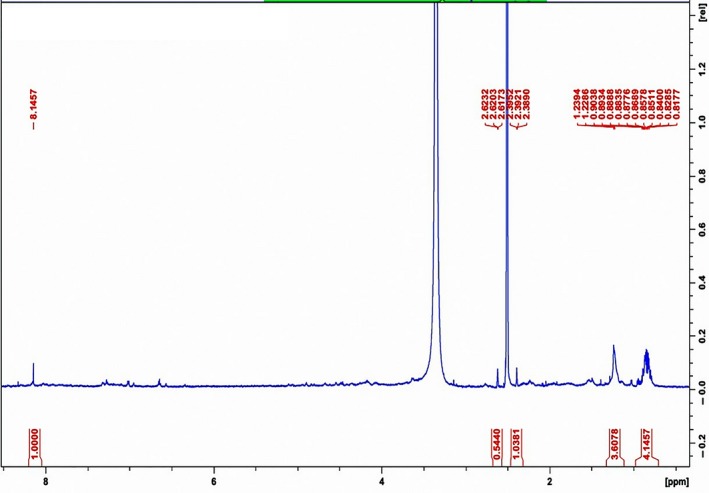
NMR spectrum of BS10.5
Figure 5
Figure 5
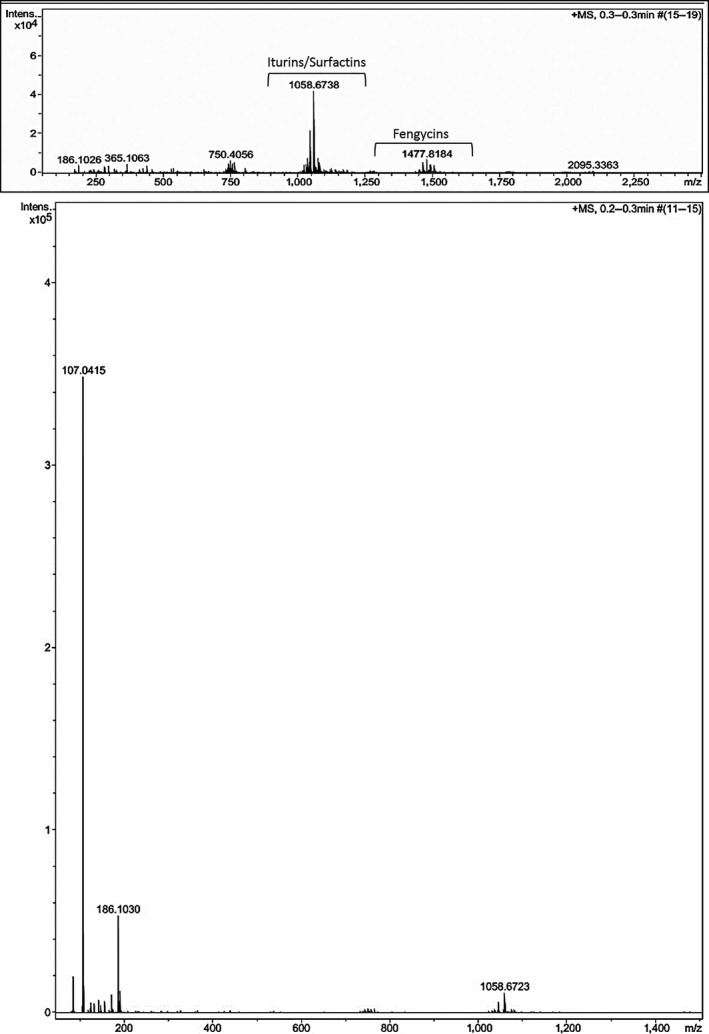
Positive ESI‐Q‐TOF MS spectrum of lipopeptides extract of BS10.5 strain. Clusters of iturin, surfactin, and bacillomycin (m/z 1,058.6738/1,058.6723, 1,058.6740), fengycin (m/z 1,477.8184), and an unidentified (m/z 2,095.3363) molecular ion species are labeled
Figure 6
Figure 6
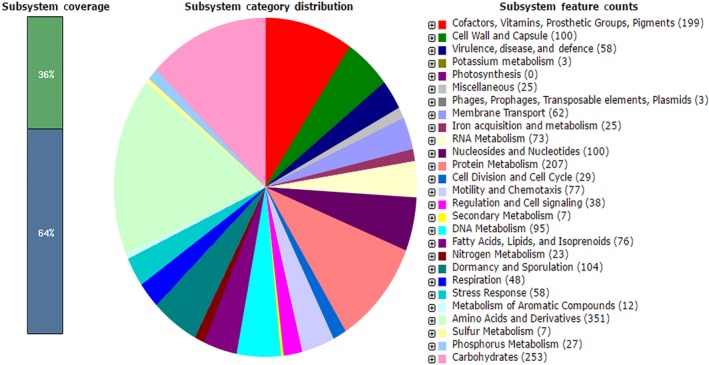
Subsystem summary of the genome Bacillus velezensis NWUMFkBS10.5 predicted by SEED Viewer v2.0. Genomic features are colored according to their functional classification types (Overbeek et al., 2014)
Figure 7
Figure 7
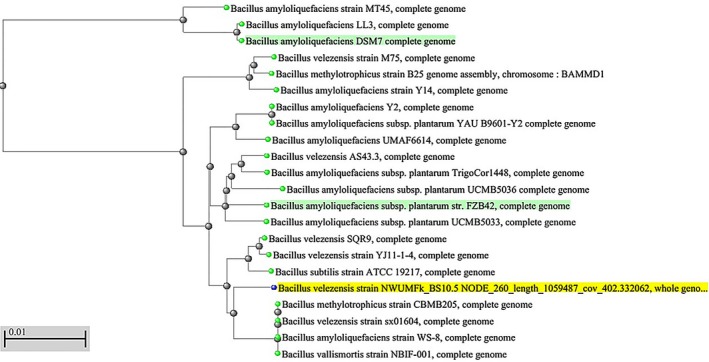
Neighbor‐joining phylogenetic tree from pangenomic sequence of closely related Bacillus velezensis strains. Bar, 0.01 substitutions per nucleotide position. Reference strains highlighted green. Strain B. velezensis NWUMFkBS10.5 is highlighted yellow
Figure 8
Figure 8
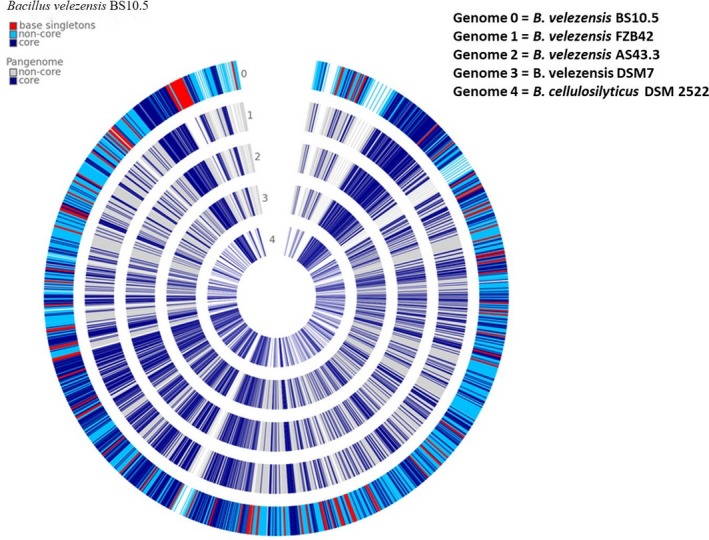
Pangenomic atlas of Bacillus velezensis NWUMFkBS10.5, other closely related B. veleznesis strains, and an out group B. cellulosilyticus DSM 2522 (genome 4). The similarities and dissimilarities in their core and non‐core genome are indicated as predicted in the left key of the figure. Peculiar genes in strain B. velezensis NWUMFkBS10.5 are indicated in its ring as light blue arcs

References

    1. Abiala, M. , Odebode, A. , Hsu, S. , & Blackwood, C. (2015). Phytobeneficial properties of bacteria isolated from the rhizosphere of maize in southwestern Nigerian soils. Applied and Environmental Microbiology, 81, 4736–4743. 10.1128/AEM.00570-15 - DOI - PMC - PubMed
    1. Abriouel, H. , Franz, C. M. , Ben Omar, N. & Gálvez, A. (2011). Diversity and applications of Bacillus bacteriocins. FEMS Microbiology Reviews, 35, 201–232. - PubMed
    1. Adeniji, A. A. , & Babalola, O. O. (2018). Tackling maize fusariosis: In search of Fusarium graminearum biosuppressors. Archives of Microbiology, 200, 1239–1255. 10.1007/s00203-018-1542-y - DOI - PubMed
    1. Ahmad, F. , Ahmad, I. , & Khan, M. S. (2008). Screening of free‐living rhizospheric bacteria for their multiple plant growth promoting activities. Microbiological Research, 163, 173–181. 10.1016/j.micres.2006.04.001 - DOI - PubMed
    1. Alsohim, A. S. , Taylor, T. B. , Barrett, G. A. , Gallie, J. , Zhang, X.‐X. , Altamirano‐Junqueira, A. E. , … Jackson, R. W. (2014). The biosurfactant viscosin produced by Pseudomonas fluorescens SBW25 aids spreading motility and plant growth promotion. Environmental Microbiology, 16, 2267–2281. - PubMed

Publication types

Associated data

LinkOut - more resources