A Randomized Clinical Trial of Synbiotics in Irritable Bowel Syndrome: Dose-Dependent Effects on Gastrointestinal Symptoms and Fatigue
- PMID: 30360032
- PMCID: PMC6351792
- DOI: 10.4082/kjfm.17.0064
A Randomized Clinical Trial of Synbiotics in Irritable Bowel Syndrome: Dose-Dependent Effects on Gastrointestinal Symptoms and Fatigue
Abstract
Background: This double-blind, randomized controlled design study aimed to assess the dose-dependent effects of synbiotics on gastrointestinal symptoms of and fatigue in irritable bowel syndrome (IBS).
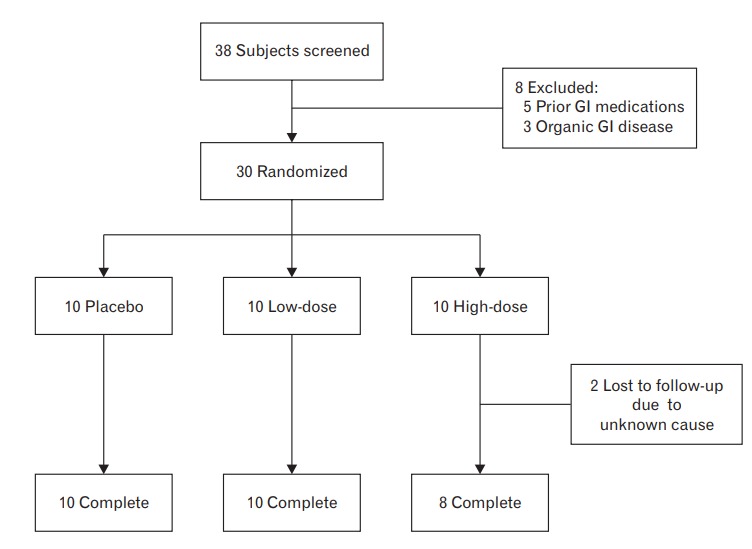
Methods: Thirty subjects with IBS were randomly assigned into the following three groups and received 2 capsules a day for 8 weeks: (1) high-dose (2 capsules of synbiotics); (2) low-dose (1 capsule of synbiotics and 1 capsule of placebo); and (3) placebo (2 capsules of placebo). At baseline and 8 weeks, they completed the study questionnaires.
Results: Two subjects in the high-dose group were lost to follow-up, leaving a total of 28 patients for the analysis. After 8 weeks, abdominal discomfort, abdominal bloating, frequency of formed stool, fatigue Visual Analog Scale (VAS), and Multidimensional Fatigue Inventory were significantly different among the groups (P=0.002, 0.006, 0.007, 0.028, and 0.041, respectively, by Kruskal-Wallis test). However, only abdominal discomfort, abdominal bloating, frequency of formed stool, and fatigue VAS were significantly improved in the high-dose group compared with those in the placebo group (P=0.002, 0.003, 0.002, and 0.013, respectively) by Mann-Whitney test with Bonferroni correction. No adverse drug reactions were reported.
Conclusion: High-dose synbiotics were superior to placebo in improving bowel symptoms and fatigue of IBS patients, suggesting that synbiotic dosage plays an important role in the treatment of IBS.
Keywords: Dose-Response Relationship; Fatigue; Irritable Bowel Syndrome; Probiotics; Synbiotics.
Conflict of interest statement
No potential conflict of interest relevant to this article was reported.
Figures
References
-
- Longstreth GF, Thompson WG, Chey WD, Houghton LA, Mearin F, Spiller RC. Functional bowel disorders. Gastroenterology. 2006;130:1480–91. - PubMed
-
- Han SH, Lee OY, Bae SC, Lee SH, Chang YK, Yang SY, et al. Prevalence of irritable bowel syndrome in Korea: population-based survey using the Rome II criteria. J Gastroenterol Hepatol. 2006;21:1687–92. - PubMed
-
- Spiegel BM. Burden of illness in irritable bowel syndrome: looking beyond the patient. Clin Gastroenterol Hepatol. 2013;11:156–7. - PubMed
-
- Parkes GC, Brostoff J, Whelan K, Sanderson JD. Gastrointestinal microbiota in irritable bowel syndrome: their role in its pathogenesis and treatment. Am J Gastroenterol. 2008;103:1557–67. - PubMed
Grants and funding
LinkOut - more resources
Full Text Sources