


Current Therapies Focused on High-Density Lipoproteins Associated with Cardiovascular Disease
- PMID: 30360466
- PMCID: PMC6278283
- DOI: 10.3390/molecules23112730
Current Therapies Focused on High-Density Lipoproteins Associated with Cardiovascular Disease
Abstract
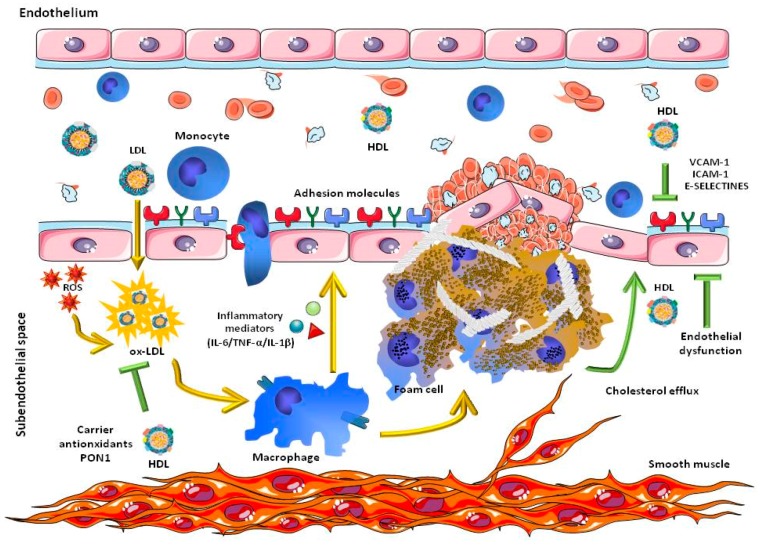
High-density lipoproteins (HDL) comprise a heterogeneous family of lipoprotein particles divided into subclasses that are determined by density, size and surface charge as well as protein composition. Epidemiological studies have suggested an inverse correlation between High-density lipoprotein-cholesterol (HDL-C) levels and the risk of cardiovascular diseases and atherosclerosis. HDLs promote reverse cholesterol transport (RCT) and have several atheroprotective functions such as anti-inflammation, anti-thrombosis, and anti-oxidation. HDLs are considered to be atheroprotective because they are associated in serum with paraoxonases (PONs) which protect HDL from oxidation. Polyphenol consumption reduces the risk of chronic diseases in humans. Polyphenols increase the binding of HDL to PON1, increasing the catalytic activity of PON1. This review summarizes the evidence currently available regarding pharmacological and alternative treatments aimed at improving the functionality of HDL-C. Information on the effectiveness of the treatments has contributed to the understanding of the molecular mechanisms that regulate plasma levels of HDL-C, thereby promoting the development of more effective treatment of cardiovascular diseases. For that purpose, Scopus and Medline databases were searched to identify the publications investigating the impact of current therapies focused on high-density lipoproteins.
Keywords: HDL-C; lipoproteins; paraoxonase; polyphenols.
Conflict of interest statement
The authors declare no conflict of interest.
Figures


References
-
- Mahley R.W., Innerarity T.L., Rall S.C., Weisgraber K.H. Plasma lipoproteins: Apolipoprotein structure and function. J. Lipid Res. 1984;25:1277–1294. - PubMed
-
- Mahley R.W., Ji Z.S. Remnant lipoprotein metabolism: Key pathways involving cell-surface heparan sulfate proteoglycans and apolipoprotein E. J. Lipid Res. 1999;40:1–16. - PubMed
-
- Segrest J.P., Jones M.K., De Loof H., Dashti N. Structure of apolipoprotein B-100 in low density lipoproteins. J. Lipid Res. 2001;42:1346–1367. - PubMed
Publication types
MeSH terms
Substances
LinkOut - more resources
Full Text Sources
Medical
Miscellaneous
