


Structural and Functional Analysis of a Bidirectional Promoter from Gossypium hirsutum in Arabidopsis
- PMID: 30360512
- PMCID: PMC6274729
- DOI: 10.3390/ijms19113291
Structural and Functional Analysis of a Bidirectional Promoter from Gossypium hirsutum in Arabidopsis
Abstract
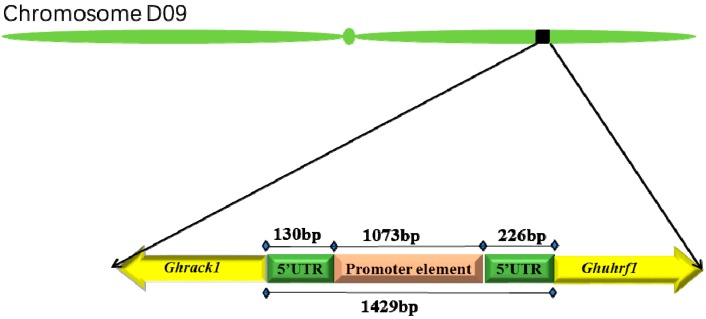
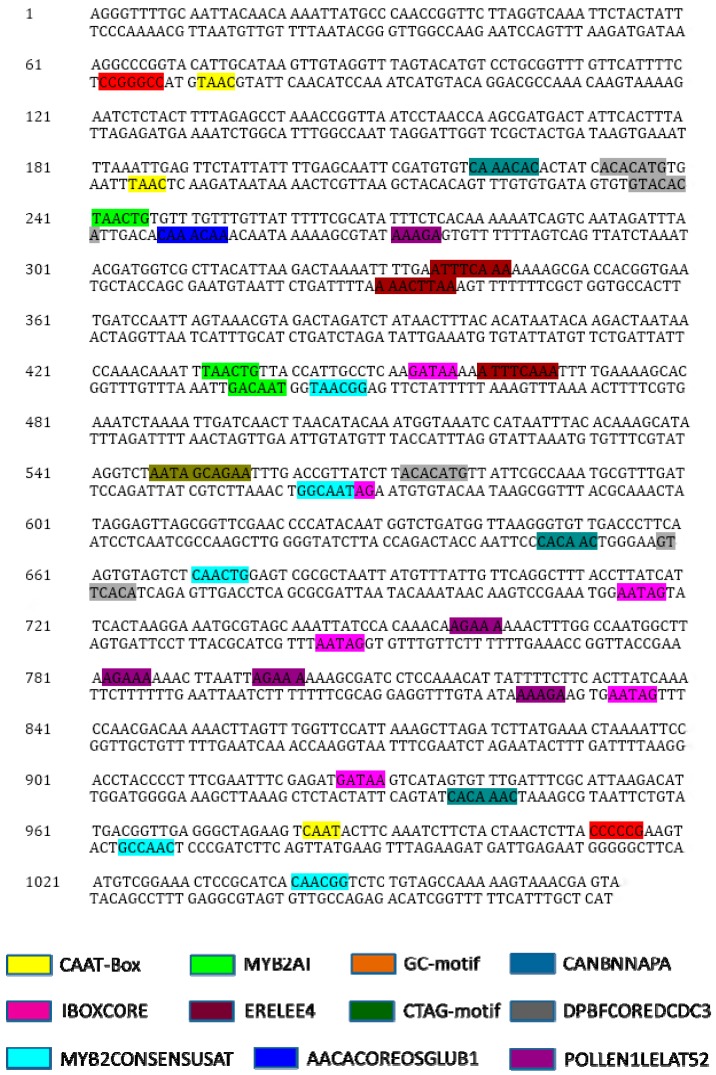
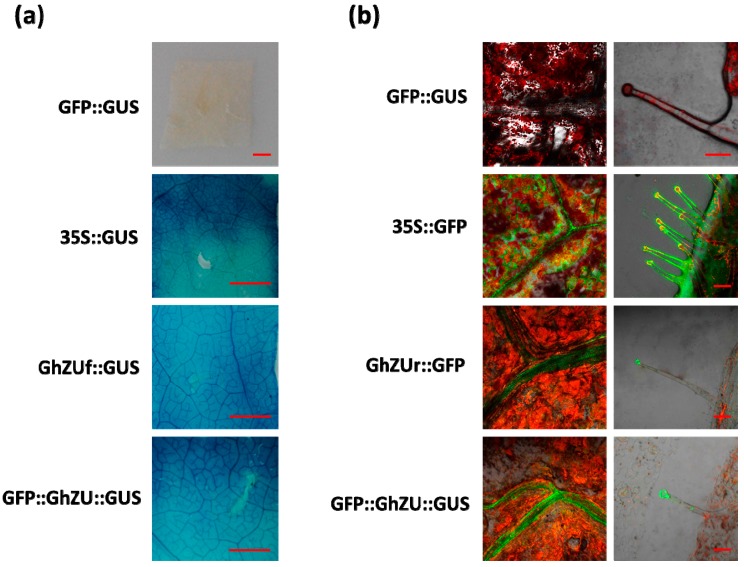
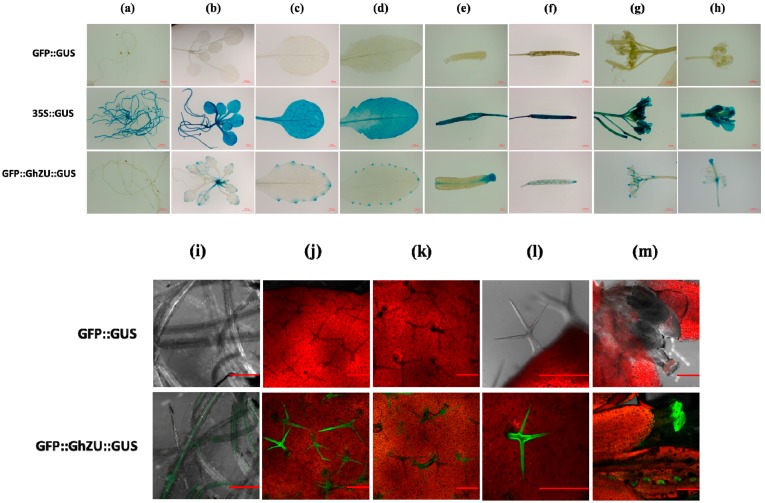
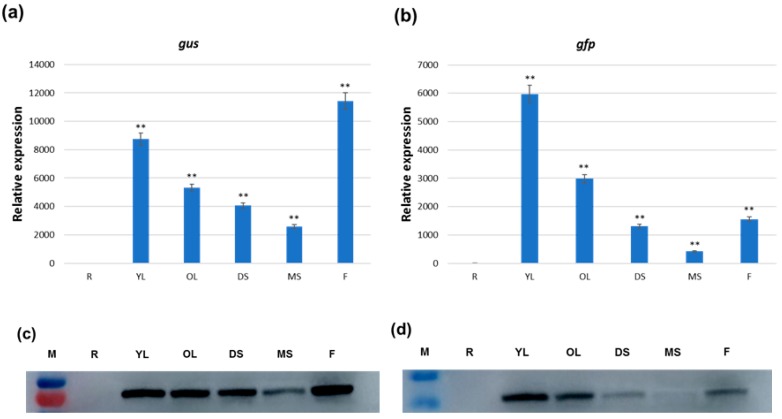
Stacked traits have become an important trend in the current development of genomically modified crops. The bidirectional promoter can not only prevent the co-suppression of multigene expression, but also increase the efficiency of the cultivation of transgenic plants with multigenes. In Gossypium hirsutum, Ghrack1 and Ghuhrf1 are head-to-head gene pairs located on chromosome D09. We cloned the 1429-bp intergenic region between the Ghrack1 and Ghuhrf1 genes from Gossypium hirsutum. The cloned DNA fragment GhZU had the characteristics of a bidirectional promoter, with 38.7% G+C content, three CpG islands and no TATA-box. Using gfp and gus as reporter genes, a series of expression vectors were constructed into young leaves of tobacco. The histochemical GUS (Beta-glucuronidase) assay and GFP (green fluorescence protein) detection results indicated that GhZU could drive the expression of the reporter genes gus and gfp simultaneously in both orientations. Furthermore, we transformed the expression vectors into Arabidopsis and found that GUS was concentrated at vigorous growth sites, such as the leaf tip, the base of the leaves and pod, and the stigma. GFP was also mainly expressed in the epidermis of young leaves. In summary, we determined that the intergenic region GhZU was an orientation-dependent bidirectional promoter, and this is the first report on the bidirectional promoter from Gossypium hirsutum. Our findings in this study are likely to enhance understanding on the regulatory mechanisms of plant bidirectional promoters.
Keywords: Gossypium hirsutum; bidirectional promoter; cloning; stable expression; transient expression.
Conflict of interest statement
The authors declare no conflict of interest.
Figures
References
-
- James C. Global Status of Commercialized Biotech/GM Crops, 2017. Volume 36. International Service for the Acquisition of Agri-Biotech Applications; New York, NY, USA: 2018. pp. 1–8.
-
- Kumari M., Rai A.K., Devanna B.N., Singh P.K., Kapoor R., Rajashekara H., Prakash G., Sharma V., Sharma T.R. Co-transformation mediated stacking of blast resistance genes Pi54 and Pi54rh in rice provides broad spectrum resistance against Magnaporthe oryzae. Plant Cell Rep. 2017;36:1747–1755. doi: 10.1007/s00299-017-2189-x. - DOI - PubMed
MeSH terms
Substances
LinkOut - more resources
Full Text Sources
