


Frailty, nutrition-related parameters, and mortality across the adult age spectrum
- PMID: 30360759
- PMCID: PMC6202862
- DOI: 10.1186/s12916-018-1176-6
Frailty, nutrition-related parameters, and mortality across the adult age spectrum
Erratum in
-
Correction to: Frailty, nutrition-related parameters, and mortality across the adult age spectrum.BMC Med. 2018 Dec 14;16(1):235. doi: 10.1186/s12916-018-1227-z. BMC Med. 2018. PMID: 30545351 Free PMC article.
Abstract
Background: Nutritional status and individual nutrients have been associated with frailty in older adults. The extent to which these associations hold in younger people, by type of malnutrition or grades of frailty, is unclear. Our objectives were to (1) evaluate the relationship between individual nutrition-related parameters and frailty, (2) investigate the association between individual nutrition-related parameters and mortality across frailty levels, and (3) examine whether combining nutrition-related parameters in an index predicts mortality risk across frailty levels.
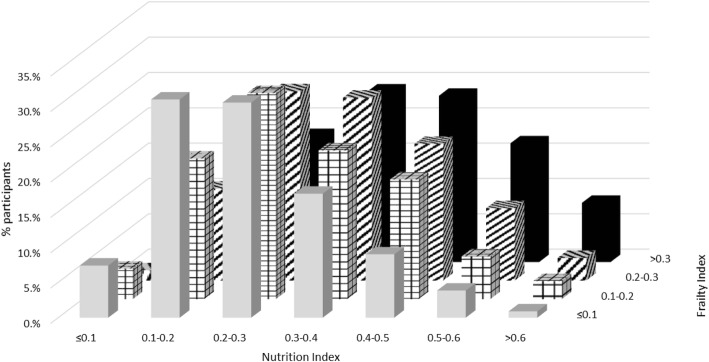
Methods: This observational study assembled 9030 participants aged ≥ 20 years from the 2003-2006 cohorts of the National Health and Nutrition Examination Survey who had complete frailty data. A 36-item frailty index (FI) was constructed excluding items related to nutritional status. We examined 62 nutrition-related parameters with established cut points: 34 nutrient intake items, 5 anthropometric measurements, and 23 relevant blood tests. The 41 nutrition-related parameters which were associated with frailty were combined into a nutrition index (NI). All-cause mortality data until 2011 were identified from death certificates.
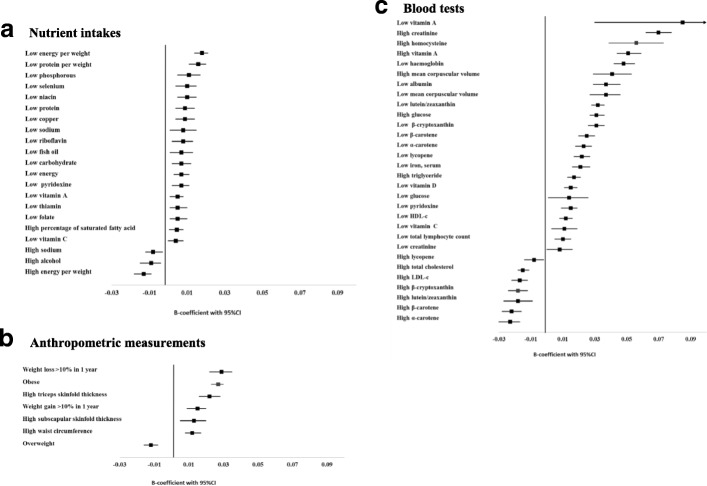
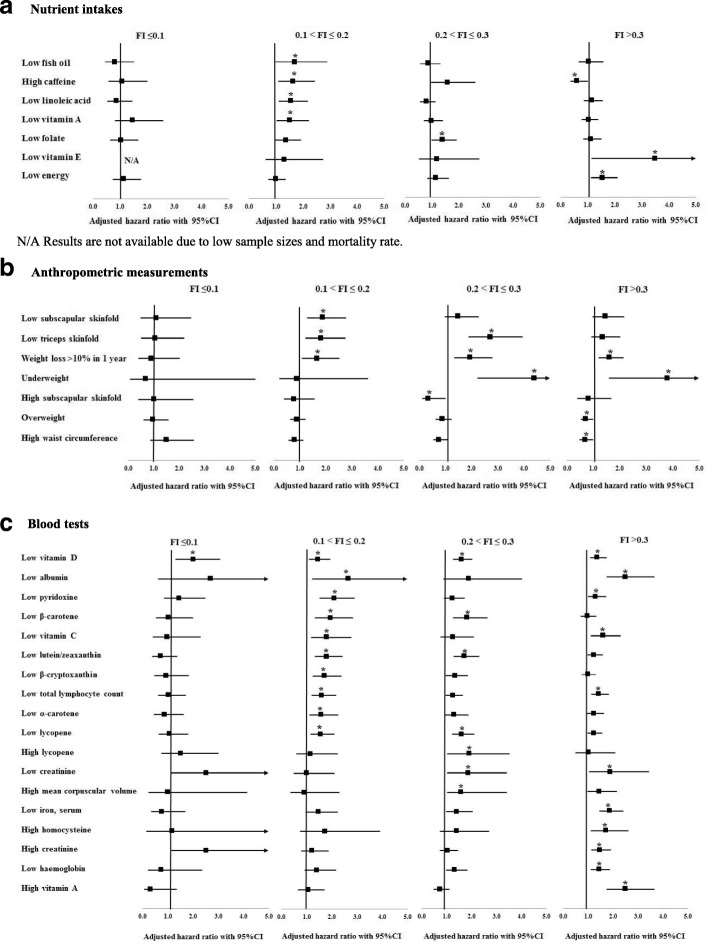
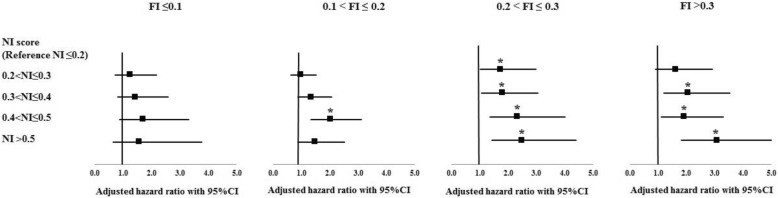
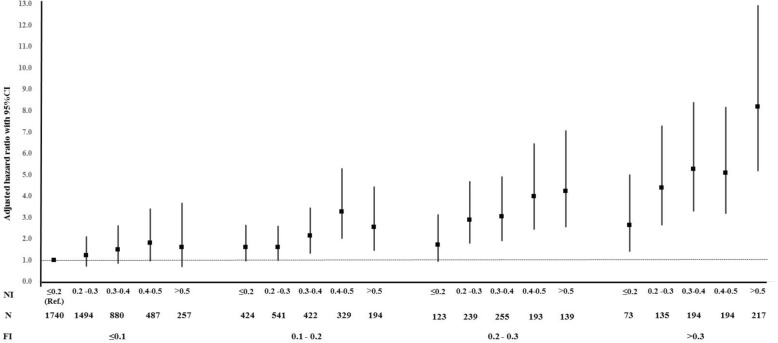
Results: All 5 anthropometric measurements, 21/23 blood tests, and 19/34 nutrient intake items were significantly related to frailty. Although most nutrition-related parameters were directly related to frailty, high alcohol consumption and high levels of serum alpha-carotene, beta-carotene, beta-cryptoxanthin, total cholesterol, and LDL-c were associated with lower frailty scores. Only low vitamin D was associated with increased mortality risk across all frailty levels. Seventeen nutrition-related parameters were associated with mortality in the 0.1-0.2 FI group, 11 in the 0.2-0.3 group, and 16 in the > 0.3 group. Overall, 393 (5.8%) of the participants had an NI score less than 0.1 (abnormality in ≤ 4 of the 41 parameters examined). Higher levels of NI were associated with higher mortality risk after adjusting for frailty and other covariates (HR per 0.1: 1.19 [95%CI 1.133-1.257]).
Conclusions: Most nutrition-related parameters were correlated to frailty, but only low vitamin D was associated with higher risk for mortality across levels of frailty. As has been observed with other age-related phenomena, even though many nutrition-related parameters were not significantly associated with mortality individually, when combined in an index, they strongly predicted mortality risk.
Keywords: Dietary intake; Frailty; Frailty index; Mortality; NHANES; Nutrition.
Conflict of interest statement
Ethics approval and consent to participate
The protocols of NHANES were approved by the institutional review board of the National Center for Health Statistics, Centers for Disease Control and Prevention (CDC). Written informed consent was obtained from each participant before participation in this study.
Consent for publication
Not applicable.
Competing interests
All authors declare that they have no competing interests.
Publisher’s Note
Springer Nature remains neutral with regard to jurisdictional claims in published maps and institutional affiliations.
Figures
References
Publication types
MeSH terms
LinkOut - more resources
Full Text Sources
Research Materials
