Does the Presence or Absence of DESH Predict Outcomes in Adult Hydrocephalus?
- PMID: 30361433
- PMCID: PMC7655339
- DOI: 10.3174/ajnr.A5820
Does the Presence or Absence of DESH Predict Outcomes in Adult Hydrocephalus?
Abstract
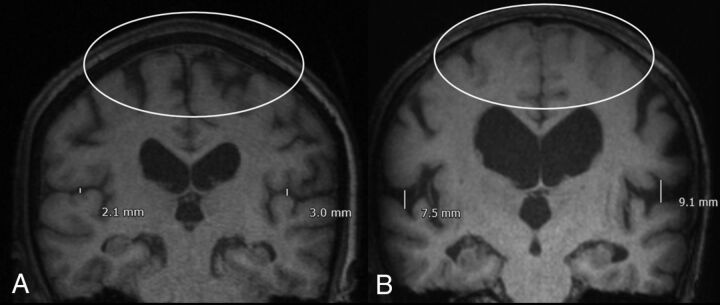
Background and purpose: The DESH (disproportionately enlarged subarachnoid-space hydrocephalus) pattern of "tight high-convexity and medial subarachnoid spaces, and enlarged Sylvian fissures with ventriculomegaly" is used to determine which patients undergo an operation for adult hydrocephalus at many centers. Our aim was to review adult hydrocephalus cases when DESH has not been a criterion for an operation to determine the prevalence of DESH among the cohort and compare the surgical outcomes in the presence or absence of DESH.
Materials and methods: A retrospective cohort study was conducted at a single institution (Johns Hopkins Hospital) to include patients surgically treated for adult hydrocephalus between 2003 and 2014 drawn from a data base of patients who had undergone standardized hydrocephalus protocol MR imaging. Preoperative imaging was reviewed by 2 blinded neuroradiologists to characterize the presence of DESH. Preoperative and postoperative clinical symptomatology was recorded. Frequencies were compared using the Fisher exact test, and nonparametric means were compared using the Mann-Whitney U Test.
Results: One hundred thirty-three subjects were identified and included (96 DESH absent, 37 DESH present). Shunting led to significant improvement in gait and urinary and cognitive symptoms for the overall cohort and for patients with and without DESH (P < .05). The Fisher exact test did not demonstrate any significant differences in either gait or urinary or cognitive symptom improvement between patients with or without DESH (P > .05).
Conclusions: The current study demonstrated symptom improvement in patients with adult hydrocephalus following shunting, with no significant differences between subjects with and without DESH. Thus, shunt insertion for patients with adult hydrocephalus should not rely solely on the presence of preoperative DESH findings.
© 2018 by American Journal of Neuroradiology.
Figures
References
-
- Marmarou A, Bergsneider M, Klinge P, et al. The value of supplemental prognostic tests for the preoperative assessment of idiopathic normal-pressure hydrocephalus. Neurosurgery 2005;57(3 Suppl):S17–28; discussion ii-v - PubMed
-
- Relkin N, Marmarou A, Klinge P, et al. Diagnosing idiopathic normal-pressure hydrocephalus. Neurosurgery 2005;57(3 Suppl):S4–16; discussion ii-v - PubMed
Publication types
MeSH terms
Grants and funding
LinkOut - more resources
Full Text Sources
Medical