


Effect of Deepwater Horizon Crude Oil Water Accommodated Fraction on Olfactory Function in the Atlantic Stingray, Hypanus sabinus
- PMID: 30361507
- PMCID: PMC6202382
- DOI: 10.1038/s41598-018-34140-0
Effect of Deepwater Horizon Crude Oil Water Accommodated Fraction on Olfactory Function in the Atlantic Stingray, Hypanus sabinus
Abstract
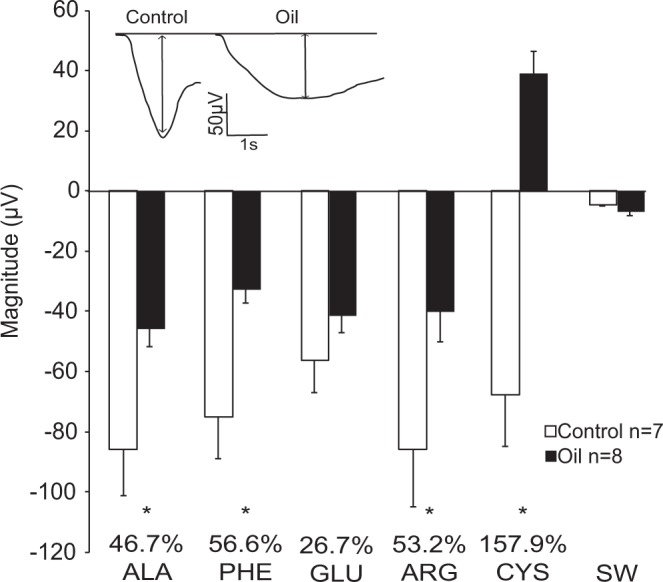
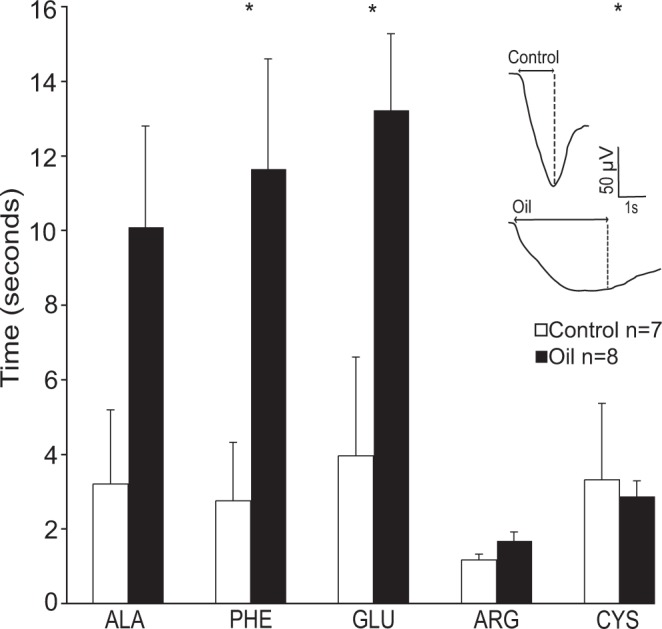
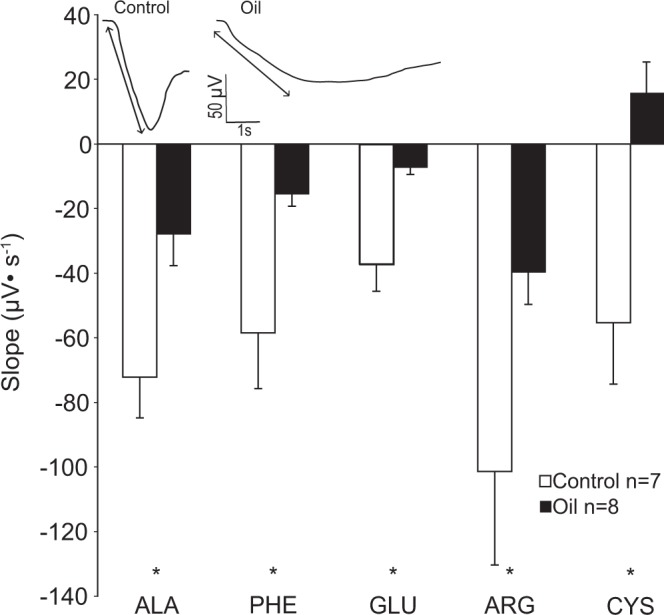
The Deepwater Horizon oil spill was the largest accidental marine oil spill in history, releasing nearly 5 million barrels of crude oil. Crude oil causes both lethal and sublethal effects on marine organisms, and sensory systems have the potential to be strongly affected. Marine fishes rely upon the effective functioning of their sensory systems for detection of prey, mates, and predators. However, despite the obvious importance of sensory systems, the impact of crude oil exposure upon sensory function remains largely unexplored. Here we show that olfactory organ responses to amino acids are significantly depressed in oil exposed stingrays. We found that the response magnitude of the electro-olfactogram (EOG) to 1 mM amino acids decreased by an average of 45.8% after 48 h of exposure to an oil concentration replicating that measured in coastal areas. Additionally, in oil exposed individuals, the EOG response onset was significantly slower, and the clearing time was protracted. This study is the first to employ an electrophysiological assay to demonstrate crude oil impairment of the olfactory system in a marine fish. We show that stingrays inhabiting an area impacted by an oil spill experience reduced olfactory function, which would detrimentally impact fitness, could lead to premature death, and could cause additional cascading effects through lower trophic levels.
Conflict of interest statement
The authors declare no competing interests.
Figures
References
-
- Cleveland, C., Hogan, C. M. & Saundry, P. Deepwater Horizon oil spill. Encycl. Earth. (2010).
-
- Liu Zhanfei, Liu Jiqing, Zhu Qingzhi, Wu Wei. The weathering of oil after theDeepwater Horizonoil spill: insights from the chemical composition of the oil from the sea surface, salt marshes and sediments. Environmental Research Letters. 2012;7(3):035302. doi: 10.1088/1748-9326/7/3/035302. - DOI
Publication types
MeSH terms
Substances
Grants and funding
LinkOut - more resources
Full Text Sources
Medical
