


Molecular probes for extracellular adenosine receptors
- PMID: 3036153
- PMCID: PMC3388543
- DOI: 10.1016/0006-2952(87)90056-6
Molecular probes for extracellular adenosine receptors
Abstract
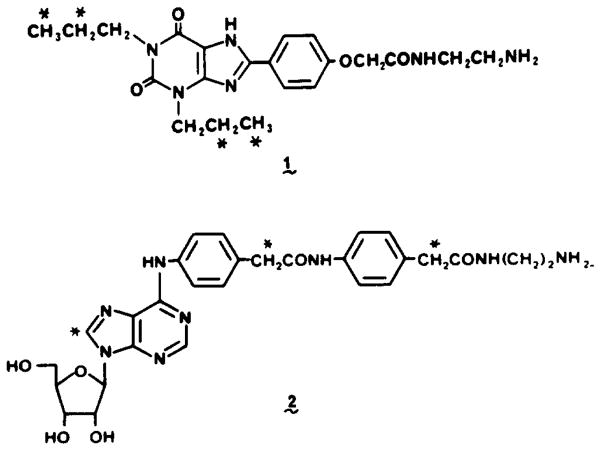
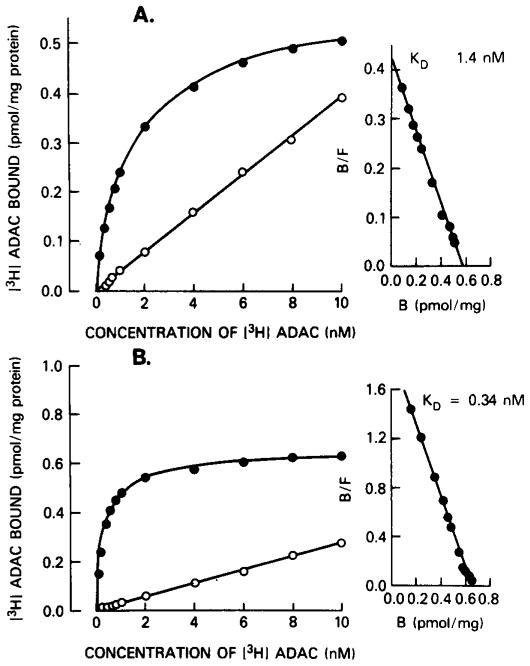
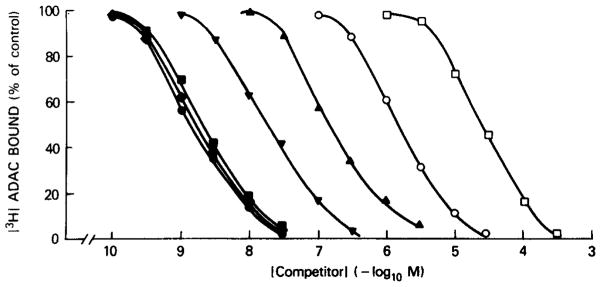
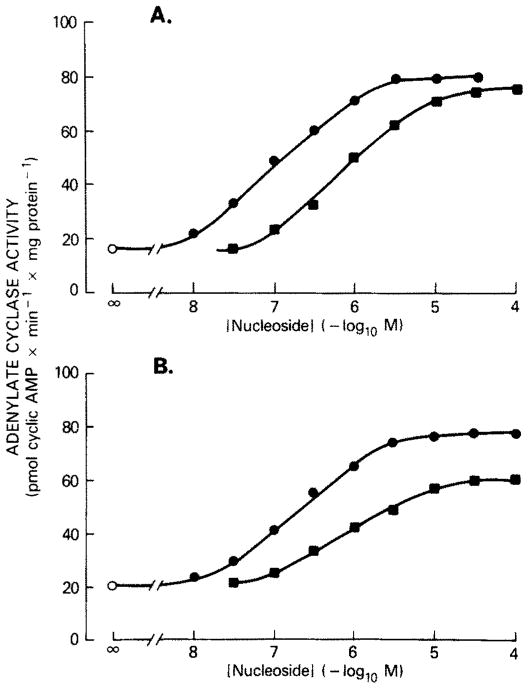
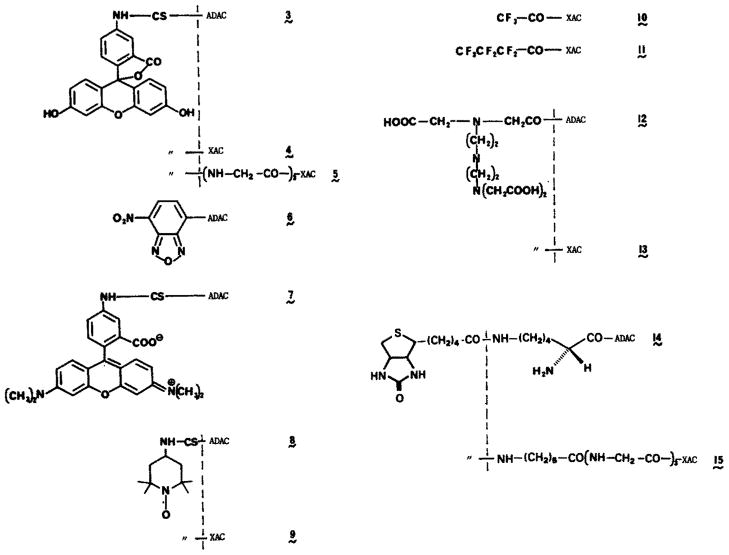
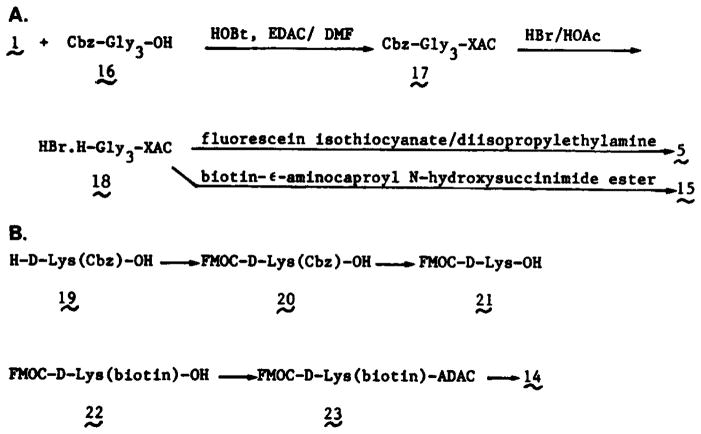
Derivatives of adenosine receptor agonists (N6-phenyladenosines) and antagonists (1,3-dialkyl-8-phenylxanthines) bearing functionalized chains suitable for attachment to other molecules have been reported [Jacobson et al., J. med. Chem. 28, 1334 and 1341 (1985)]. The "functionalized congener" approach has been extended to the synthesis of spectroscopic and other probes for adenosine receptors that retain high affinity (Ki approximately 10(-9)-10(-8) M) in A1-receptor binding. The probes have been synthesized from an antagonist xanthine amine congener (XAC) and an adenosine amine congener (ADAC). [3H]ADAC has been synthesized and found to bind highly specifically to A1-adenosine receptors of rat and calf cerebral cortical membranes with KD values of 1.4 and 0.34 nM respectively. The higher affinity in the bovine brain, seen also with many of the probes derived from ADAC and XAC, is associated with phenyl substituents. The spectroscopic probes contain a reporter group attached at a distal site of the functionalized chain. These bifunctional ligands may contain a spin label (e.g. the nitroxyl radical TEMPO) for electron spin resonance spectroscopy, or a fluorescent dye, including fluorescein and 4-nitrobenz-2-oxa-1,3-diazole (NBD), or labels for 19F nuclear magnetic resonance spectroscopy. Potential applications of the spectroscopic probes in characterization of adenosine receptors are discussed.
Figures
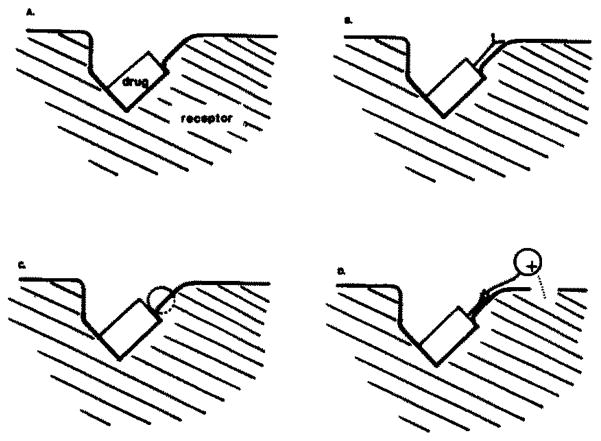
 ), such as an amine or carboxylic acid, for the covalent attachment to carrier molecules. (C) The presence of a bulky group close to the pharmacophore may prevent binding. (D) Attachment of a bulky group through the functionalized chain. The attached moiety (carrier) may enhance affinity due to an energetically favorable interaction, either specific or nonspecific, at a distal (accessory) site. At adenosine receptors the presence of a positively-charged ammonium group is associated with high affinity, possibly reflecting a distal electrostatic interaction.
References
-
- Jacobson KA, Pannell LK, Kirk KL, Fales HM, Sokoloski EA. J chem Soc (Perkin I) 1986:2143.
Publication types
MeSH terms
Substances
Grants and funding
LinkOut - more resources
Full Text Sources
Other Literature Sources
