


The risk of systemic lupus erythematosus associated with Epstein-Barr virus infection: a systematic review and meta-analysis
- PMID: 30361847
- PMCID: PMC6394567
- DOI: 10.1007/s10238-018-0535-0
The risk of systemic lupus erythematosus associated with Epstein-Barr virus infection: a systematic review and meta-analysis
Abstract
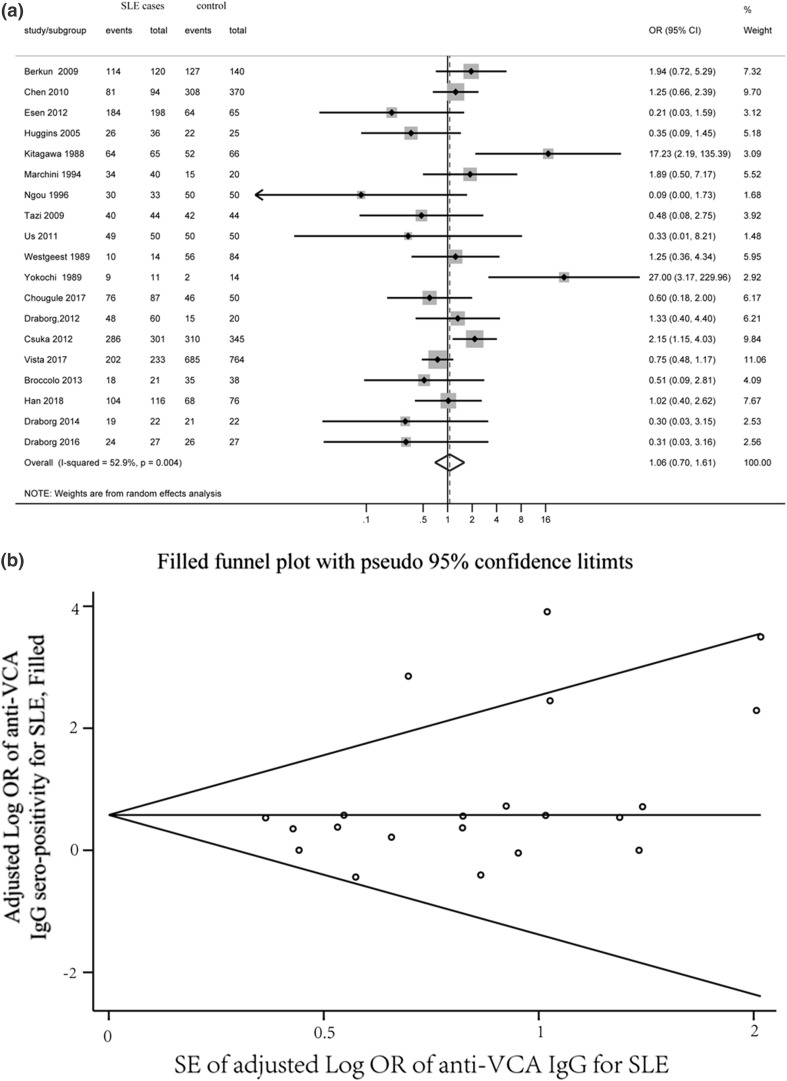
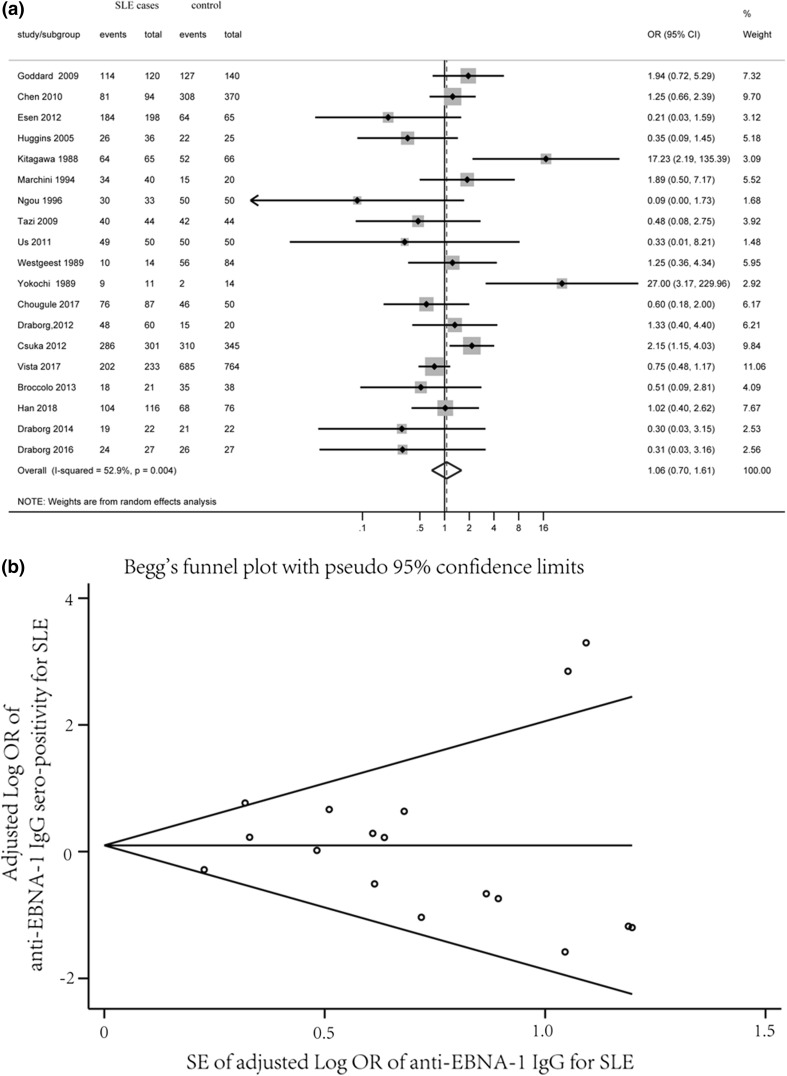
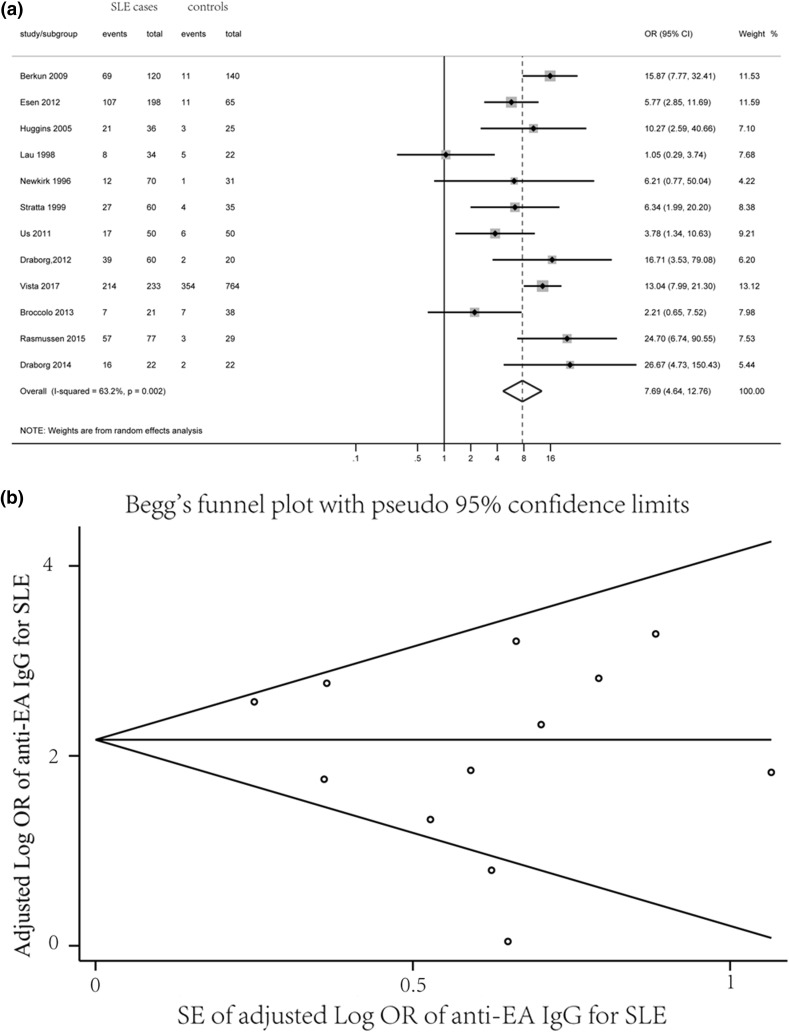
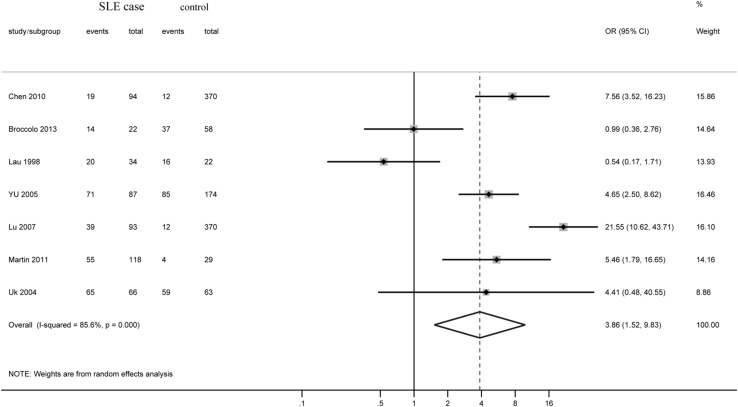
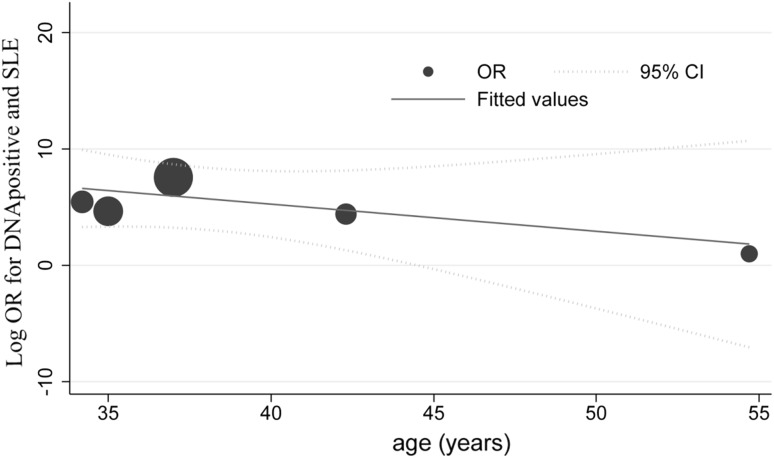
Previous systematic reviews have found a higher sero-prevalence of EBV antibodies in SLE patients compared with controls. Because many studies have been published, there is a need to apply more precise systematic review methods. We examined the association between EBV and SLE patients by conducting a systematic review and meta-analysis of case-control studies that examined the prevalence of EBV antibodies and the DNA-positive rate. We searched the MEDLINE and EMBASE databases from 1966 to 2018 with no language restrictions. The Mantel-Haenszel odds ratios (OR) for EBV antibody sero-positivity were calculated, and meta-analyses were conducted. Quality assessment was performed using a modified version of the Newcastle-Ottawa scale, and 33 studies were included. Most studies found a higher sero-prevalence of VCA IgG and EA IgG in SLE patients compared with controls. Meta-analysis demonstrated a significantly higher OR for sero-positivity to VCA IgG and EA IgG for SLE cases (2.06 [95% confidence interval (CI) 1.30-3.26, p = 0.002] and 7.70, [95% CI 4.64-12.76, p < 0.001], respectively). The overall OR for the DNA-positive rate for SLE patients compared with controls was 3.86 (95% CI 1.52-9.83, p = 0.005). Other antibodies, i.e., VCA IgA/IgM, EBNA IgA, and EA IgA/IgM, also demonstrated a significant difference between SLE patients and controls. These findings support previous systematic reviews; however, publication bias cannot be excluded. The methodological conduct of studies could be improved, particularly when selecting controls and analyses of laboratory conduct.
Keywords: Epstein–Barr virus; Meta-analysis; Systemic lupus erythematosus.
Conflict of interest statement
Conflict of interest
The authors declare that they have no competing interests.
Ethical approval
All analyses were based on previous published studies; thus, no ethical approval is required.
Informed consent
All analyses were based on previous published studies; thus, no informed consent is required.
Figures
References
Publication types
MeSH terms
Substances
Grants and funding
LinkOut - more resources
Full Text Sources
Medical
Miscellaneous
