Review
. 2018 Oct 25;12(1):107.
doi: 10.1186/s13065-018-0472-8.

Estrogen alpha receptor antagonists for the treatment of breast cancer: a review

Affiliations
Review

Estrogen alpha receptor antagonists for the treatment of breast cancer: a review

Deepika Sharma et al. Chem Cent J. .

Abstract

Background: Cancer is at present one of the leading causes of death in the world. It accounts for 13% of deaths occurred worldwide and is continuously rising, with an estimated million of deaths up to 2030. Due to poor availability of prevention, diagnosis and treatment of breast cancer, the rate of mortality is at alarming level globally. In women, hormone-dependent estrogen receptor positive (ER+) breast cancer making up approximately 75% of all breast cancers. Hence, it has drawn the extensive attention of researchers towards the development of effective drugs for the treatment of hormone-dependent breast cancer. Estrogen, a female sex hormone has a vital role in the initiation and progression of breast malignancy. Therefore, estrogen receptor is the central target for the treatment of breast cancer.

Conclusion: In this review, we have studied various classes of antiestrogens that have been designed and synthesized with selective binding for estrogen alpha receptor (ER). Since estrogen receptor α is mainly responsible for the breast cancer initiation and progression, therefore there is need of promising strategies for the design and synthesis of new therapeutic ligands which selectively bind to estrogen alpha receptor and inhibit estrogen dependent proliferative activity.

Keywords: Antiestrogens; Breast cancer; Estrogen receptor alpha; Molecular docking; Relative binding affinity.


Conflict of interest statement

The authors declare that they have no competing interests.

Figures

Fig. 1
Fig. 1
Role of estrogen alpha receptor and estrogen alpha receptor antagonists (tamoxifen, fulvestant, letrozole and anastrozole) in breast cancer
Fig. 2
Fig. 2
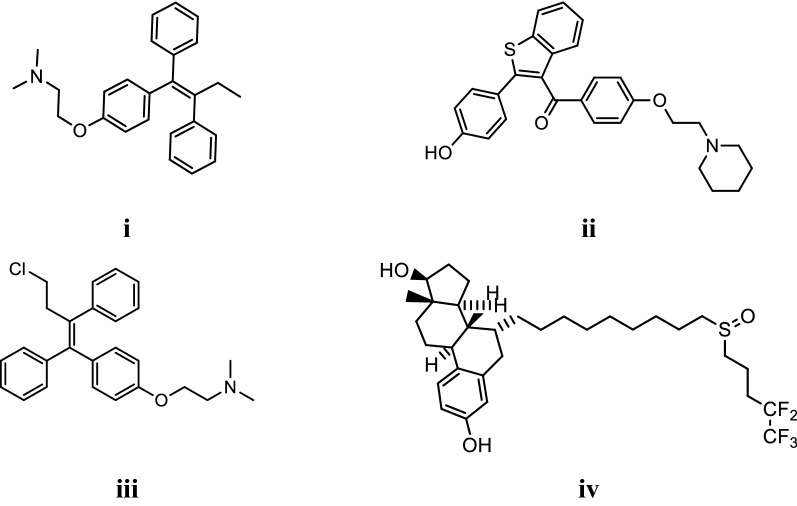
Marketed drugs for breast cancer
Fig. 3
Fig. 3
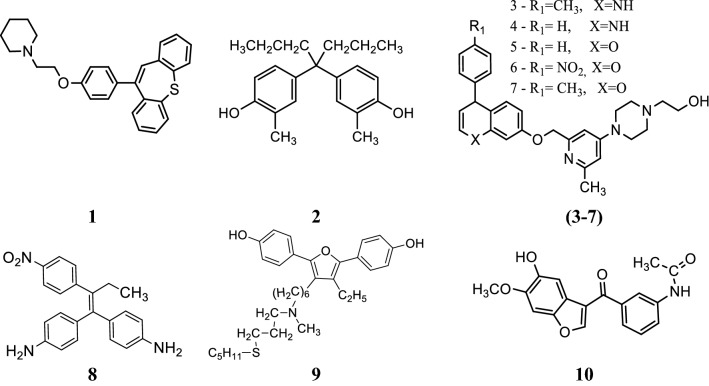
Molecular structures of compounds (110)
Fig. 4
Fig. 4
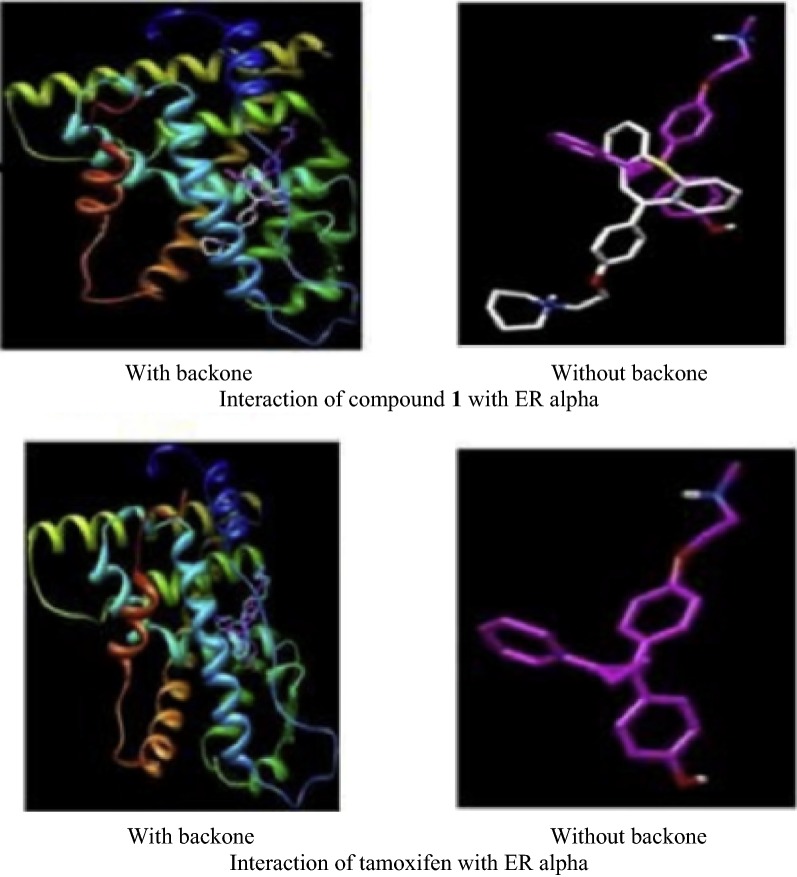
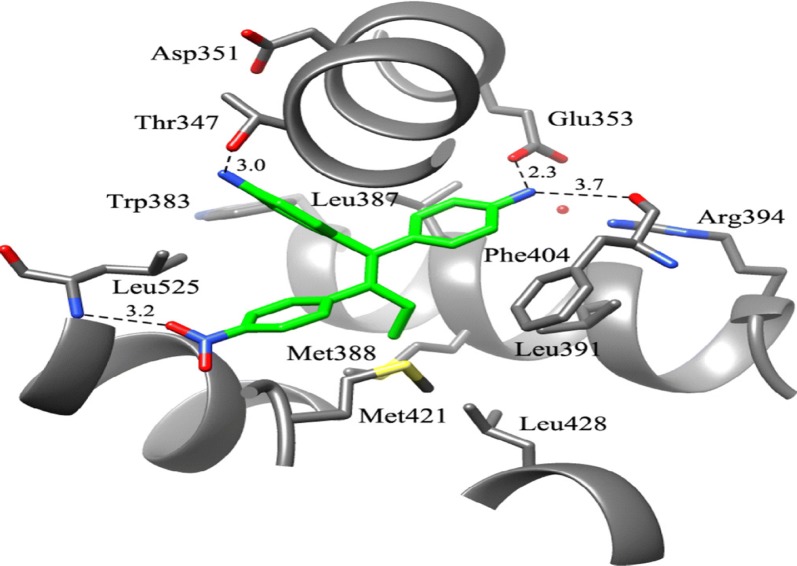
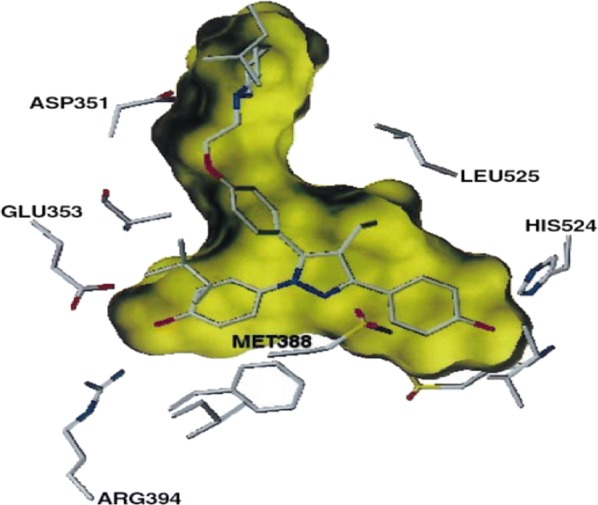
Pictorial presentation of interaction of compound 1 and tamoxifen with ER alpha
Fig. 5
Fig. 5
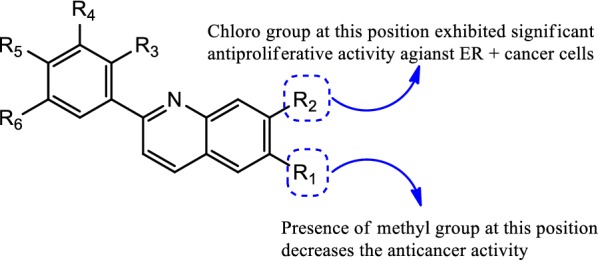
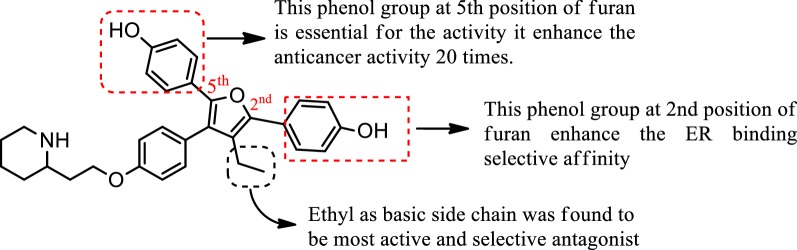
Structure activity relationship study of compound 2
Fig. 6
Fig. 6
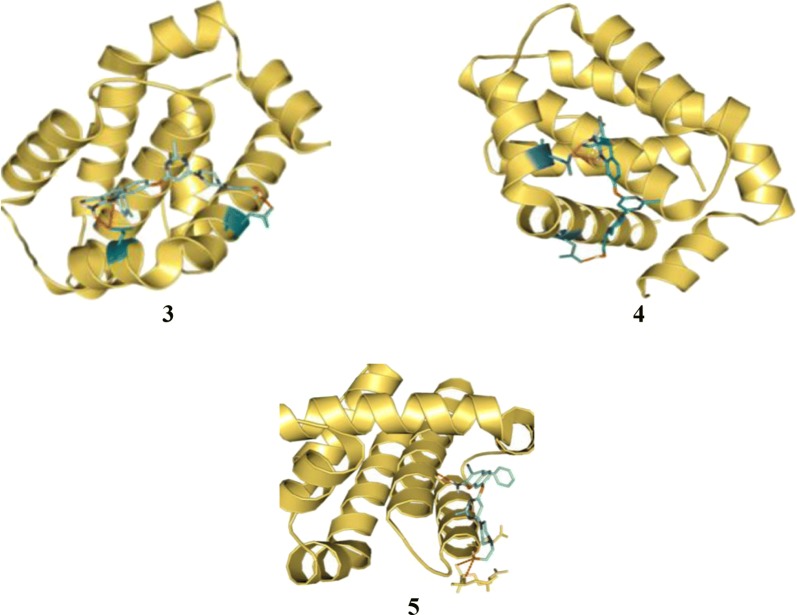
Pictorial presentation of best conformation of compounds 35
Fig. 7
Fig. 7
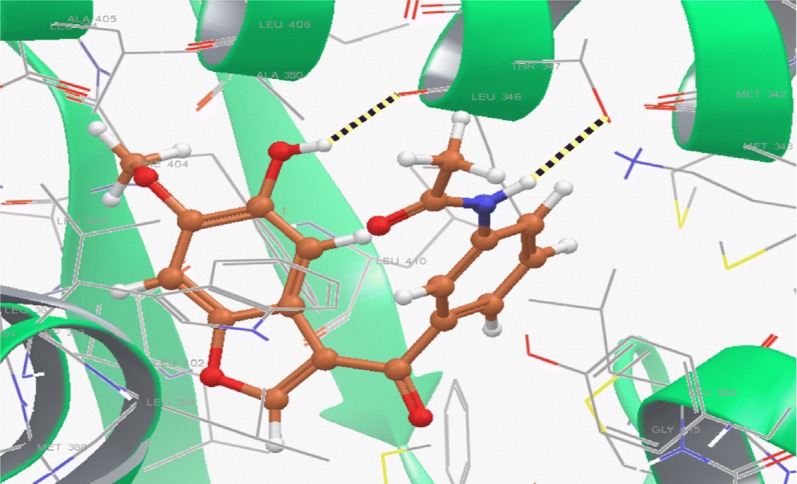
Docking model of compound 8
Fig. 8
Fig. 8
Pictorial presentation of compound 10
Fig. 9
Fig. 9
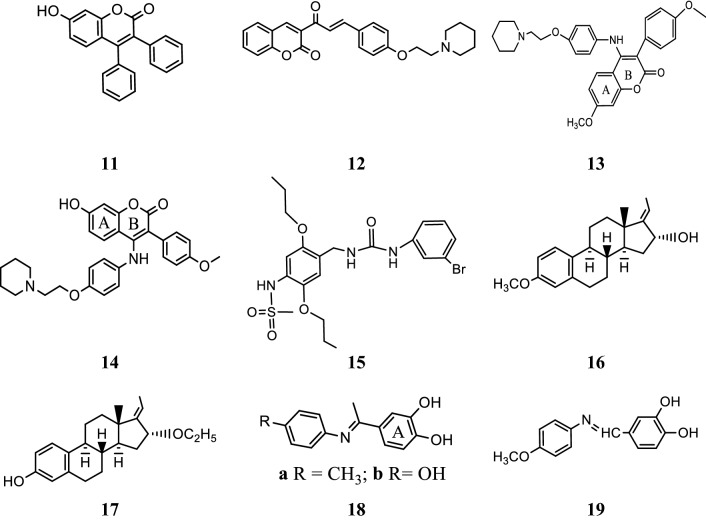
Molecular structures of compounds (1119)
Fig. 10
Fig. 10
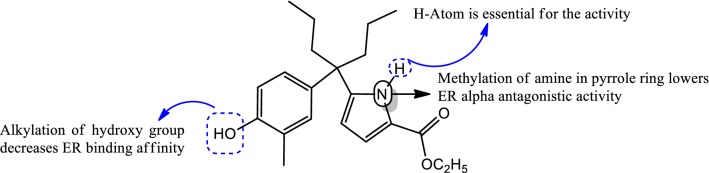
Structure activity relationship study of compound 12
Fig. 11
Fig. 11
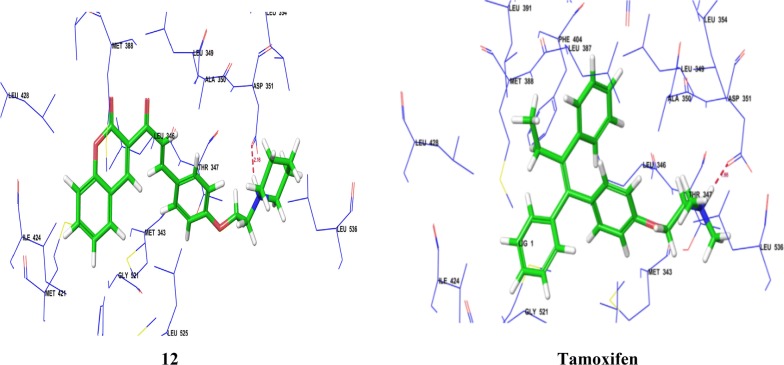
Pictorial presemtation of compound 12
Fig. 12
Fig. 12
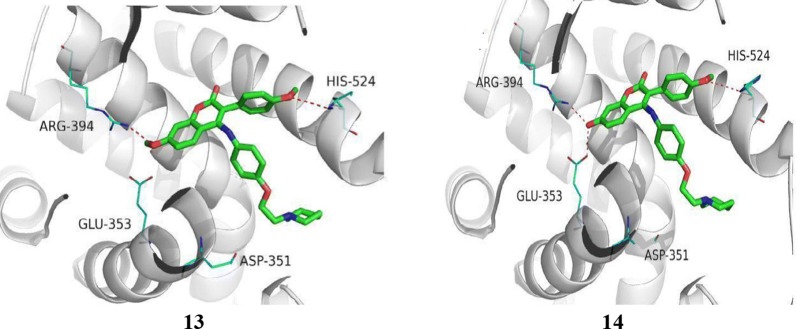
Pictoial presentation of compound 13 and 14
Fig. 13
Fig. 13
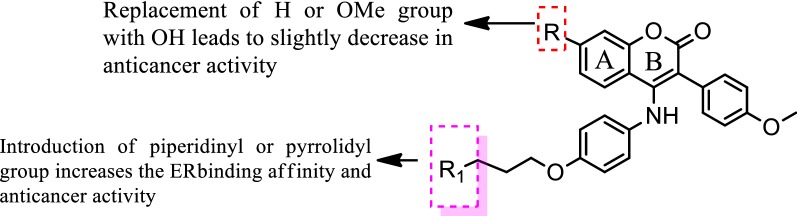
Structure activity relationship study of compound 13 and 14
Fig. 14
Fig. 14
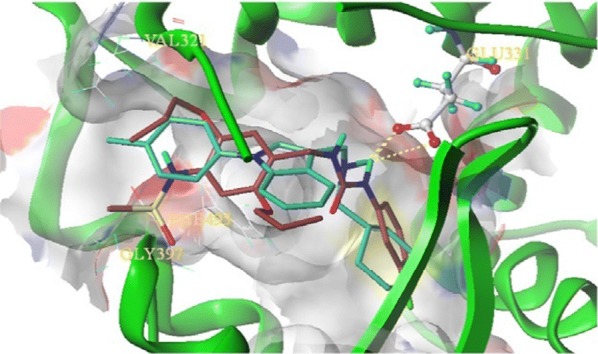
Superimposition of docking model of compound 2PJL ligand (cyan) and compound 15 (reddish brown) was docked into ERRα crystal structure. Dotted yellow lines shows hydrogen binding interactions
Fig. 15
Fig. 15
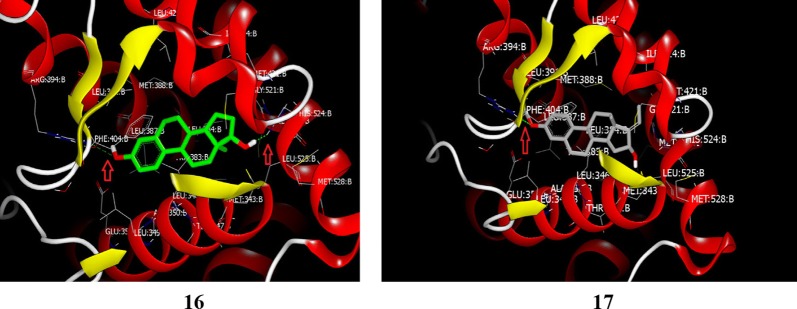
Visual presentation of compound 16 and 17 with receptor ER α. Dotted red lines show the hydrogen bond formation
Fig. 16
Fig. 16
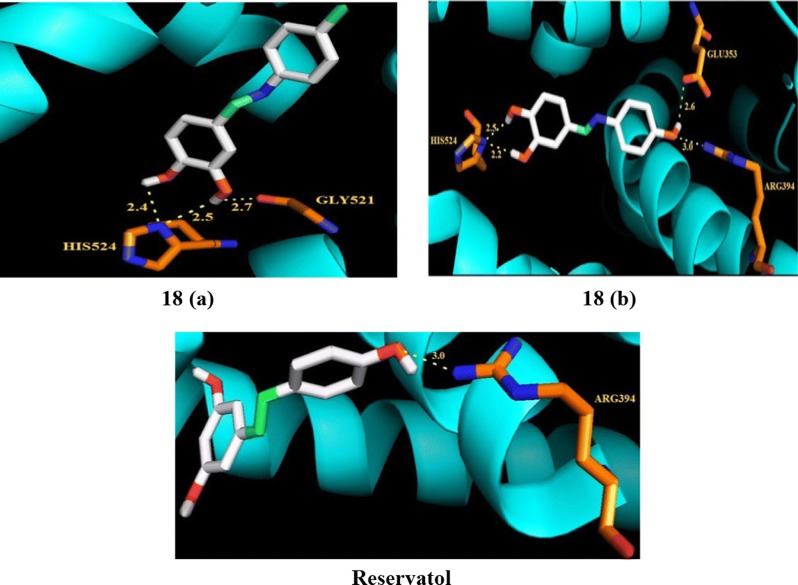
Pictorial presentation of compounds 18 (a, b) and reservatol
Fig. 17
Fig. 17
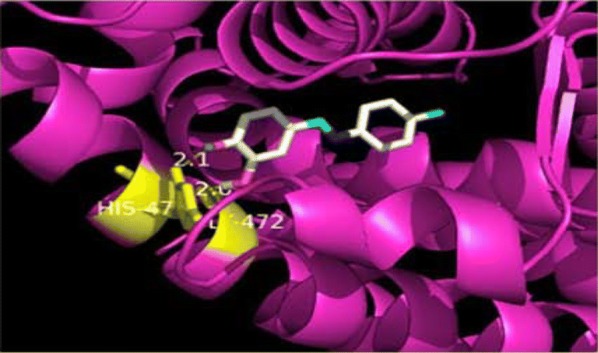
Pictorial pesentation of compound 19
Fig. 18
Fig. 18
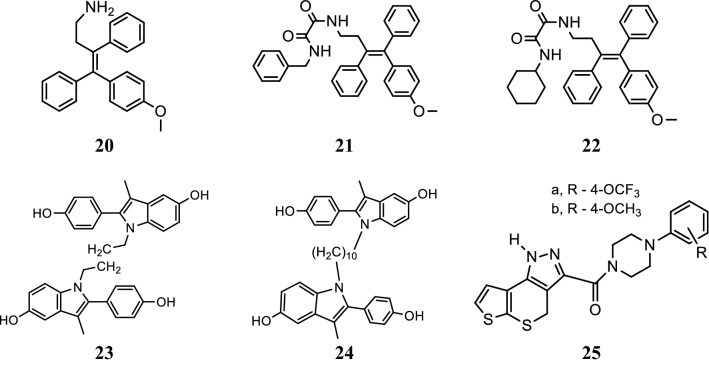
Molecular structures of compounds (2025)
Fig. 19
Fig. 19
Pictorial presentation of compound 23 and 24
Fig. 20
Fig. 20
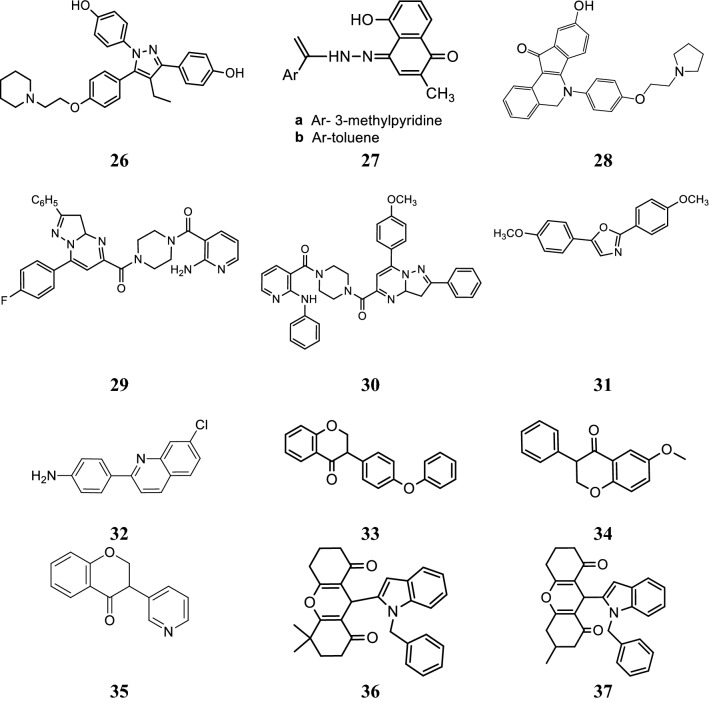
Molecular structures of compounds (2637)
Fig. 21
Fig. 21
Pictorial presentation of compound 26
Fig. 22
Fig. 22
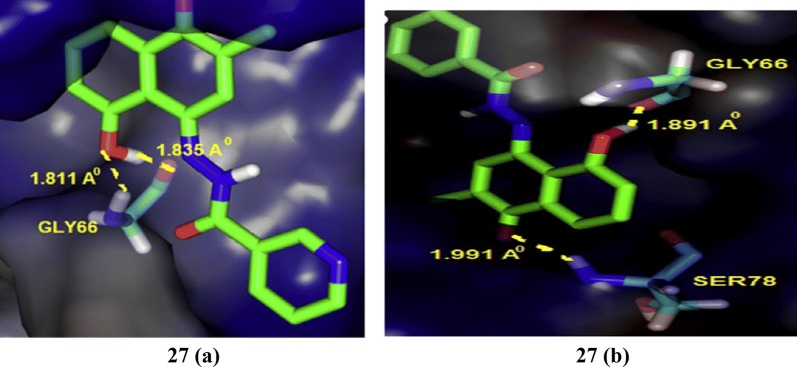
Pictorial presentation f compound 27 (a, b)
Fig. 23
Fig. 23
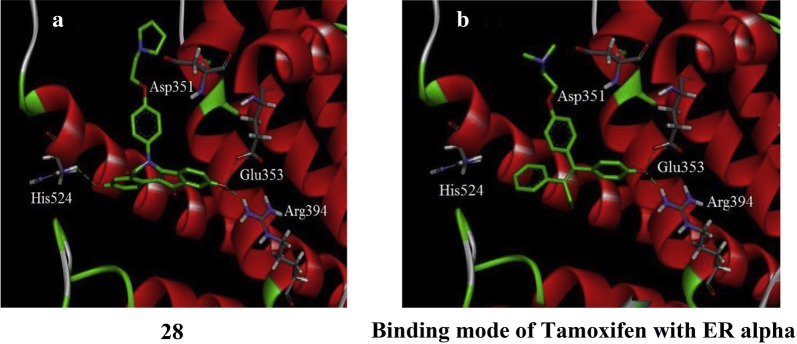
Pictorial presentation of compound 28 in ER alpha (a) and tamoxifen in ER alpha (b)
Fig. 24
Fig. 24
Pictorial presentation of docked compound 31
Fig. 25
Fig. 25
Structure activity relationship of compound 32
Fig. 26
Fig. 26
Pictorial presentation of compounds 3335
Fig. 27
Fig. 27
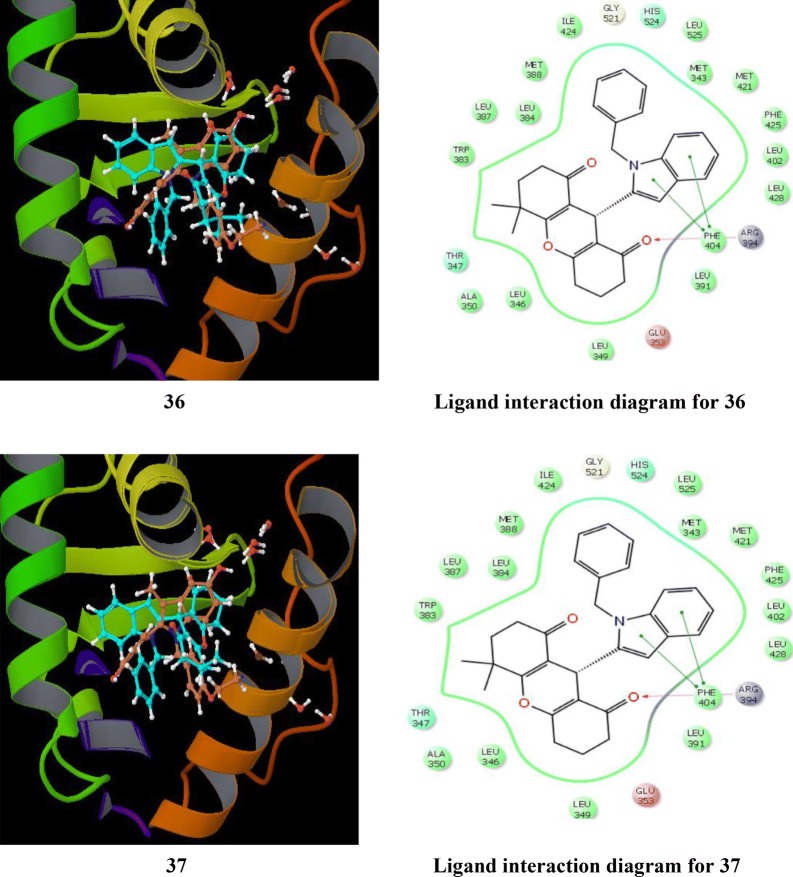
Pictorial presentation of compound 36 and 37
Fig. 28
Fig. 28
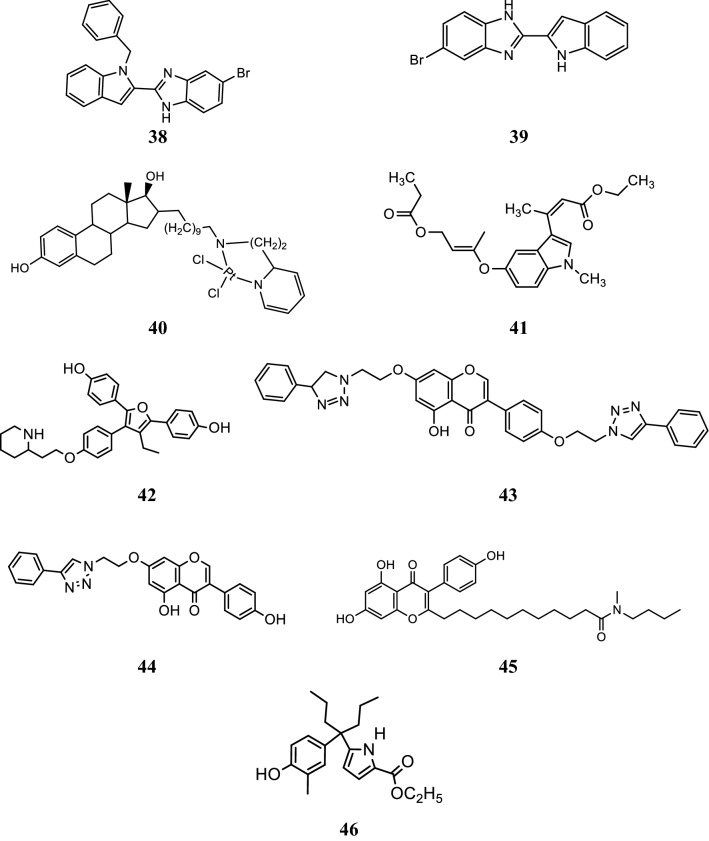
Molecular structures of compounds (3846)
Fig. 29
Fig. 29
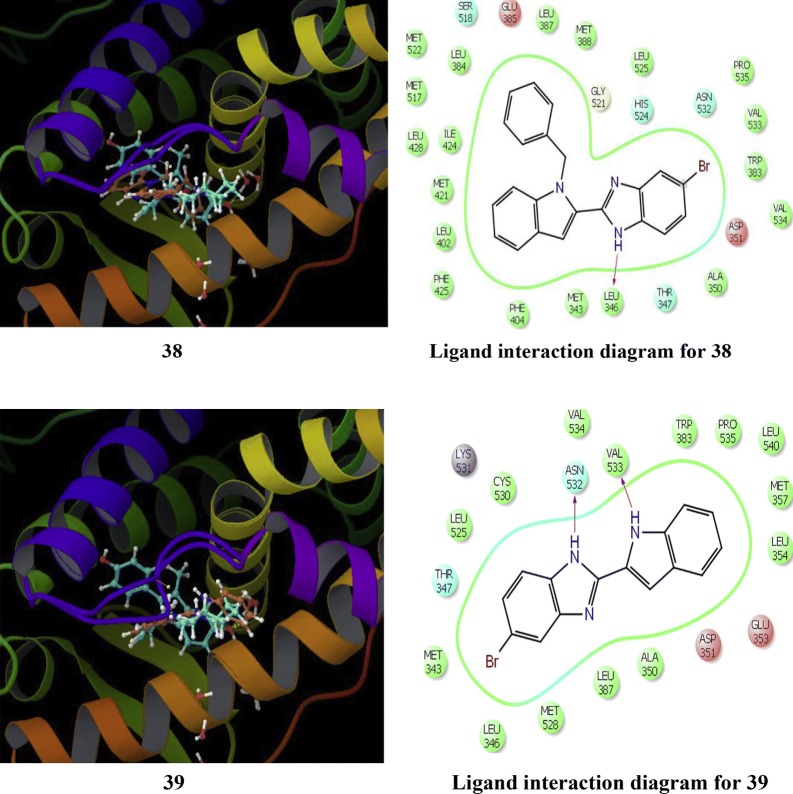
Pictorial presentation of compound 38 and 39
Fig. 30
Fig. 30
Pictorial presentation of compound 41
Fig. 31
Fig. 31
Structure activity relationship study of compound 42
Fig. 32
Fig. 32
Structure activity relationship study of compound 46
Fig. 33
Fig. 33
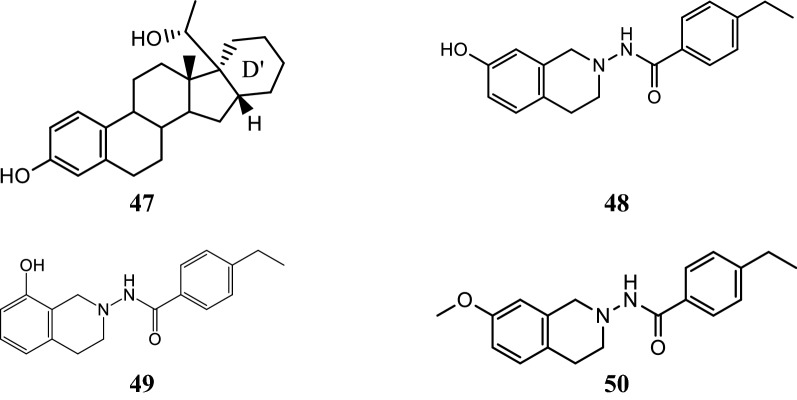
Molecular structures of compounds (4750)
Fig. 34
Fig. 34
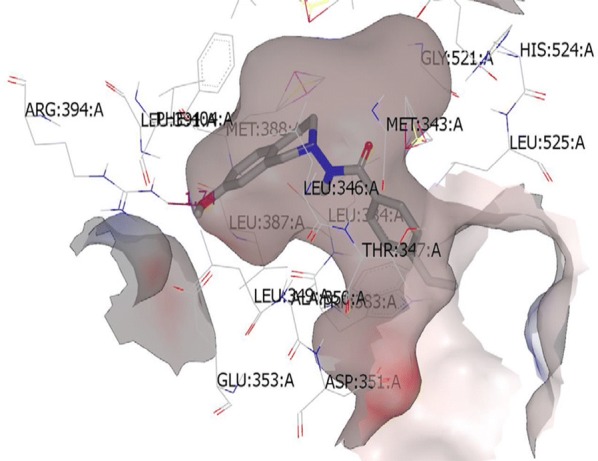
Pictorial presentation and surface view of compound 47
Fig. 35
Fig. 35
Top scoring binding pose of the most active substituted THIQ analogs at the active site of ERα-4-OHT complex (3ERT)
Fig. 36
Fig. 36
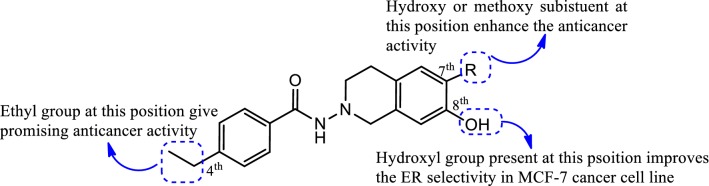
Strcuture activity relationship study of compound 36
Fig. 37
Fig. 37
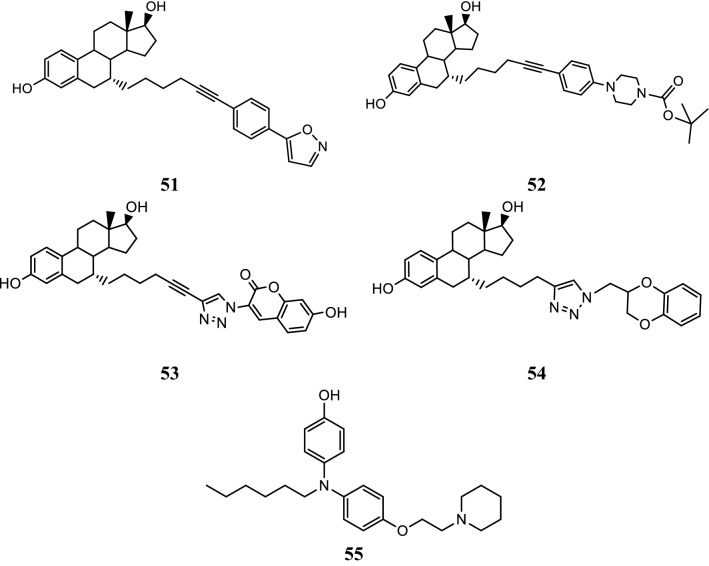
Molecular structures of compounds (5155)
Fig. 38
Fig. 38
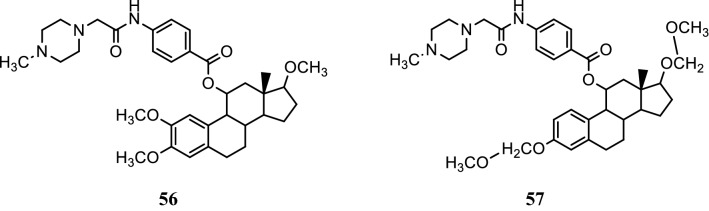
Molecular structures of compounds (5657)
Fig. 39
Fig. 39
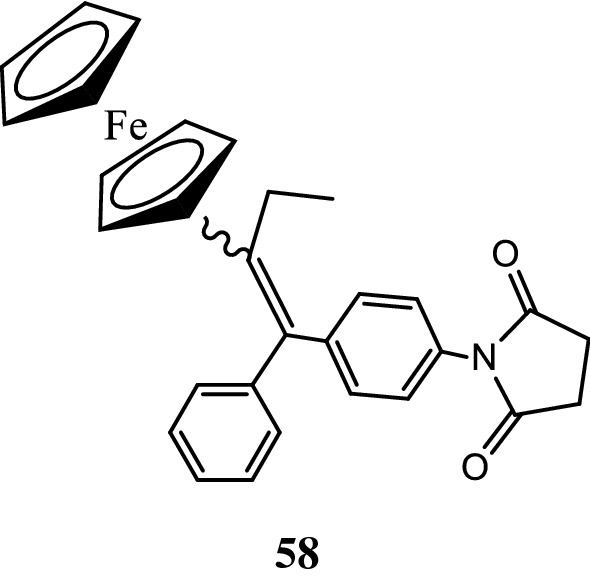
Molecular structure of compound (58)
Fig. 40
Fig. 40
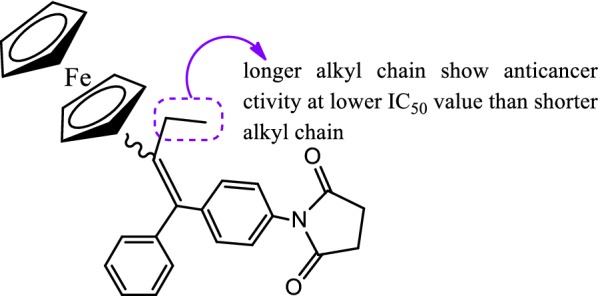
Structure activity relationship study of organometallic compound 58

References

    1. American Cancer Society . Breast cancer facts & figures 2017–2018. Atlanta: American Cancer Society; 2017. pp. 3–4.
    1. Althuis MD, Dozier JM, Anderson WF, Devesa SS, Brinton LA. Global trends in breast cancer incidence and mortality 1973–1997. Int J Epidemiol. 2005;34:405–412. doi: 10.1093/ije/dyh414. - DOI - PubMed
    1. Lukong KE. Understanding breast cancer—the long and winding road. BBA Clin. 2017;7:64–77. doi: 10.1016/j.bbacli.2017.01.001. - DOI - PMC - PubMed
    1. Fan L, Goss PE, Weippl KS. Current status and future projections of breast cancer in Asia. Breast Care. 2015;10:372–378. doi: 10.1159/000441818. - DOI - PMC - PubMed
    1. Varughese J, Richman S. Cancer care inequity for women in resource-poor countries. Rev Obstet Gynecol. 2010;3:122–132. - PMC - PubMed

LinkOut - more resources